AI-Powered E‑Signature and Document Automation Tools Gain Momentum
Streamline approvals with AI e-signature. Discover how AI-powered e-signature and document automation tools boost speed, security, and compliance.

AI-Powered E‑Signature and Document Automation Tools Gain Momentum
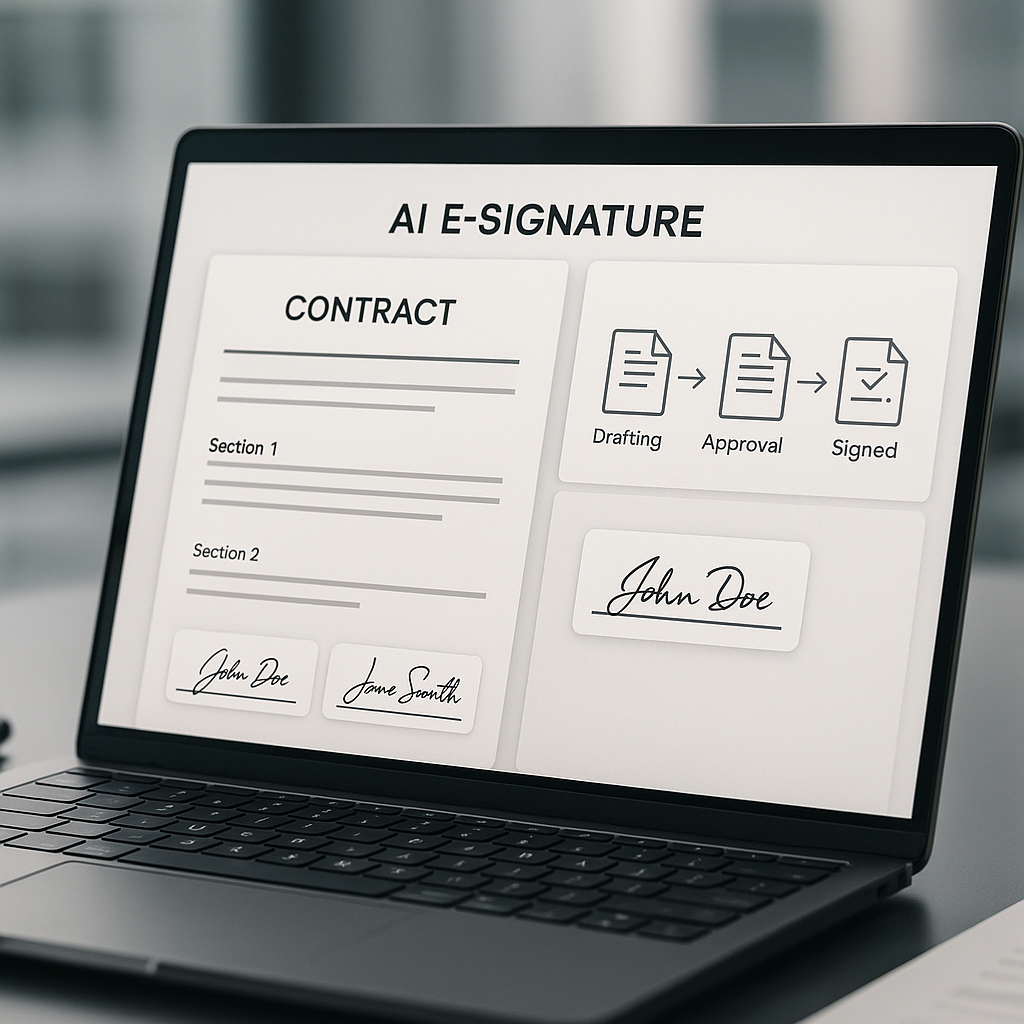
Artificial intelligence is rapidly reshaping how businesses generate, route, and sign agreements. In November 2025, a wave of AI-infused updates from major e‑signature and document software vendors—from contract drafting agents to dynamic field placement and intelligent routing—signaled that the era of “smart” signing workflows has decisively arrived.
For sales, legal, and operations teams, this shift is more than a feature upgrade. It marks a fundamental change in how contracts are created, understood, and pushed through the pipeline. Instead of manually assembling documents, hunting for data, and chasing signatures, AI is increasingly doing the heavy lifting—and smaller, more agile platforms like QuickSign.it are positioning these capabilities for startups and small businesses that have historically been priced out of sophisticated contract lifecycle management (CLM) tools.
Why AI in E‑Signature Matters Now
AI isn’t new to document management, but the last 12–18 months have seen a transition from passive analysis (summaries and clause extraction) to active automation—agents that can draft, populate, route, and monitor agreements with minimal human input.
Several forces are converging:
- Deal velocity pressure: Sales and procurement teams are under constant pressure to reduce cycle times from quote to close.
- Contract sprawl: Enterprises manage millions of agreements, while smaller businesses juggle templates scattered across drives, email threads, and legacy tools.
- LLMs reaching maturity: Large language models can now reliably generate structured documents, identify key clauses, and interact via natural language.
“Every company wants to adopt AI, and contracts are a natural place to start, given the inefficient workflows, unstructured data, and lack of visibility,” Docusign CEO Allan Thygesen noted recently, tying AI directly to improved contracting performance for high‑performing organizations.(investor.docusign.com)
For business professionals, this translates into shorter prep time for every deal, fewer errors, and a clearer view of risk and obligations across the contract portfolio.
What the Big Platforms Are Rolling Out
Docusign: From E‑Signature to AI Contract Agents and ChatGPT Integration
Docusign, still one of the largest players in e‑signature and CLM, has spent 2025 repositioning itself as an AI-first agreement company. Building on its Intelligent Agreement Management (IAM) platform, the firm recently announced “AI contract agents” designed to automate end‑to‑end agreement workflows. These agents draw on Docusign Iris, the company’s agreement AI engine, to perform custom data extractions, obligation tracking, and risk analysis across large contract sets.(investor.docusign.com)
By late October 2025, Docusign went a step further, unveiling a connector that brings its contract AI directly into ChatGPT via the Model Context Protocol (MCP). Users will be able to ask natural language prompts like “draft a residential lease using our standard template” or “find all vendor contracts over $10,000 expiring in 90 days and prepare renewal letters,” then send the resulting documents for signature—without ever leaving ChatGPT.(investor.docusign.com)
These moves underscore a broader trend: AI that doesn’t just sit inside a document platform, but embeds itself into the tools where work already happens—email, CRM, and now conversational AI interfaces.
Adobe Acrobat & Acrobat Studio: Contract Intelligence and AI Workspaces
Adobe is also leaning heavily into AI for agreements. Early in 2025, the company rolled out contract‑specific capabilities in Acrobat AI Assistant to automatically detect contracts (even in scanned PDFs), summarize key terms, surface important clauses, and compare up to 10 contract versions to spot discrepancies.(news.adobe.com)
Later in the year, Adobe introduced Acrobat Studio, a broader AI-powered productivity hub that turns collections of PDFs, web pages, and other documents into “PDF Spaces”—conversational knowledge hubs where users can analyze content, manage agreements, and collaborate using customizable AI agents. Acrobat Studio folds in e‑sign tools, contract AI, and Adobe Express–powered content creation, with subscription plans starting around $24.99 per month for individuals.(news.adobe.com)
For enterprises, this deep integration of AI into an already ubiquitous PDF ecosystem is a logical evolution. For smaller businesses, though, the pricing and complexity may feel closer to high‑end CLM than a lightweight e‑signature tool.
PandaDoc and the Push Toward Automated Deal Rooms
While Docusign and Adobe dominate headline coverage, vendors like PandaDoc have been pushing aggressively into AI-powered document automation, especially for mid‑market sales teams. Building on earlier features for document analytics and template-based quoting, PandaDoc has been expanding into AI-assisted content generation, more intelligent field behavior, and tighter CRM workflows—helping reps assemble proposals and contracts faster and with fewer manual edits.
Across the PandaDoc ecosystem and comparable platforms, several AI patterns are emerging:
- Automated contract drafting: Generating first drafts from playbooks, clauses, and CRM data instead of starting from a blank page.
- Dynamic field placement: Auto-detecting names, signatures, dates, and totals in uploaded PDFs, then pre‑placing fields to reduce setup time.
- AI-assisted routing and approvals: Determining who needs to sign or ap
prove based on contract value, region, or deal type—and then orchestrating the routing automatically.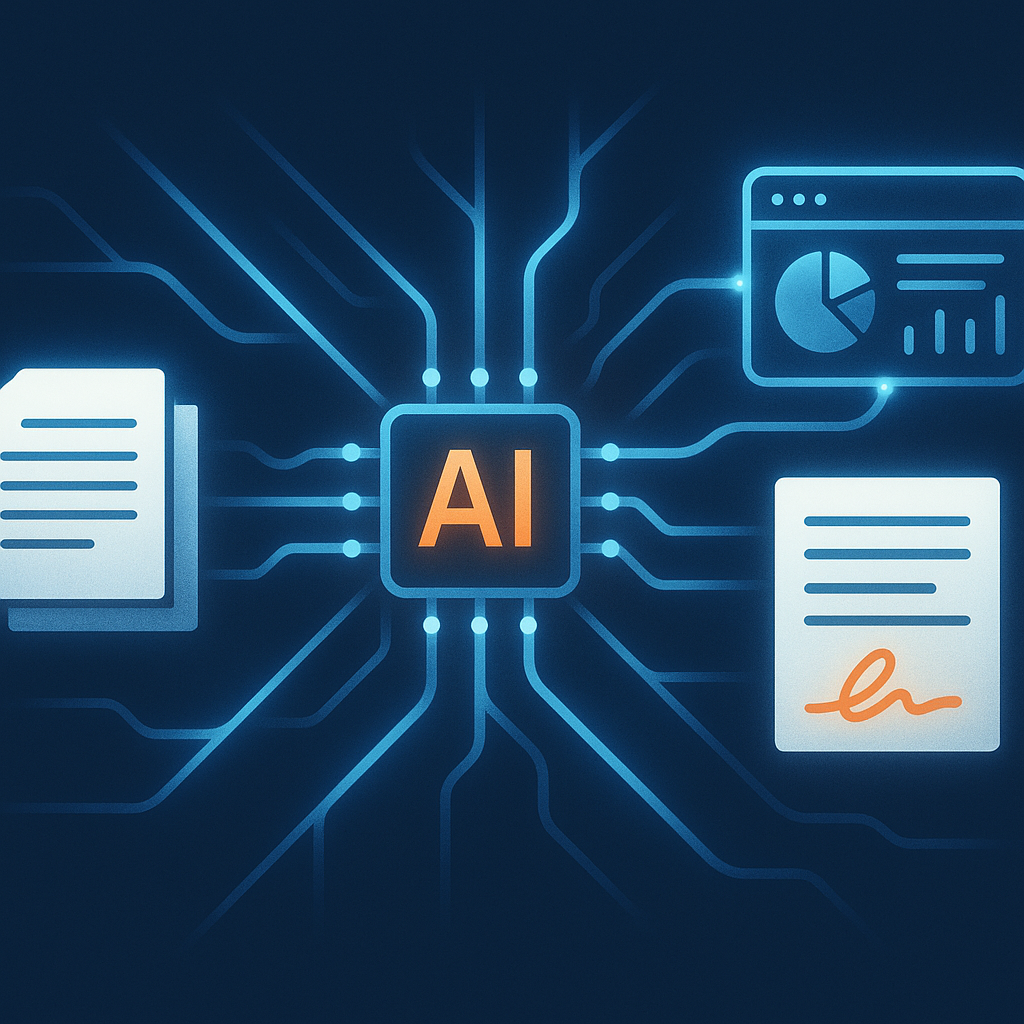
For high‑volume teams, these capabilities can compress deal cycles by days, particularly when combined with real‑time analytics and automated reminders.
Where QuickSign Fits in a Rapidly AI‑Evolving Market
The AI arms race among large platforms risks leaving smaller organizations behind—especially those that don’t need full‑blown enterprise CLM but still want modern automation. That’s where leaner solutions like QuickSign.it are carving out a niche.
QuickSign positions itself as a modern, user‑friendly alternative to legacy tools, emphasizing simplicity and affordability while still tapping AI where it matters most:
- AI Document Generation: Instead of buying separate legal templates or drafting everything from scratch, users can generate legal documents with AI—ideal for NDAs, basic service agreements, and simple sales contracts.
- Effortless Sending: The workflow is intentionally minimal: upload a PDF, drag and drop fields, and send to unlimited recipients—mirroring what users expect from larger e‑signature tools but without the clutter.
- Real-Time Tracking: Status dashboards show who has opened, signed, or stalled, giving small teams the same visibility that enterprises enjoy from their CLM suites.
- AI-Powered Variables: Smart auto‑fill fields pull repetitive data (names, addresses, company details) across multiple documents, reducing copy‑paste errors.
Crucially, QuickSign.it avoids the per‑seat pricing that has become standard among the largest e‑signature providers. Instead, it offers a generous free tier—2 AI document generations and 1 document send to unlimited recipients—plus flat‑rate plans starting at $15 per month. For solo founders, agencies, and small operations, that cost structure can be a deciding factor when weighed against tools such as Docusign or Adobe Sign that increasingly tie advanced AI behind higher‑tier subscriptions.
While larger platforms like Docusign and Adobe continue to layer AI into complex CLM ecosystems, alternatives like QuickSign.it focus on giving small businesses the essentials—AI document generation, simple sending, and tracking—at a flat, predictable price.
Implications for Businesses Adopting AI E‑Signature Tools
For business professionals evaluating e‑signature and document automation platforms in late 2025, a few implications stand out.
1. Contract Lifecycle Management Is Becoming AI‑Native
Leading vendors now treat AI as core infrastructure rather than a bolt‑on. Docusign’s IAM and AI contract agents illustrate how CLM is moving toward continuous, AI-driven management of obligations, renewals, and risk scoring—not just one‑off e‑sign events.(investor.docusign.com)
Even if your organization isn’t ready for full CLM, it’s worth selecting tools that can grow into AI‑assisted lifecycle management as your volume and complexity increase.
2. Document Understanding Is as Important as Signing
Adobe’s contract intelligence capabilities highlight a critical pain point: many users—especially SMB owners—sign agreements they don’t fully understand. Adobe’s own research found that nearly 70% of consumers have signed contracts without knowing all the terms, and 64% of small business owners have avoided signing contracts because they weren’t confident in the content.(news.adobe.com)
AI that can summarize, flag key clauses, or compare redlines across versions helps both sides of the table: it accelerates review while lowering the risk of costly misunderstandings.
3. Workflow Optimization Will Separate Winners from Also‑Rans
Simply digitizing signatures is no longer enough. The real gains come from end‑to‑end workflow optimization:
- Automated drafting based on templates and CRM data.
- Dynamic field detection and placement in uploaded documents.
- Intelligent routing based on business rules.
- Proactive notifications around expirations and renewals.
Platforms that combine these elements with clear, accessible UX will stand out—whether they are enterprise players or SMB-focused solutions like QuickSign.
4. Cost and Complexity Still Matter—Especially for SMBs
Advanced AI features from Adobe and Docusign increasingly arrive bundled with premium subscriptions or add-ons. Docusign’s IAM and Adobe’s Acrobat Studio, for instance, are positioned as higher‑end offerings in their respective ecosystems.(news.adobe.com)
Smaller teams that only need a handful of signatures per month, plus basic automation, may find those ecosystems overpowered and overpriced. Flat‑rate tools like QuickSign.it help close this gap, offering AI document generation and unlimited‑recipient sending without forcing customers into complex, multi‑seat contracts or enterprise lock‑in.
How to Evaluate AI E‑Signature and Automation Tools in 2025
As the market heats up, it’s easy to be distracted by AI buzzwords. A more practical approach is to map features to concrete outcomes:
- Time to first draft: Can the platform generate or assemble a usable first draft from your templates, past agreements, or CRM data?
- Setup time per document: Does it auto‑detect signature fields, dates, and other metadata when you upload a PDF?
- Routing intelligence: Can it automatically determine the correct signers and approvers, or at least make useful suggestions?
- Review assistance: Does it summarize key terms, highlight risks, or show differences between versions in plain language?
- Cost transparency: Is pricing per seat, per document, or flat-rate—and how does that scale as your team grows?
Enterprises may prioritize deep integrations with Salesforce, ServiceNow, or ERP systems, where platforms like Docusign and Adobe are heavily investing.(prnewswire.com) Smaller organizations, meanwhile, might optimize for simplicity, predictable pricing, and the ability to start sending professional, AI‑generated contracts in minutes—where tools like QuickSign are intentionally focused.
The Bottom Line
November 2025’s flurry of AI announcements makes one thing clear: e‑signature is no longer just about collecting digital signatures. It’s about orchestrating entire agreement lifecycles with AI—drafting, understanding, routing, and managing contracts at scale.
For business professionals, the opportunity is to turn historically slow, error‑prone paperwork into a streamlined, data‑driven engine for revenue and risk management. Whether you choose a heavyweight CLM platform or a lightweight, flat‑rate tool, the key is aligning AI capabilities with your actual workflow and budget.
Looking for an affordable e-signature solution? Try QuickSign for free - no credit card required.