Critical xml-crypto Flaws Expose Signed XML Workflows to Authentication Bypass
Discover how critical xml-crypto vulnerabilities enable authentication bypass in signed XML workflows, and learn how to secure your xml-crypto implementations.
Critical xml-crypto Flaws Expose Signed XML Workflows to Authentication Bypass
Signed but Not Secure: New xml-crypto Bugs Shake Trust in Digital Workflows
Two newly highlighted flaws in the widely used Node.js xml-crypto library — tracked as CVE-2025-29774 and CVE-2025-29775 — allow attackers to silently modify signed XML documents while still passing signature verification. Security advisories from IBM, Red Hat, and cloud security vendors confirm that affected systems can be tricked into accepting tampered SAML assertions, identity tokens, or other XML-based security messages, opening the door to authentication bypass, privilege escalation, and impersonation attacks. (ibm.com)

Why Business Leaders Should Care
While xml-crypto is an open‑source developer library, the impact of these vulnerabilities is squarely a business issue. XML signatures sit underneath many high-value workflows:
- SAML-based single sign-on (SSO) and identity federation in corporate environments
- APIs that exchange signed XML payloads for financial, healthcare, or logistics transactions
- Back-office integrations in data platforms, ESBs, and iPaaS products that rely on verified XML
- Parts of e-signature and document‑workflow stacks that use XML signatures as a trust anchor
In these contexts, a signed XML document is often treated as ground truth. If an attacker can alter who a user is, what role they have, or what transaction has been approved — without breaking the signature — the integrity of the entire digital workflow is compromised.
“An attacker may be able to exploit a vulnerability in versions prior to 6.0.1, 3.2.1, and 2.1.6 to bypass authentication or authorization mechanisms in systems that rely on xml-crypto for verifying signed XML documents. The vulnerability allows an attacker to modify a valid signed XML message in a way that still passes signature verification checks.” (ibm.com)
For organ
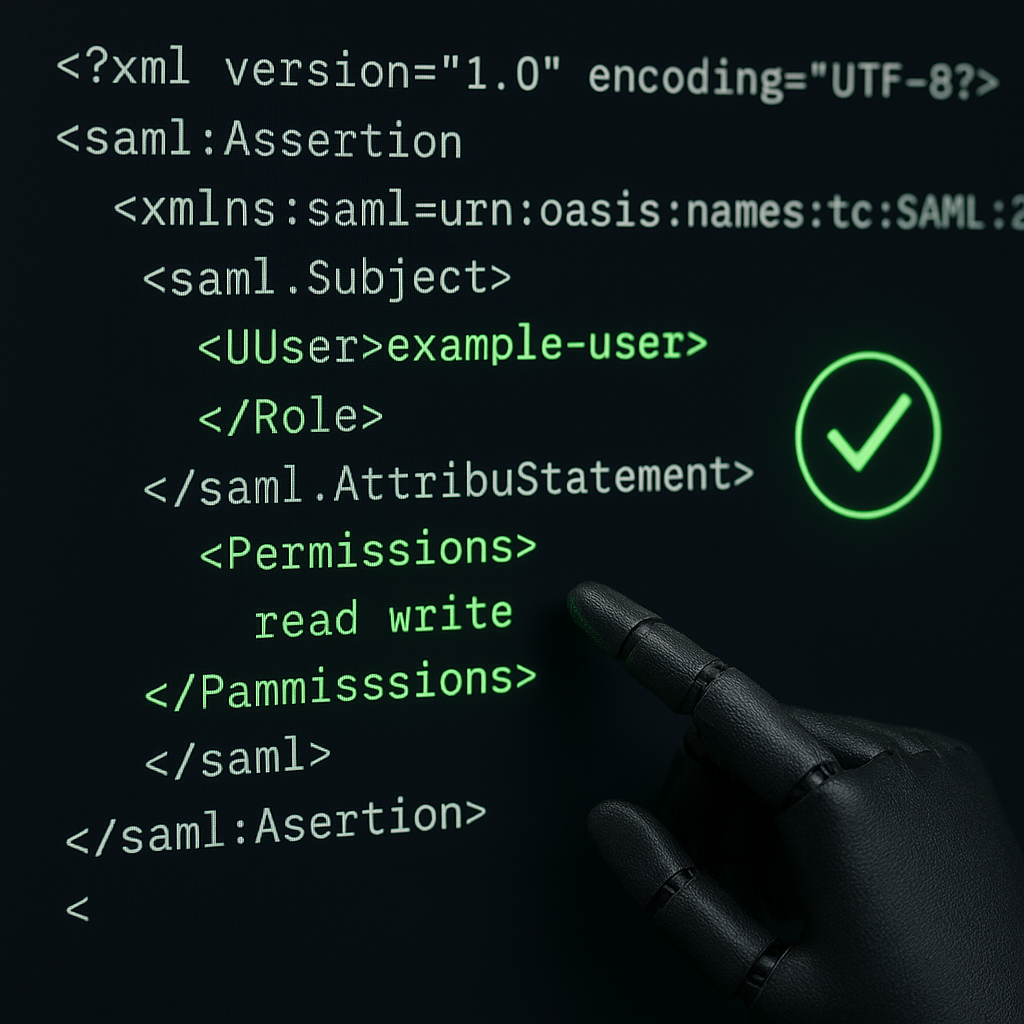
What Happened: Inside CVE-2025-29774 and CVE-2025-29775
A Critical Weak Link in XML Signature Verification
The xml-crypto library provides XML digital signature and encryption functionality for Node.js. It is embedded directly into products such as IBM Cloud Pak for Data, IBM App Connect Enterprise and related container offerings, as well as platforms like Red Hat Developer Hub, which have all issued security bulletins acknowledging impact from these CVEs. (ibm.com)
Both CVE-2025-29774 and CVE-2025-29775 are rated critical, with a CVSS v4.0 base score of 9.3, reflecting the ease of exploitation (network-accessible, no prior privileges required) and the high potential impact on confidentiality, integrity, and availability. (ibm.com)
How the Attack Works
Advisories describe a common core problem: xml-crypto’s signature verification logic can be manipulated so that a modified XML message still validates as correctly signed. Two complementary vectors have emerged in public analysis:
-
Malformed or multi-part signature elements. In one case (CVE-2025-29774), the library’s handling of XML Signature elements allows multiple
SignedInfonodes in a single<Signature>. Attackers can craft a message in which a benignSignedInfois validated while a second, attacker‑controlled version actually governs the sensitive business content. (vulert.com) - Digest value manipulation using XML edge cases. For CVE-2025-29775, analysis from cloud security firm Wiz highlights weaknesses around digest verification, including how comments or XML structure can be abused to change the effective content without invalidating the digest. The result: a receiver believes the document is intact and authentic when, in fact, key fields have been changed. (wiz.io)
In practical terms, an attacker who can submit or influence signed XML to a vulnerable service — for example by compromising a low-privileged account or a partner integration — may be able to:
- Upgrade their own role from “user” to “admin” within an SSO assertion
- Swap a beneficiary or payment amount in a signed transaction record
- Impersonate another user by changing identity fields bound to the signature
Who Is Affected?
The vulnerabilities affect xml-crypto versions prior to 6.0.1, 3.2.1, and 2.1.6. Any application or platform that embeds these versions — directly via npm or indirectly through other dependencies — is potentially exposed. (ibm.com)
IBM, for example, lists xml-crypto as a root cause in multiple enterprise products, warning that attackers could exploit the flaw to bypass signature validation in XML data flows, especially in integration and data platforms that often handle identity assertions and business documents. (ibm.com)
Industry Analysis: A Supply Chain Wake-Up Call for Trust in XML and SSO
These xml-crypto CVEs land amid a broader pattern of cryptographic implementation bugs across the JavaScript and Node.js ecosystem, including recent critical flaws in other crypto libraries. (techradar.com) They reinforce several trends that business leaders and technology executives cannot ignore:
- The identity perimeter is increasingly code-driven. Digital signatures, SAML, and token verification now enforce who can sign a contract, approve a payment, or access a document. A bug deep in a library can quietly undermine that perimeter.
- Open-source infrastructure is business-critical. Libraries like xml-crypto are maintained by relatively small communities but power authentication in enterprises, SaaS products, and regulated industries. Security investment and vendor due diligence must reflect that reality.
- Configuration is not enough. Previous xml-crypto issues have shown that even when applications try to pin trusted certificates, library defaults or behaviors can override those assumptions. (wiz.io) Code-level fixes and thorough testing are required, not just configuration tweaks.
“A flaw was found in the xml-crypto library for Node.js. An attacker can exploit this vulnerability to bypass authentication or authorization mechanisms in systems that rely on xml-crypto to verify signed XML documents. The vulnerability allows an attacker to modify a valid signed XML message in a way that still passes signature verification checks.” (docs.redhat.com)
For the e-signature and digital workflow market, where trust in document integrity is non-negotiable, these flaws function as a live-fire test of how robustly vendors manage their cryptographic supply chains.
Implications for E‑Signature and Digital Workflow Platforms
Where xml-crypto Might Hide in Your Stack
Many organizations do not directly use xml-crypto, but still inherit it via:
- Identity gateways and SSO brokers that issue or validate SAML assertions
- Integration platforms (iPaaS), ESBs, or API gateways implemented in Node.js
- Custom microservices that validate signed XML for approvals, orders, or claims
- Enterprise data and analytics platforms that consume signed XML from partners
E-signature providers and workflow automation tools that integrate deeply with identity providers or line-of-business systems are at particular risk if they rely on vulnerable components for XML signature validation along the path of a transaction.
Risk Scenarios for Digital Signatures
If xml-crypto is part of your e-signature or workflow ecosystem, potential risks include:
- Role and scope escalation. A signed SAML assertion could be tampered with so that a “sign-only” user appears as a full administrator, gaining the power to approve or modify documents outside their normal permissions.
- Impersonated approvals. An attacker might alter identity attributes within a signed workflow message so that an action appears to come from an executive or key stakeholder.
- Tampered transaction content. XML payloads describing contract terms, invoice amounts, or delivery instructions could be changed post-signature while still appearing cryptographically “valid.”
Such attacks do not necessarily break the top-level e-signature UI or audit trail. Instead, they exploit trust assumptions at integration points — where a backend system treats any successfully verified XML signature as authoritative.
How Mature Providers Respond
Well-governed e-signature and digital workflow vendors typically:
- Maintain a software bill of materials (SBOM) to quickly identify where libraries like xml-crypto are used
- Run continuous dependency scanning and automated alerts for critical CVEs
- Layer security controls, such as independent authorization checks on top of signature verification
- Conduct regression and penetration testing after upgrading cryptographic components
Vendors such as QuickSign, which focus on secure digital workflows and compliant e-signatures, can use this moment to demonstrate transparent patch management and robust cryptography practices to customers that are suddenly asking sharper questions about what’s under the hood.
What Organizations Should Do Now
1. Inventory and Patch Dependencies
Security bulletins are unanimous: upgrade xml-crypto to a patched version:
- For xml-crypto 6.x users: upgrade to 6.0.1 or later
- For 3.x users: upgrade to 3.2.1 or later
- For 2.x users: upgrade to 2.1.6 or later
These versions contain fixes for both CVE-2025-29774 and CVE-2025-29775. (ibm.com)
Work with your security and DevOps teams to:
- Scan codebases, containers, and serverless functions for xml-crypto versions
- Identify upstream products (integration platforms, data hubs, identity tools) that bundle xml-crypto
- Apply vendor patches or updates as they become available
2. Harden Identity and Approval Flows
Beyond patching, consider compensating controls:
- Implement defense-in-depth by validating user roles and entitlements in your own authorization layer, not only in signed assertions
- Enable anomaly detection around high-risk actions (e.g., adding signers, modifying bank details, changing approval thresholds)
- Log and monitor XML-based security events for unusual patterns, such as repeated assertion failures or structure anomalies
3. Demand Transparency from Vendors
Ask your e-signature, SSO, and integration providers:
- Whether they use xml-crypto anywhere in their stack
- Which versions are currently deployed, and whether the 6.0.1 / 3.2.1 / 2.1.6 patches are in place
- How they validate the integrity of identity assertions and approvals beyond simple signature checks
Providers that can promptly answer these questions — and provide evidence of remediation — are better positioned to support high‑assurance digital business processes.
Video: Understanding Modern AI-Driven Attack Surfaces
Although not specific to xml-crypto, many organizations are also exploring how AI tools can both help and hinder application security. For those looking to deepen their understanding of advanced prompt engineering and “God‑Mode” style capabilities in AI assistants, the following video is a relevant explainer:
Conclusion: Rebuilding Trust in Signed XML Workflows
The xml-crypto vulnerabilities CVE-2025-29774 and CVE-2025-29775 underscore a hard truth: digital signatures are only as trustworthy as their lowest-level implementation. For business leaders, this is less about a single open-source bug and more about how rigorously your organization — and your vendors — manage the cryptographic supply chain that underpins SSO, e-signatures, and automated approvals.
By rapidly patching affected systems, strengthening authorization layers, and demanding transparency from partners, organizations can restore confidence in signed XML workflows and continue to scale digital operations safely.
If you’re evaluating secure document workflows, consider platforms that prioritize cryptographic robustness and transparent security practices. Solutions like QuickSign are designed to provide streamlined, compliant e-signature experiences while keeping a close watch on the underlying security components that protect your business-critical documents.
Call to action: Try QuickSign for free - generate 2 documents and send 1 document to unlimited recipients at no cost. This can be a low‑risk way to benchmark how a modern e-signature platform handles security, governance, and user experience in an era where even “signed” XML can’t always be taken at face value.