Electronic Signature Software Market Forecasts Explosive 41% CAGR Through 2034
Discover why the electronic signature software market is set to soar, with forecasts of explosive 41% CAGR through 2034 and game‑changing digital adoption.

Electronic Signature Software Market Forecasts Explosive 41% CAGR Through 2034
The electronic signature software market is on track for a decade of hyper-growth, with a new long-range outlook projecting revenue to surge from roughly $12.9 billion in 2025 to $289.2 billion by 2034. That implies a compound annual growth rate (CAGR) of about 41.3%—placing e-signature platforms among the fastest-growing categories in enterprise software and cementing their role as core infrastructure for digital business operations.
Why This Forecast Matters for Business Leaders
Once considered a convenience layer on top of document workflows, electronic signatures are rapidly becoming a prerequisite for doing business in a digital, regulated, and globally distributed economy. A string of recent analyst reports already point to breakneck growth for digital signatures through 2030, with CAGRs in the high 30% to low 40% range across key segments and regions.(grandviewresearch.com)
The new 2025–2034 outlook extends that trajectory and underscores three strategic realities for executives:
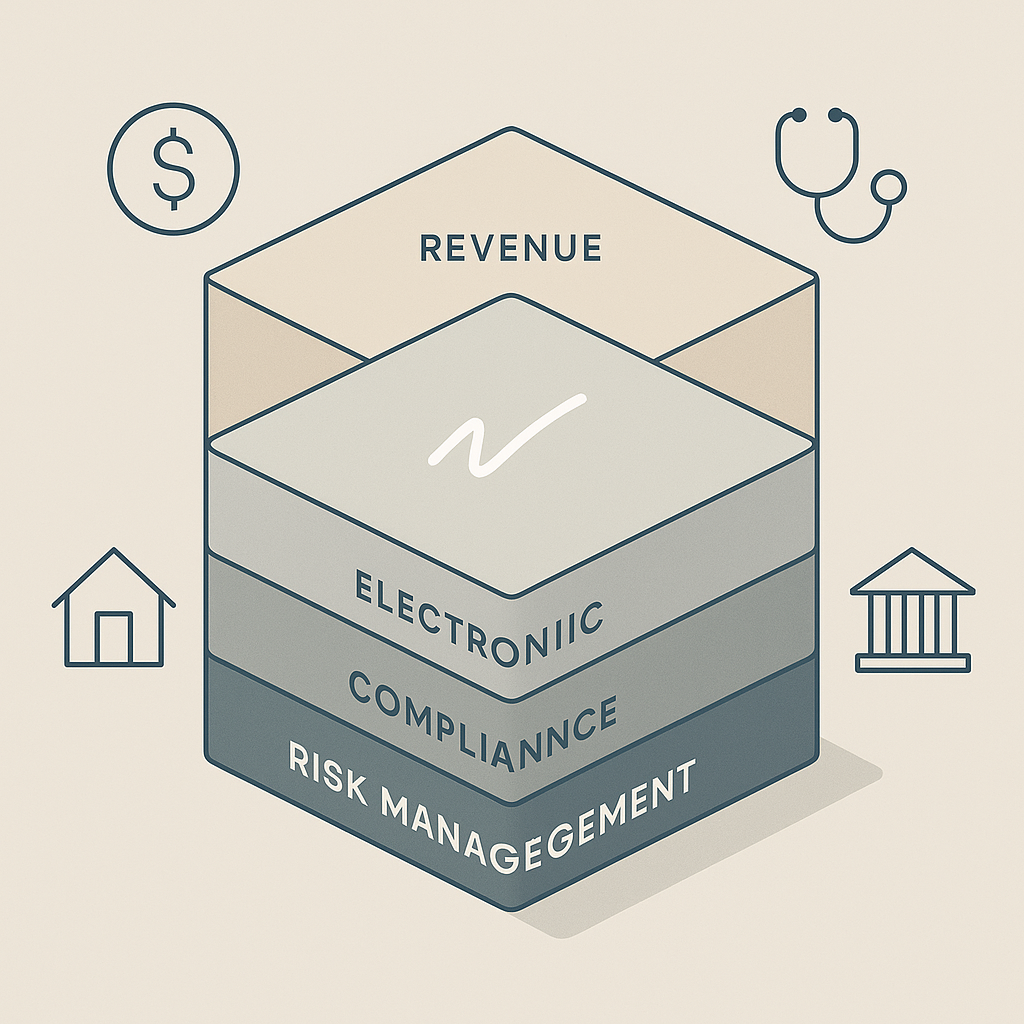
- Digital agreements are becoming a system of record for revenue, compliance, and risk management.
- E-signature is no longer a point tool; it is a platform spanning sales, HR, procurement, and customer lifecycle operations.
- Regulation is accelerating adoption in finance, healthcare, real estate, and the public sector—not slowing it down.
“When you project a 40%+ CAGR over nearly a decade, you’re not just looking at tool adoption; you’re watching the emergence of a new digital infrastructure layer for how organizations commit, comply, and transact.”

The Numbers Behind a 41.3% Growth Trajectory
While the new forecast out to 2034 is among the most aggressive to date, it sits on top of an already strong consensus that the digital signature and e-signature category will expand rapidly through the end of this decade.
Recent market studies show:
- Grand View Research estimates the global digital signature market will grow from about $5.2 billion in 2024 to $38.2 billion by 2030, a CAGR of 40.5% from 2025 to 2030.(grandviewresearch.com)
- MarketsandMarkets projects the market to reach approximately $70.2 billion by 2030, at a CAGR of around 38–39% from the mid-2020s.(prnewswire.com)
- Precedence Research forecasts the digital signature market to grow from about $12.2 billion in 2025 to roughly $238.4 billion by 2034, representing nearly 40% CAGR over that period.(precedenceresearch.com)
The new outlook pushing totals to $289.2 billion by 2034 and a 41.3% CAGR essentially extends these existing trendlines, reflecting expectations that adoption will intensify in large enterprises, heavily regulated sectors, and mid-market organizations that are still early in their digital workflow journeys.
 te>
te>
“Multiple analysts are already converging around upper-30s to low-40s CAGR through 2030. A 41%+ run rate out to 2034 assumes that today’s experimentation phase in many departments gives way to standardized, organization-wide agreement platforms.”
Where Adoption Is Surging: From Sales Desks to Compliance Hubs
Core Enterprise Workflows
The report highlights that electronic signature software is no longer confined to contract desks or legal teams. Instead, adoption is broadening across:
- Sales and revenue operations – Quote approvals, MSAs, renewals, upsell and cross-sell agreements, and channel partner contracts.
- Human Resources – Offer letters, onboarding packs, policy acknowledgments, NDAs, benefits enrollment, and contractor agreements.
- Procurement and vendor management – Purchase agreements, supplier onboarding, service-level agreements, and compliance attestations.
Grand View Research data for organizational end-users shows a 41% CAGR through 2030, underscoring how quickly businesses are standardizing on digital signatures internally.(grandviewresearch.com)
Regulated Industries: Finance, Healthcare, Real Estate, Government
Regulation has become a principal driver rather than a barrier. Market researchers note that frameworks such as the EU’s eIDAS, the U.S. ESIGN Act and UETA, and similar laws across more than 70 countries now recognize electronic and digital signatures as legally binding, provided appropriate controls are in place.(globalmarketstatistics.com)
This legal foundation is powering deep adoption in:
- Financial services (BFSI) – Account openings, loan agreements, wealth management mandates, card issuance, and insurance policies.
- Healthcare – Patient consent forms, telehealth authorizations, HIPAA-related acknowledgments, and payer-provider contracts.
- Real estate – Purchase and sale agreements, lease contracts, disclosures, and property management workflows.
- Government and public sector – Licensing, permits, citizen services, internal HR, and procurement documentation.
Industry data consistently identifies BFSI and government as leading verticals for digital signature adoption, with healthcare and real estate among the fastest-growing segments.(grandviewresearch.com)
“E-signature is evolving from ‘nice-to-have’ convenience tech into a regulated control point for identity, non-repudiation, and auditability across high-stakes transactions.”
From Tool to Platform: E-Signature as Digital Infrastructure
The central theme of the 2034 outlook is that electronic signature software is becoming foundational to how organizations manage agreements and digital trust. Several structural shifts support that thesis:
- Platform consolidation: Enterprises are moving from scattered point tools to a unified, organization-wide agreement platform that integrates with CRM, ERP, HRIS, and document management systems.
- API-first and workflow-centric design: Leading solutions increasingly provide low-code/no-code workflow builders and robust APIs to embed e-signature steps directly into existing applications.
- AI and analytics layers: Vendors are rolling out AI features—such as automatic clause detection, risk scoring, and intelligent routing—to transform signatures from a “final step” into a continuous source of operational insight.(globalmarketstatistics.com)
Modern players such as QuickSign exemplify this shift, positioning their platforms not just as signing utilities but as end-to-end digital agreement engines that handle template generation, routing, tracking, and audit-ready storage for organizations of all sizes.
What a 41% CAGR Means for Technology and Procurement Leaders
1. E-Signature Will Be an Enterprise Standard, Not a Departmental Choice
As spending accelerates, CIOs and CPOs are increasingly making e-signature a cross-enterprise standard rather than leaving adoption to individual departments. This has several implications:
- Vendor consolidation: Expect rationalization from multiple overlapping tools to one or two strategic platforms.
- Centralized governance: Standard policies for identity verification, signing levels (simple, advanced, qualified), and retention/audit management.(marketsandmarkets.com)
- Stronger integration expectations: Native connectors to Salesforce, Microsoft 365, Google Workspace, SAP, Workday, and industry-specific systems will become non-negotiable.
2. Security, Compliance, and Digital Identity Will Dominate RFPs
As agreement volume grows, so does exposure to fraud and regulatory risk. Market research already points to security and compliance as top buying criteria, with demand rising for capabilities such as PKI-based signatures, strong identity verification, granular audit trails, and tamper-evident storage.(prnewswire.com)
Buyers should scrutinize:
- Alignment with eIDAS, ESIGN, UETA, and sector-specific rules (e.g., HIPAA, PCI-DSS).
- Availability of Advanced/Qualified Electronic Signatures for high-risk workflows.
- Data residency, encryption, and key management practices.
3. Efficiency Gains Move From “Soft Benefit” to Hard P&L Impact
With agreement volume in large organizations easily reaching tens or hundreds of thousands per year, small time savings per transaction translate into substantial financial impact. Analysts highlight reductions in cycle time, error rates, and abandonment as key ROI drivers behind the market’s rapid expansion.(grandviewresearch.com)
Executives evaluating e-signature investments should model:
- Shorter sales cycles and faster time-to-cash.
- Lower cost per agreement vs. manual, paper-based processes.
- Reduced compliance overhead and audit preparation time.
Implications for Businesses Already Using—or Considering—E-Signatures
Benchmarks for Enterprise Adoption
Given the projected CAGR of 41.3% through 2034, organizations can expect continuous innovation and expanding use cases. To stay competitive, business leaders should benchmark their maturity along three axes:
- Coverage: What percentage of contracts, HR documents, procurement agreements, and customer forms are fully digital, from creation through signature to archiving?
- Integration: Are e-signature steps embedded directly into your CRM, ERP, HR, and line-of-business systems—or are teams still manually uploading PDFs?
- Governance and analytics: Do you have a single, searchable agreement repository with standardized access controls, reporting, and lifecycle management?
Opportunities for SMBs and High-Growth Companies
While many of the headline forecasts are driven by large enterprises and governments, analysts also highlight rapid adoption among small and medium-sized businesses (SMBs) seeking to compete digitally.(bonafideresearch.com)
Cloud-native platforms like QuickSign lower the barrier to entry by offering simple onboarding, self-service templates, and flexible pricing—often including free tiers—to help smaller teams digitize contracts, NDAs, and basic HR or client documents without complex IT projects.
Looking Ahead: E-Signatures as the Front Door to Digital Trust
As we look toward 2034, the projected growth from roughly $12.9 billion to $289.2 billion in electronic signature software revenue is about more than volume. It signals a structural change in how organizations establish trust and commit to obligations in a digital-first economy.
For business leaders, the key takeaways are clear:
- E-signature is evolving into a strategic control point for compliance, security, and revenue recognition.
- Platform decisions made in the next 12–24 months will likely define your agreement infrastructure for the next decade.
- Early movers that fully digitize their agreement lifecycle will gain sustainable advantages in speed, customer experience, and operational resilience.
“In a world where every critical relationship—customer, employee, supplier, citizen—is mediated by an agreement, the systems that manage those commitments become just as strategic as your ERP or CRM.”
Conclusion and Call to Action
With market forecasts pointing to a 41.3% CAGR through 2034, electronic signature platforms are set to become one of the defining categories of enterprise software over the next decade. For organizations that have not yet standardized their e-signature approach—or that still rely on fragmented tools across departments—the window to get ahead of this curve is open now.
If you are evaluating options, consider starting with a flexible, cloud-based platform that can grow with your needs. For example, QuickSign offers an accessible on-ramp for teams looking to modernize their agreement workflows without heavy upfront investment.
Try QuickSign for free - generate 2 documents and send 1 document to unlimited recipients at no cost
Whether you’re in sales, HR, procurement, finance, healthcare, real estate, or the public sector, the message from the latest market data is the same: electronic signature software is moving from optional add-on to essential backbone of digital business. The question for leaders is no longer whether to adopt it—but how quickly you can build a coherent, future-ready agreement strategy.