Freelancer Contract Software Benchmarks Highlight Cost Savings Over Stacked Point Tools
Discover how freelancer contract software pricing beats stacked point tools, with benchmarks that reveal big cost savings and smarter contract management.
Freelancer Contract Software Benchmarks Highlight Cost Savings Over Stacked Point Tools
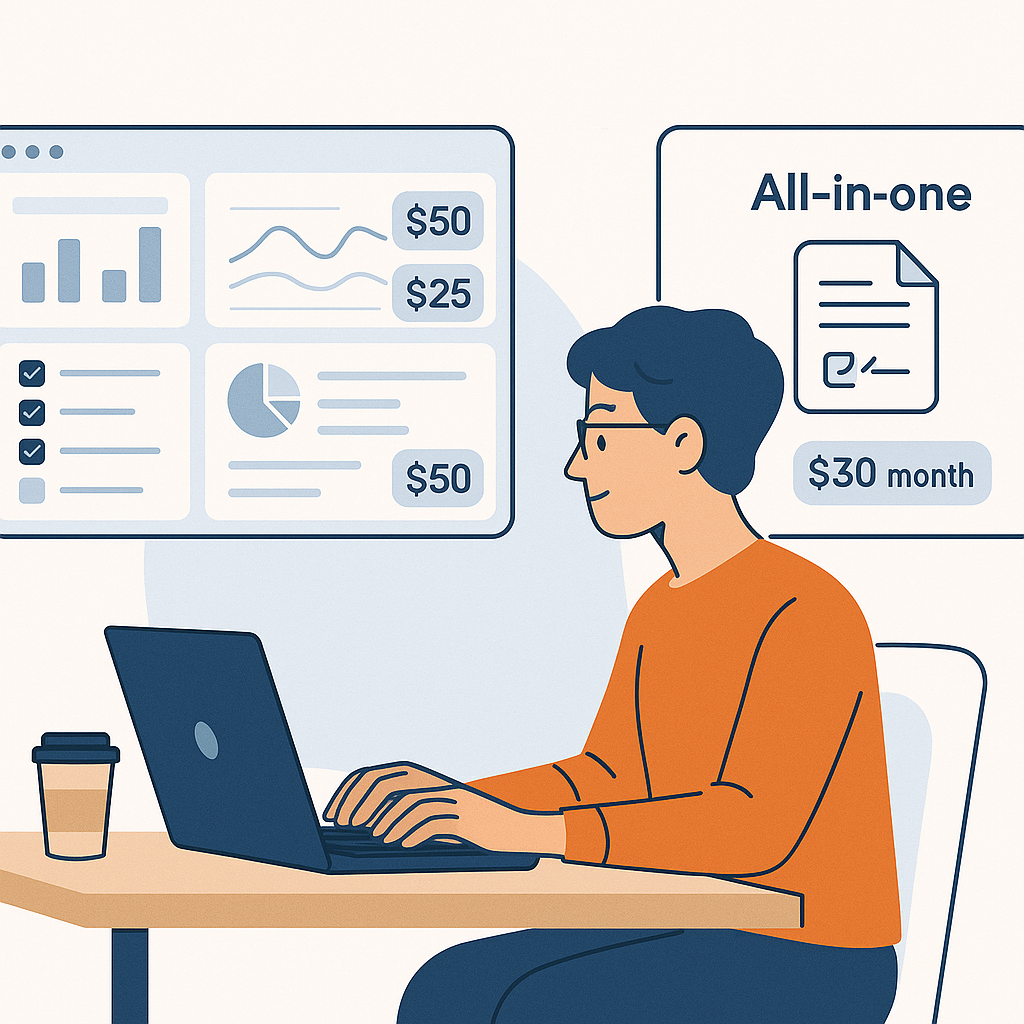
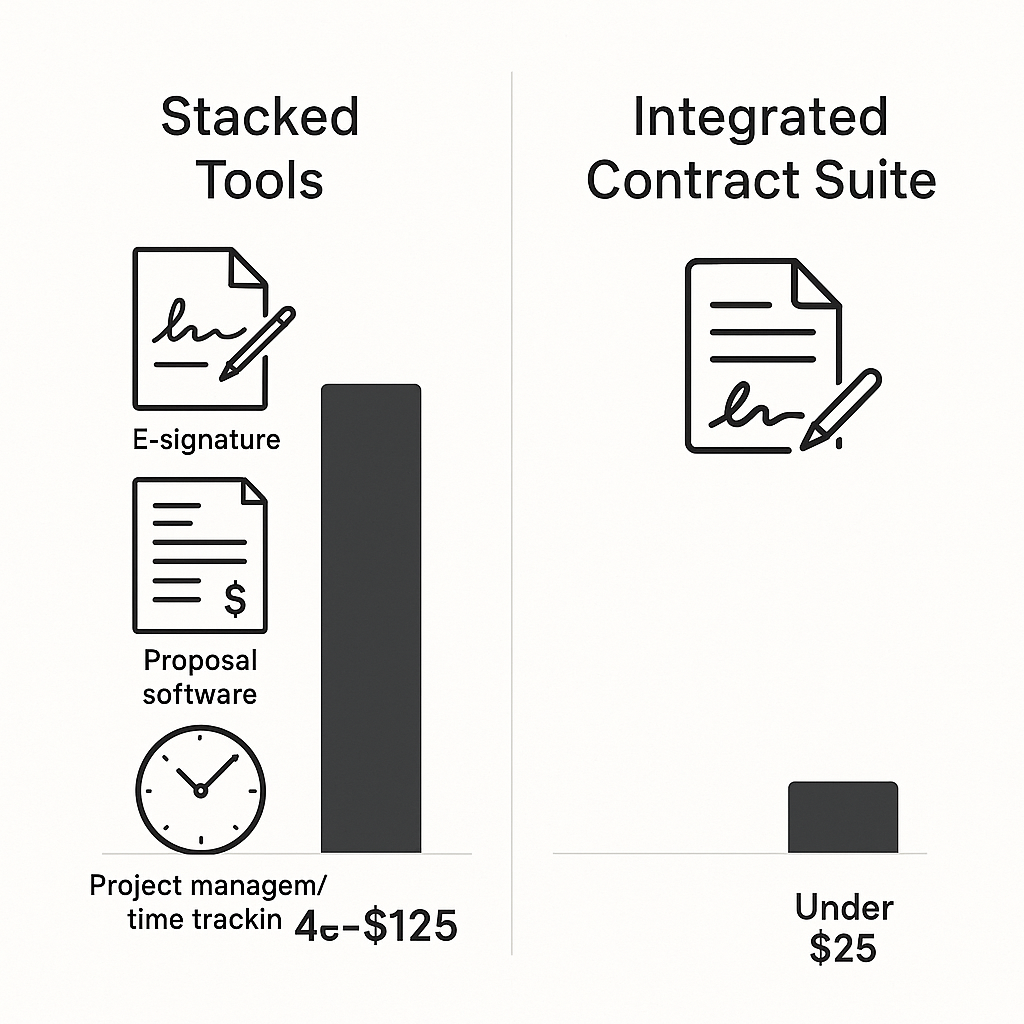
New pricing benchmarks released in early 2026 are reshaping how freelancers and small businesses think about their contract software stacks. Analysts tracking e‑signature and contract tools now estimate that the typical solo professional can easily spend $40–$125 per month when combining separate apps for e‑signatures, proposals, and project management. In contrast, integrated suites that bundle unlimited e‑signatures with client portals, time tracking, and invoicing often come in under $25 per month — and in some cases at a flat rate for an entire team. (plutio.com)
This shift is pushing many independent professionals to rethink whether they really need three or four different subscriptions to manage what is, in practice, a single end‑to‑end workflow: drafting a contract, sending it for signature, tracking the work, and getting paid.
Why This Matters for Freelancers and Small Businesses
Freelancers and small agencies have historically stitched together a “stack” of tools:
- A standalone e‑signature app ($10–$25 per user/month)
- A proposal or document‑creation tool ($15–$50/month)
- A separate project management or time‑tracking platform ($10–$25/month)
Recent reviews of contract software for freelancers note that this mix quickly drives up total cost of ownership, especially when each product uses per‑user pricing or caps signatures by “envelope.” (plutio.com)
Benchmark reports on e‑signature pricing put the average small‑business plan at around $25 per user per month, with many providers imposing limits on how many documents can be sent before overage fees kick in. For freelancers sending a few contracts a week, those caps may not seem critical at first — but as client volume grows, extra signature or “envelope” charges can significantly inflate monthly spend. (esignglobal.com)
Key insight: The apparent affordability of individual tools often disappears once you add up per‑user licenses, signature quotas, and the time lost to moving data between disconnected systems.
The Benchmark: Integrated Versus Stacked Tools
Stacked Point Tools: Higher Costs, Fragmented Workflows
Industry comparisons in late 2025 and early 2026 consistently show that freelancers using separate apps face both higher costs and more friction:
- Standalone e‑signature tools: Common plans range from about $10 to $25 per user per month for small teams, often with document send limits or envelope quotas. (esignglobal.com)
- Proposal/document creation software: Sales‑oriented platforms that combine proposals and contracts frequently start around $19–$35 per user per month, rising to $49 or more for full feature sets. (research.com)
- Project management and time tracking: Freelancer‑focused suites and invoicing platforms typically add another $10–$25 per month, depending on team size and feature depth. (clientary.com)
In practice, a solo consultant might pay:
- $15/month for an e‑signature app
- $19/month for proposal software
- $15/month for project tracking
That’s $49/month for a single person — before any per‑signature fees or paid add‑ons.
Integrated Suites: Unlimited E‑Signatures, Single Subscription
By contrast, an emerging class of integrated freelancer platforms bundle core client‑facing workflows into one subscription. Recent examples place pricing around $19–$25/month for plans that include unlimited contracts and signatures, proposals, projects, invoicing, and client portals in a single workspace. (plutio.com)
These platforms emphasize:
- Unlimited e‑signatures instead of per‑envelope billing
- Client portals where contracts, messages, and invoices live together
- Integrated time tracking so hours roll directly into invoices
- Simple, flat pricing with no per‑user surprises
Benchmark analyses of contract tools for freelancers now position “all‑in‑
one” suites as delivering 20–40% subscription savings versus stacking separate e‑signature, proposal, and project apps — before factoring in time saved on admin work. (plutio.com)

What’s Driving the Consolidation Trend?
Budget Pressure and Predictable Costs
With many freelancers operating on thin margins, predictable monthly spend is increasingly valued over granular feature choices. Surveys of SMB‑focused e‑signature tools show that per‑user and per‑envelope pricing remain the norm, but can feel misaligned with how small teams actually work: one month might require a burst of contract activity; the next might be quiet. (esignglobal.com)
Flat‑rate subscriptions — whether for a single user or an entire small team — make it easier to forecast costs and avoid “bill shock” from overages or extra seats added during busy periods.
Workflow Friction and Lost Time
Beyond pricing, freelancers increasingly cite workflow friction as a hidden cost of stacked tools. Moving from a proposal builder to a separate e‑signature platform, then into a project board and invoicing app, introduces:
- Duplicate data entry (client details re‑typed multiple times)
- Version confusion (different tools storing different copies of the contract)
- Longer turnaround times on signatures and approvals
Recent guides to digital contract workflows estimate that integrated platforms can save solo freelancers 5–10 hours per month by eliminating manual PDF prep, email attachments, and cross‑tool copy‑paste — time that can instead be spent on billable client work. (influenceflow.io)
How QuickSign Fits Into the New Benchmark
Within this shift toward consolidation and transparent pricing, QuickSign positions itself as a modern, small‑business‑first alternative to legacy e‑signature providers.
Flat‑Rate Pricing Designed for Small Teams
While many e‑signature products still charge per user, QuickSign follows the integrated‑suite trend with a simple, flat‑rate $15/month plan for your whole team. There are no per‑seat licenses to juggle and no envelope caps hiding in the fine print — a notable contrast to enterprise‑oriented tools where costs can quickly escalate with each new user or document volume tier. (quicksign.it)
For freelancers used to paying $30–$50/month across multiple tools, that $15 flat rate can bring contract software spend back under control.
AI‑Powered Document Generation
One of the clearest ways to shrink a stacked tool budget is to reduce the number of products in the first place. Instead of paying separately for contract templates or proposal‑creation tools, QuickSign includes AI Document Generation that can draft contracts, NDAs, and other legal documents directly from a prompt.
Paired with a generous free tier — including 2 AI document generations and 1 document send to unlimited recipients — this allows freelancers to build and send professional contracts without committing to multiple paid subscriptions. (quicksign.it)
Effortless Sending and Real‑Time Tracking
In line with the benchmark focus on workflow consolidation, QuickSign streamlines the signature process itself:
- Effortless sending: Upload a PDF, drag and drop signature fields, and send in a few clicks.
- Real‑time tracking: See whether a document is sent, opened, viewed, or signed, so you can follow up with the right context. (quicksign.it)
These capabilities mirror the integrated suites emerging in freelancer benchmarks, but at a price point calibrated for solo professionals and lean teams.
Practical Takeaways for Small Business Document Workflows
1. Audit Your Current Stack and True Monthly Cost
Start by listing every tool you use in your contract workflow:
- E‑signature software
- Proposal or quote builder
- Project management / time tracking
- Invoicing or client portal platform
For each, note:
- Base subscription price
- Per‑user or per‑seat charges
- Any limits on documents or “envelopes”
- Add‑on fees (e.g., advanced features, storage)
Compare this total to the integrated platforms now on the market, many of which bundle unlimited e‑signatures and core client workflows in the $19–$25/month range — and, in the case of QuickSign, at a flat $15/month. (plutio.com)
2. Prioritize Unlimited E‑Signatures and Clear Caps
Signature limits are one of the easiest ways for costs to spiral. When evaluating tools, look for:
- Unlimited e‑signatures with no per‑envelope overages
- Simple, published pricing grids with no “call for quote” tiers
- Free plans that let you test your real‑world workflow before upgrading
Benchmarks show that once you exceed 50 signatures per month, per‑signature pricing can climb to nearly $1.50 per document in some markets — a non‑trivial expense for busy agencies and consultancies. (legalprod.com)
3. Factor in Time Savings, Not Just Subscription Fees
Even if a stacked tool setup looks comparable in price, consider the hours spent coordinating proposals, contracts, and invoices across disconnected apps. Recent workflow studies suggest that integrated contract platforms save freelancers several hours per month by keeping proposals, contracts, and signed documents in one place and eliminating manual follow‑up. (clientary.com)
For a freelancer billing $75–$150 per hour, reclaiming even three hours monthly easily outweighs a modest subscription difference.
4. Use AI to Reduce Legal and Admin Overhead
Finally, the 2026 benchmarks highlight growing use of AI in contract workflows — not just for signatures, but for document creation. Instead of buying separate template packs or paying a lawyer for every routine agreement, freelancers are starting with AI‑generated drafts and then having them reviewed as needed.
Platforms like QuickSign that bake AI Document Generation directly into the e‑signature flow allow small businesses to consolidate tools while still elevating the professionalism and consistency of their contracts.
The Bottom Line: Consolidation as a Cost‑Saving Strategy
The latest contract software benchmarks confirm what many freelancers have suspected: stacking separate tools for proposals, contracts, signatures, and project tracking often leads to unpredictable costs and fragmented workflows. Integrated platforms — especially those offering unlimited e‑signatures, client portals, and time tracking under a single subscription — now provide a clearer, more budget‑friendly path.
For independent professionals and small teams, the opportunity in 2026 is to simplify: fewer tools, flatter pricing, and a more coherent client experience from first proposal to final invoice.
Looking for an affordable e-signature solution? Try QuickSign for free - no credit card required.