Freelancers Gain New Contract Management Options with Updated Rankings and Pricing Data
Discover the best freelancer contracts with new rankings, pricing data, and tools. Compare, customize, and confidently manage every client agreement.

Freelancers Gain New Contract Management Options with Updated Rankings and Pricing Data
New research into contract management software shows a fast‑maturing market tailored to freelancers and solo professionals, with more tools bundling secure e‑signatures, templates, and real‑time collaboration into free tiers and sub‑$20 monthly plans. For independent workers managing a steady flow of proposals, NDAs, and client agreements, this shift promises enterprise‑style contract workflows without the need to hire back‑office staff or invest in complex legal infrastructure.
Why Contract Workflows Are Becoming a Freelance Bottleneck
The timing of this new wave of freelancer‑focused contract tools is no accident. Analysts estimate that the global freelance workforce reached around 1.57 billion people in 2025, or roughly 46–47% of the global workforce, with the United States alone home to more than 76 million freelancers and independent professionals.(capitalcounselor.com) That number is projected to keep rising toward a majority of the U.S. labor force over the next few years.
At the same time, the freelance platform market itself—tools that help independents find work, invoice clients, and manage relationships—has grown to an estimated $7.65 billion in 2025, on track to more than double by 2030.(amraandelma.com) While marketplaces like Upwork and Fiverr get most of the attention on YouTube tutorials and beginner guides, many experienced freelancers now say their true bottleneck isn’t finding a client—it’s handling all the paperwork that comes after a lead says “yes.”
For a growing share of freelancers, contracts have become the new admin headache: every new client often means a new NDA, a revised scope of work, and one more agreement to track across email threads, PDFs, and shared drives.
Research into the freelance economy also shows that many independents are moving into higher‑value knowledge work—consulting, marketing, design, and technical services—with average U.S. freelance incomes often in the mid‑five figures and top performers crossing six figures.(dojobusiness.com) These are precisely the professionals for whom mismanaged contracts can mean delayed payments, scope creep, or even legal exposure.
What the Latest Rankings Reveal About Freelancer‑Friendly Contract Tools
Against this backdrop, recent rankings and comparison studies of contract management platforms highlight a clear trend: more vendors are carving out packages specifically for solo professionals, creators, and micro‑agencies.
Pricing: Free Tiers and Sub‑$20 Plans Become Standard
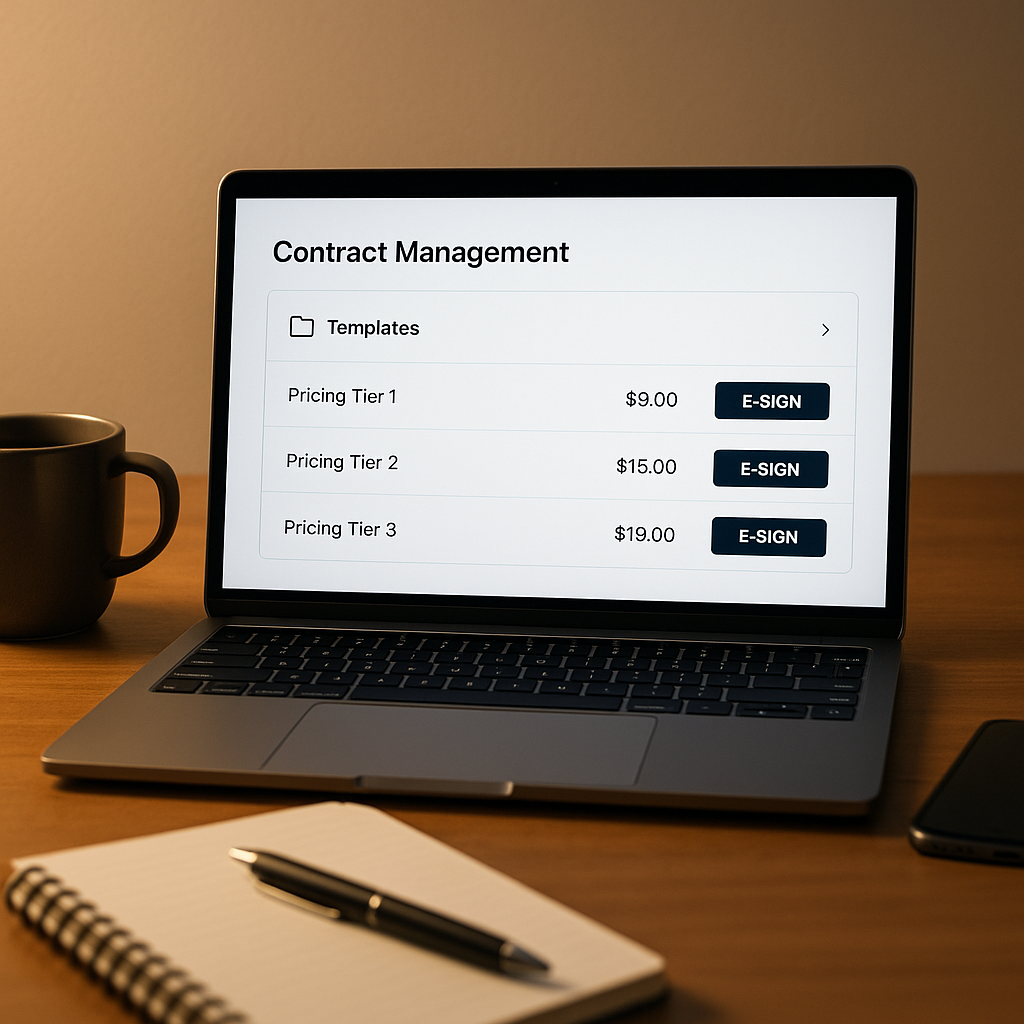
Updated pricing data across leading e‑signature and contract tools show a tight clustering around entry‑level plans in the $10–$20 per month range for individual users, with most including:
- Unlimited or high‑cap e‑signature sends
- Basic template libraries for proposals and simple NDAs
- Activity history and notifications when a client views or signs
Crucially for freelancers just starting out, many providers now offer free tiers that support a limited number of documents per month—often enough to cover early‑stage solo work or a side hustle, without requiring an upfront subscription commitment.
This mirrors broader SaaS trends in the freelance and creator economy, where commission‑free platforms and low‑entry‑cost tools are increasingly preferred by independents seeking to maximize their margins.(jobbers.io)
Features: From Static PDFs to Live, Collaborative Contracts
On the feature side, reviewers and analysts note a clear move away from static “sign this PDF and email it back” workflows toward richer, cloud‑based contract experiences designed for constant iteration. The most highly ranked freelancer‑oriented platforms now tend to include:
- Live editing and version control so both freelancer and client can adjust language in real time and maintain a clear audit trail.
- Reusable templates for common agreement types (proposals, NDAs, retainers, statements of work) tailored to creative, technical, and consulting fields.
- AI‑driven clause analysis that flags unusual indemnity, non‑compete, payment, or IP language and suggests edits in plain English.
- Integrated, legally binding e‑signatures, eliminating the need for separate signing tools or manual workarounds.
- CRM or platform integrations so contracts can be triggered directly from a lead or project
in tools freelancers already use.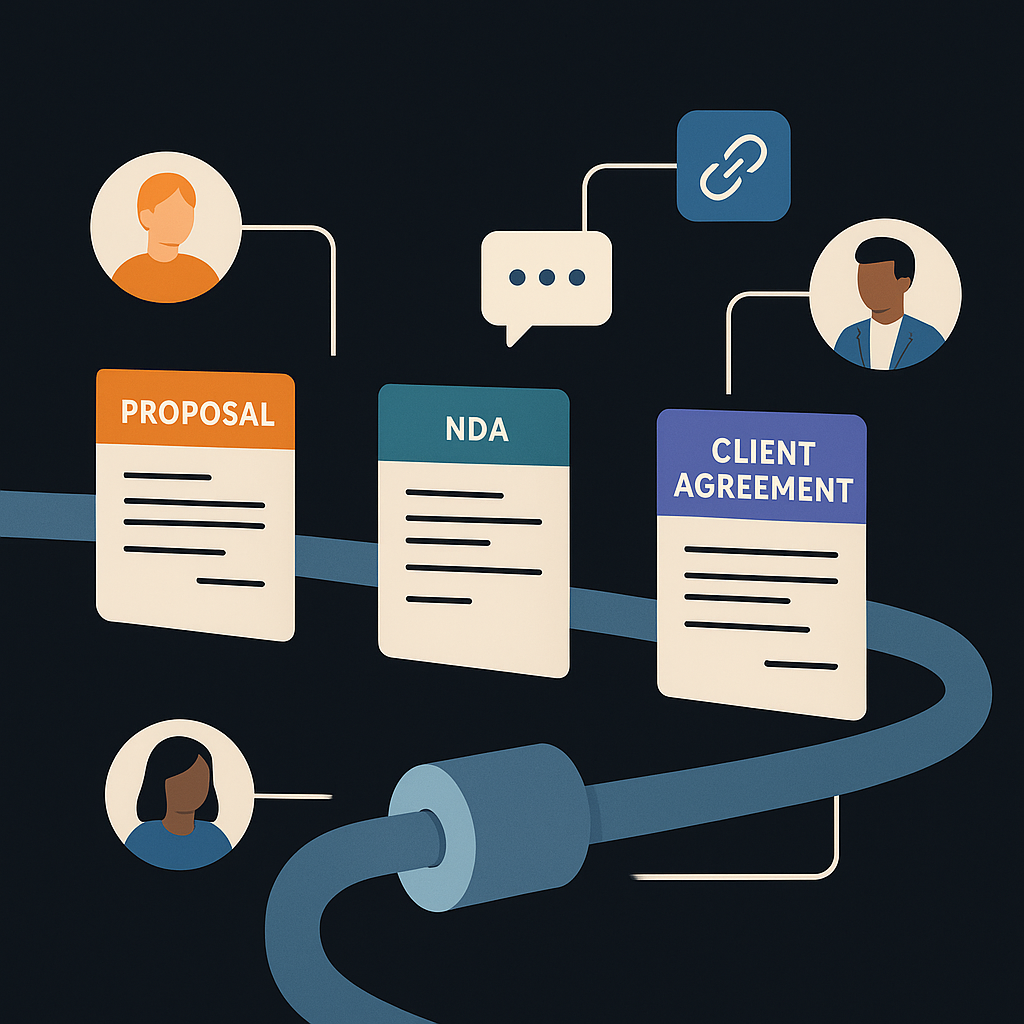
These capabilities are increasingly framed as a way for individuals to approximate what a full‑time in‑house legal or ops team would normally manage—only now it’s available “as a service” at consumer‑grade price points.
How Contract Management Is Evolving for Solo Professionals
Beyond pricing and features, the latest reports underscore broader shifts in how independent professionals approach client agreements:
1. Contracts as Part of the Sales Funnel
For many freelancers, contracts are no longer a bureaucratic afterthought; they are a core part of the sales experience. Real‑time editing and in‑document commenting help turn what used to be a slow email back‑and‑forth into a collaborative, trust‑building step—especially for high‑ticket engagements.
In this model, a freelancer can move from discovery call to proposal to signed agreement within hours instead of days, significantly improving close rates and cash flow.
2. AI as a Solo Professional’s “Second Pair of Eyes”
AI‑driven clause analysis tools are also gaining attention in current rankings and product announcements. Instead of sifting through dense legal text, freelancers can rely on automated systems to highlight:
- Risky or one‑sided clauses around liability, IP ownership, or non‑solicitation
- Inconsistent dates, payment schedules, or deliverable descriptions
- Missing essentials such as governing law, dispute resolution, or termination language
While these tools do not replace lawyers, they offer solo professionals a pragmatic way to reduce risk before they click “Send for signature”—particularly important in a landscape where regulatory scrutiny of gig work and independent contracting continues to increase.(theguardian.com)
3. Integrations Across the Freelance Stack
As more of the global workforce turns to independent work and content creation,(axios.com) contract tools are increasingly expected to “talk to” the rest of a freelancer’s workflow:
- Proposals generated from a CRM opportunity or lead
- Contracts auto‑linked to invoices and payment reminders
- Client history and signed documents synced back into project management boards
This is particularly attractive for consultants, agency‑style creators, and technical freelancers who manage dozens of active clients and cannot afford to lose track of a single signed agreement.
The QuickSign Perspective: Modern Contract Management at Freelance‑Friendly Pricing
Within this fast‑evolving category, QuickSign.it positions itself squarely on the side of freelancers, solopreneurs, and small teams that need robust contract workflows without enterprise complexity or cost.
Unlike many enterprise‑focused tools that charge per seat, QuickSign offers a flat‑rate $15/month plan that covers the whole team—making it easier for micro‑agencies, studios, and partnerships to standardize their signing process as they grow. That flat pricing stands out in an industry where per‑user fees can quickly erode margins on modest client retainers.
For solo professionals, several capabilities align directly with the trends highlighted in recent research:
- AI Document Generation: Freelancers can generate complete contracts, NDAs, and basic service agreements using AI, starting from a short description of the project and terms—ideal for those without a legal background.
- Effortless Sending: The workflow—upload PDF, drag‑and‑drop e‑signature and form fields, send—matches the simplicity freelancers expect from modern SaaS, while still supporting legally binding signatures.
- Real‑time Tracking: Status updates show when a client has opened, viewed, or signed a document, helping independents time their follow‑ups and avoid awkward “just checking in” messages.
To lower the barrier even further, QuickSign.it offers a free tier that includes two AI‑generated documents and one document send to unlimited recipients. For many freelancers, that’s enough to cover a full project cycle—proposal, NDA, and signed agreement—before they commit to a paid subscription.
Practical Takeaways for Freelancers and Small Businesses
Given the rapid expansion of the freelance workforce and the proliferation of low‑cost SaaS tools serving it, independent professionals have more leverage than ever when choosing contract software. A few practical guidelines emerge from the latest data and rankings:
1. Prioritize End‑to‑End Workflows Over Point Solutions
Instead of stringing together one tool for proposals, a separate app for e‑signatures, and manual follow‑up via email, freelancers can gain substantial time savings by adopting a single platform that handles:
- Template creation or AI‑assisted drafting
- Real‑time editing and negotiation
- Secure e‑signatures
- Status tracking and basic archiving
This reduces context switching and makes it easier to maintain consistent terms across clients.
2. Treat AI as a Contract Co‑Pilot, Not a Substitute for Judgment
AI clause analysis and automated drafting can help independents who lack legal training, but they still need to apply judgment—particularly around IP, exclusivity, and long‑term non‑compete language. Where stakes are high, having a lawyer review the base template, then using AI to adapt and scale it across future clients, is a sensible compromise.
3. Watch the True Cost of “Per Seat” Tools
For small teams and collectives, seemingly low per‑user fees add up quickly. Flat‑rate pricing models like $15/month for the entire team—as offered by QuickSign—can be significantly more predictable and affordable as a business scales from a solo practice to a multi‑person studio.
4. Integrate Contracts with Client Acquisition Channels
Many freelancers now acquire clients via platforms like Upwork, Fiverr, or social channels linked to personal websites and portfolios. Embedding streamlined contract workflows into that funnel—whether via CRM integrations or simple email links—helps convert inquiries into signed agreements faster, while ensuring clear scope and payment terms from day one.
5. Use Free Tiers Strategically
With so many contract tools offering limited free plans, independents can:
- Test multiple platforms in parallel on low‑risk engagements
- Compare the usability of live editing and collaboration features
- Evaluate the quality of AI‑generated contracts in their specific niche
From there, locking in a simple, flat‑rate subscription can standardize workflows and reduce administrative friction as client volume grows.
A More Level Playing Field for Solo Negotiators
As freelancing and digital creator work continue to expand globally, the contract table is gradually becoming less lopsided. Where once a solo designer or consultant might face a corporate client’s heavily lawyered agreement with little recourse, today’s AI‑enhanced, freelancer‑priced contract tools give independents more visibility, control, and negotiating power.
By combining AI document generation, intuitive e‑signature workflows, and real‑time tracking in a single, flat‑priced package, platforms like QuickSign.it embody the broader shift documented in recent rankings: enterprise‑grade contract capabilities, streamlined and priced for the individuals and small teams who increasingly power the global economy.
Looking for an affordable e-signature solution? Try QuickSign for free - no credit card required.