GoSign Desktop Vulnerability Raises Supply-Chain Risks for Qualified E‑Signatures
GoSign Desktop vulnerability exposes serious supply-chain risks for qualified e-signatures. Learn how GoSign Desktop flaws could impact your trust and security.

GoSign Desktop Vulnerability Raises Supply-Chain Risks for Qualified E‑Signatures
A newly disclosed set of vulnerabilities in GoSign Desktop, a qualified electronic signature client from Tinexta InfoCert, is raising alarm across government and enterprise circles that rely on the platform for legally binding digital workflows. With TLS certificate validation disabled in some configurations and an unsigned update mechanism in affected versions, security researchers warn that attackers could mount man‑in‑the‑middle and supply‑chain attacks capable of tampering with documents, stealing credentials and executing arbitrary code on trusted systems.(dailysecurityreview.com)
Why This Matters for Business and Government Workflows
The GoSign ecosystem plays a central role in European digital trust services. InfoCert’s qualified electronic signature (QES) solutions are widely used by public administrations, banks, utilities, and large enterprises to sign contracts, HR documents, procurement files and regulatory records that must stand up in court under eIDAS. Researchers note that GoSign handled hundreds of millions of signing transactions in a single year, underscoring its systemic importance.(ush.it)
When vulnerabilities surface in software that anchors a legal trust chain—especially software often installed with elevated privileges—the impact goes beyond traditional IT risk. A compromised e‑signature client can undermine:
- Document integrity – signed PDFs or XML documents may be altered before or after signing.
- Non‑repudiation – signers could plausibly deny their intent if compromise is proven.
- Regulatory compliance – public-sector bodies and regulated industries may breach security and procurement obligations.
- Supply‑chain security – attackers could pivot from desktop clients into back‑office systems and signing backends.
For CIOs, CISOs and business leaders who have championed digitization, the GoSign Desktop case is a stark reminder: even certified trust services depend on robust endpoint and update security.
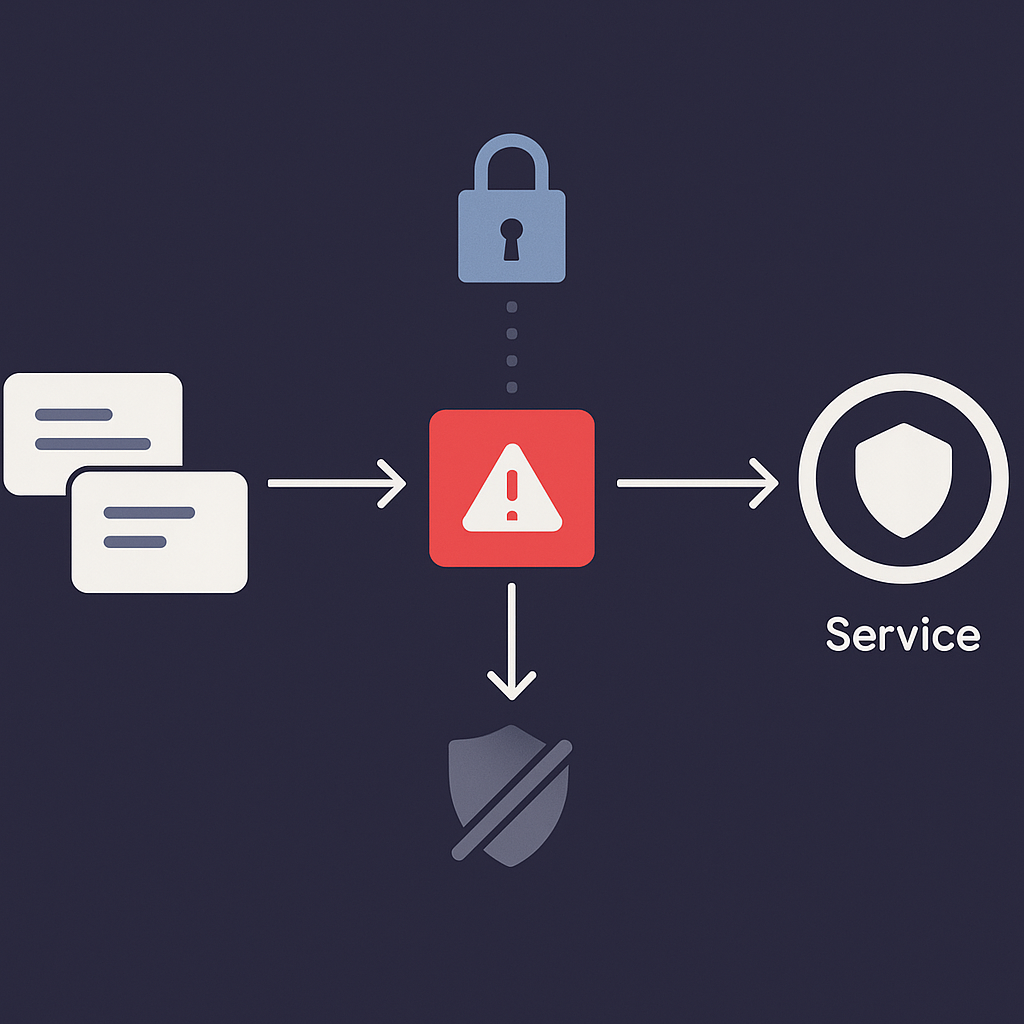
What Happened: Disabled TLS Checks and Insecure Updates
Improper TLS Handling Enables Man‑in‑the‑Middle Attacks
According to a detailed advisory by independent researchers from the ush.it team, GoSign Desktop up to version 2.4.0 disables TLS certificate validation when configured to use a proxy server. In these cases the software effectively sets the TLS verification mode to SSL_VERIFY_NONE in its networking components, removing any cryptographic assurance of the server’s identity.(ush.it)
This configuration flaw means that an attacker positioned on the network—on compromised Wi‑Fi, a malicious proxy, or an internal adversary—can present arbitrary TLS certificates and intercept or alter encrypted traffic without being detected by the client. Sensitive data at risk includes:
- Remote-signature and OAuth credentials
- Authentication tokens
- Documents in transit for signing or verification
- Update manifests and binaries
In some attack paths, the researchers demonstrated information disclosure of OAuth secrets, potentially opening the door to account takeover or further lateral movement.(ush.it)
Unsigned Update Mechanism Creates a Supply‑Chain Weak Point
The second—and more structurally significant—issue lies in GoSign Desktop’s update mechanism. Versions prior to 2.4.1 distributed updates via an unsigned manifest containing package URLs and SHA‑256 hashes. While hashes protect against accidental corruption, they do not authenticate the origin of the manifest itself.
In a coordinated advisory also tracked by VulnCheck as “GoSign Desktop < 2.4.1 Insecure Update Mechanism RCE,” researchers show that an attacker who can intercept traffic or control proxy settings can swap the legitimate manifest and package for a malicious pair with matching hashes. The client will then happily download and execute the attacker’s code as an official update.(vulncheck.com)
“Effectively, the update manifest’s authentication is entirely delegated to the TLS layer, which is not validated—thus rendering all authenticity guarantees ineffective.” – ush.it research advisory on GoSign Desktop(ush.it)
Because GoSign Desktop is often installed with administrator‑level permissions in government and ent

Timeline, Vendor Response and Partial Fixes
The ush.it team reports that it privately disclosed the vulnerabilities to Tinexta InfoCert earlier in 2025, providing technical details, proof‑of‑concept exploits, and remediation guidance. During an October 16, 2025 call, InfoCert representatives reportedly agreed to an October 31 deadline for a fix.(ush.it)
A subsequent release, GoSign Desktop 2.4.1, shipped on November 4, 2025 and introduced digital signature verification for the update manifest, addressing the most direct remote‑code‑execution and privilege‑escalation pathways tied to the unsigned updates. However, the TLS certificate validation issue when a proxy is configured remains unsolved, leaving information‑disclosure vectors open according to the researchers.(vulncheck.com)
A summary in recent vulnerability listings describes the remaining flaw as follows: GoSign Desktop through 2.4.1 disables TLS certificate validation when configured to use a proxy server, potentially allowing integrity protection to be bypassed if the proxy does not enforce valid certificates.(redpacketsecurity.com)
Key impacts highlighted by researchers include: OAuth secrets disclosure (not fixed), remote code execution (fixed in 2.4.1), and privilege escalation (fixed in 2.4.1).
As of late November 2025, public statements from InfoCert on the vulnerability, patch status and recommended mitigations remain limited, and some advisories criticize the vendor’s lack of communication and transparency during the disclosure process.(blog.rankiteo.com)
Industry Context: E‑Signature Trust Meets Software Supply Chains
The GoSign Desktop case exposes a broader tension in the digital‑trust ecosystem: cryptographic assurance is only as strong as the client and update channels that implement it.
InfoCert’s GoSign SaaS/web platform has obtained QC2 qualificationush.it) Yet the vulnerable Desktop client, typically deployed on endpoints under varying security regimes, fell short on basic secure‑update practices that are now considered table stakes in high‑assurance software:
- End‑to‑end TLS certificate validation, including through proxies
- Digitally signed and verified update manifests and binaries
- Defense‑in‑depth: not relying solely on transport security for update integrity
For the e‑signature industry, where products compete on compliance credentials—eIDAS, ETSI standards, national cloud certifications—this incident underscores that certifications do not automatically guarantee secure client implementations, especially across multiple deployment models (desktop, mobile, web).
It also aligns with a pattern seen in other sectors: attackers increasingly target trusted software distribution channels and security‑sensitive clients (VPNs, RMM tools, enterprise agents) because compromising these allows them to ride on top of established trust relationships.
Implications for Organizations Using GoSign and Other QES Clients
Immediate Risk Assessment and Technical Actions
Organizations currently using GoSign Desktop should take a tiered approach:
- Inventory and version check
- Identify all endpoints running GoSign Desktop and determine their versions.
- Prioritize systems used for high‑value or high‑volume signing workflows.
- Apply available patches
- Upgrade to version 2.4.1 or later to address the insecure update mechanism and the most direct RCE and privilege‑escalation paths.(vulncheck.com)
- Review proxy configurations
- Audit whether GoSign Desktop is configured to use explicit HTTP/HTTPS proxies.
- Where possible, avoid proxy modes that disable TLS validation; enforce enterprise TLS inspection policies that require valid certificates.
- Network segmentation and monitoring
- Place signing workstations in hardened network segments.
- Monitor for anomalous outbound connections and unusual update‑related traffic.
- Re‑validate critical documents and processes
- For high‑stakes transactions signed via vulnerable clients during risky periods, consider targeted reviews or compensating legal controls.
Strategic Re‑Evaluation of E‑Signature Architecture
Beyond immediate containment, the episode invites a deeper look at architectural choices for e‑signature deployments:
- Minimize heavy desktop agents for workflows where a hardened web/SaaS channel suffices.
- Centralize update control via managed enterprise repositories or package managers rather than ad‑hoc in‑app updaters.
- Demand software bills of materials (SBOMs) and update‑security documentation in RFPs and vendor due‑diligence questionnaires.
- Test e‑signature clients as part of red‑team exercises, not just their server‑side components.
Some organizations are increasingly turning to cloud‑native e‑signature platforms that emphasize secure APIs, web‑based signing and transparent update models. Solutions like QuickSign, for example, focus on browser‑based signing flows and API integrations, reducing reliance on privileged desktop components while still supporting robust legal and business use cases.
Lessons for the E‑Signature and Trust‑Services Market
The GoSign Desktop case is likely to reverberate across the broader trust‑services landscape in several ways:
- Regulators may tighten guidance on secure client and update mechanisms for qualified trust service providers under eIDAS and national schemes.
- Procurement teams will raise the bar on software‑supply‑chain questions when selecting signature and identity providers.
- Vendors will need to invest in secure‑development life cycles that treat desktop agents as critical infrastructure, not peripheral add‑ons.
- Customers will diversify their trust stack, combining multiple providers or adding independent verification layers for high‑value documents.
The core lesson: qualified electronic signatures are only as trustworthy as the weakest link in the implementation chain—from cryptographic modules and client apps to update pipelines and endpoint configurations.
Conclusion: Rebuilding Trust in Digital Signatures
As digital transformation marches on, organizations will continue to replace paper‑based processes with qualified electronic signatures. The GoSign Desktop vulnerability does not invalidate that trajectory—but it does highlight how fragile trust can become when widely deployed clients neglect basic security controls.
For business and IT leaders, the path forward is twofold:
- Demand transparent, verifiable security practices from trust‑service providers, including details about client hardening and update channels.
- Architect e‑signature workflows around modern, cloud‑first platforms that minimize local attack surface and make patching and observability easier.
Vendors that can combine strong legal assurances with secure‑by‑design software stand to gain from the current scrutiny. Platforms such as QuickSign, which emphasize streamlined, web‑based signing and clear pricing, offer an alternative path for organizations reassessing their risk exposure.
Call to action: If you’re evaluating a safer, more transparent e‑signature stack, consider trying a modern, cloud‑native option. Try QuickSign for free - generate 2 documents and send 1 document to unlimited recipients at no cost and experiment with digital workflows that keep both usability and security in focus.