Guide Highlights Budget-Friendly Legal Tools for Solo and Small Startup Founders
Discover budget-friendly startup legal tools solo and small founders trust to form, protect, and grow their businesses—with guidance you can actually use.

Guide Highlights Budget-Friendly Legal Tools for Solo and Small Startup Founders
A new 2025 guide aimed at solo and very early-stage startup founders is putting the spotlight on a growing category of budget-friendly legal tools—covering contracts, e-signatures, and basic compliance—that promise to replace many billable law-firm hours for routine work. For indie developers, no-code founders, and one- or two-person tech teams, the message is clear: a lean legal stack is no longer a luxury, it’s becoming the default.
Why a “Lean Legal Stack” Matters in 2025
Over the past two years, legal technology has shifted from an enterprise accessory to a core part of how small businesses and solo founders get work done. Recent surveys show AI and automation tools are rapidly entering legal workflows, with AI usage in contract review growing 75% year over year among legal teams.(legalontech.com) At the same time, small firms and solo practitioners are embracing generative AI, with one 2025 report finding that AI adoption in small law firms and solo practices nearly doubled, from 27% to 53% in a year.(lawnext.com)
For founders, the implications are straightforward:
- Routine documents are getting cheaper to produce. AI-backed drafting and template-based workflows make standard contracts, NDAs, and policies more accessible.
- E-signatures are now mainstream, not optional. By 2025, 60–80% of organizations across industries use some form of e-signature, and 95% are either using or planning to use it.(certinal.com)
- Paper is becoming a liability. In the legal sector alone, about 78% of law firms now rely on e-signature tools as part of their core stack.(textcontrol.com)
For a solo founder, these trends translate into a practical question: how far can you go with affordable, self-serve legal tools before needing a lawyer on retainer?
Inside the 2025 Guide: Core Categories of Startup Legal Tools
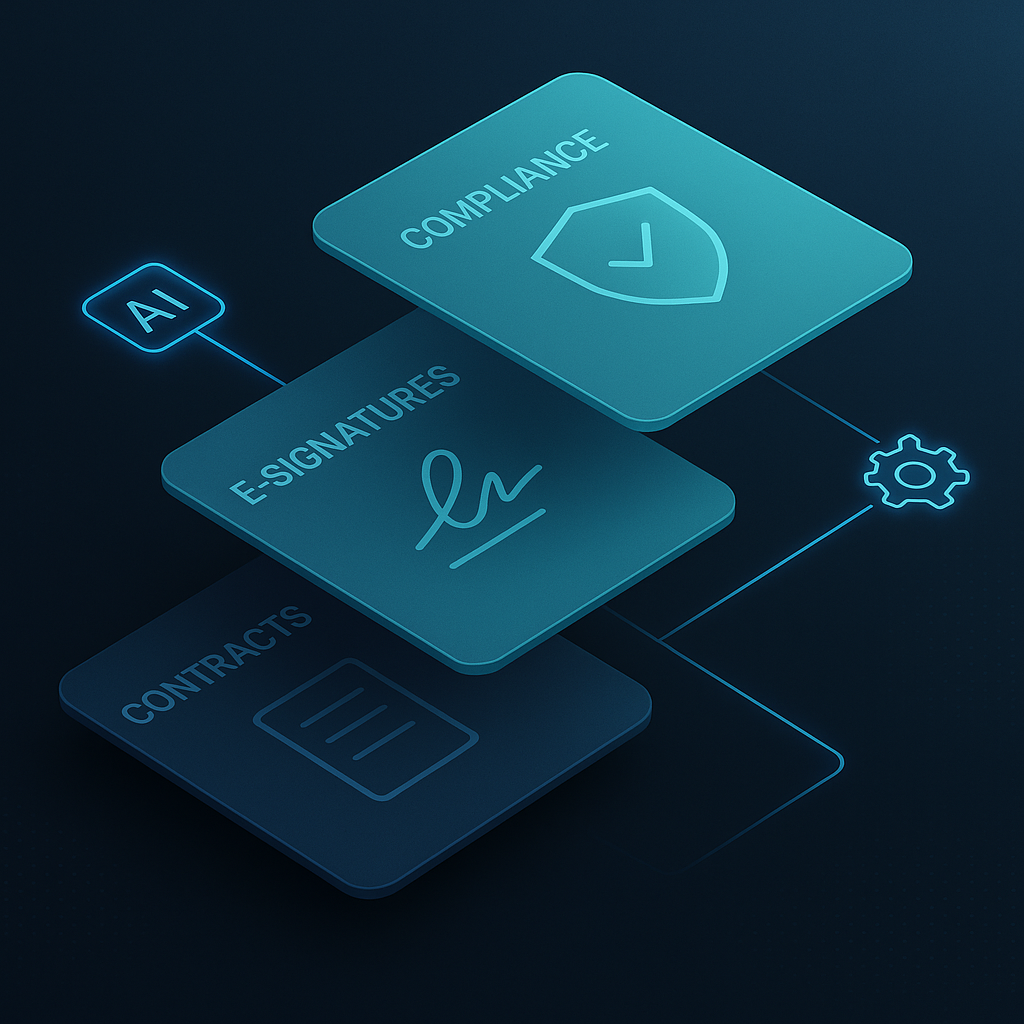
The new guide maps out a stack that covers three main pillars for solo and small startup teams: contract drafting assistants, lightweight e-signature platforms, and cap table and IP management tools. The emphasis is on products that are priced for one-person or very small teams, often with transparent subscriptions and generous free tiers.
1. Contract Drafting Assistants and Templates
Instead of starting every agreement from scratch or paying hourly for simple paperwork, many founders now lean on AI drafting assistants and structured templates. The guide highlights tools that help generate:
- Founders’ agreements and operating agreements
- Freelancer and contractor agreements
- Non-disclosure agreements (NDAs)
- Basic SaaS or service terms for early customers
These tools typically work by combining standardized clauses with prompts about the business model, governing law, and key commercial terms. This aligns with broader legal tech trends, where contract review and drafting have become natural early use cases for AI because they are rule-based and repeatable.(legalontech.com)
For “straightforward but essential” documents—NDAs, contractor agreements, pilot SaaS contracts—the guide suggests founders can safely start with AI-assisted templates, then reserve human lawyers for custom or high-risk matters.
2. Lightweight E-Signature for Everyday Deals
Next in the stack is e-signature—now expected by clients, contractors, and investors alike. The guide points out that adoption of e-signatures has surged across sectors, with digital signature tools forming a market worth over $12 billion in 2025 and projected to grow at nearly 40% annually through 2034.(certinal.com)
For small teams, the key requirements are:
- Simplicity: Upload a PDF, drop in signature and date fields, send.
- Affordability: Pricing that doesn’t scale per seat or per envelope.
- Visibility: Clear tracking of who has opened, signed, or stalled the document.
Unlike enterprise-level platforms that often bundle advanced workflow features at a premium and price per user, newer tools are starting to offer flat-rate subscriptions designed around how small teams actually work.
3. Cap Table and IP Management on a Budget
The guide also calls out lightweight tools that help founders keep control of ownership and intellectual property without a heavy legal bill. These include:
- Cap table tools for tracking founder equity, early employee options, and investor SAFEs or notes.
- IP and document vaults for storing assignment agreements, invention assignment IP clauses, and key filings.
- Complia
nce checklists for making sure basic filings and renewals don’t fall through the cracks.
These systems don’t replace corporate counsel, but they reduce the risk of messy ownership or missing paperwork when it’s time to raise capital or sell the business.
Where E-Signature Fits: From Contract Generation to Click-to-Sign
The guide stresses that e-signature isn’t an isolated tool, but the final mile in an end-to-end legal workflow: draft → approve → sign → store. As more contracts are generated or reviewed by AI, closing the loop with a secure, auditable e-signature platform is critical.
Key benefits for solo and small teams include:
- Speed: Digital signatures routinely cut turnaround times by more than half in many industries.(clauseflow.com)
- Remote-first operations: Contractors, advisors, and investors can sign from anywhere, often on mobile devices, which now account for a large share of completed e-signatures.(certinal.com)
- Compliance and audit trails: Timestamped logs and clear records reduce disputes and help with due diligence during fundraising.
QuickSign’s Perspective: A Legal Stack Built for Solo and Small Teams
Within this broader trend, tools like QuickSign are positioning themselves squarely around the needs of solo founders, freelancers, and small businesses rather than large enterprise legal departments.
Where many legacy platforms base pricing on per-seat or per-envelope models, driving up costs as a team grows, QuickSign offers a flat-rate subscription of $15 per month for the whole team, with a free tier that includes two AI document generations and one document send to unlimited recipients. This aligns well with the guide’s focus on predictability and low overhead for very small teams.
Key capabilities that map directly to the 2025 guide’s recommendations include:
- AI Document Generation: Founders can generate core legal documents—such as contracts and NDAs—using AI, instead of paying for custom drafting for every routine agreement.
- Effortless Sending: The workflow mirrors what the guide calls a “lightweight but complete” approach: upload a PDF, drag and drop signature and form fields, then send for signing.
- Real-Time Tracking: Status updates show when a document is viewed, signed, or stuck, helping small teams follow up at the right time without manual spreadsheets.
- Affordability: Unlike enterprise-focused solutions with complex seat-based pricing, QuickSign keeps costs straightforward at $15/month, making it easier for founders to budget.
For solo founders, the combination of AI document generation and simple e-signature in one tool means the entire lifecycle of a standard contract—from drafting to final signature—can happen in minutes, not days, and without per-user penalties.
Learning from Adjacent Trends: Entity Formation on a Budget
The guide’s recommendations also echo a wider movement toward DIY but structured legal processes. In the entity-formation space, for example, multiple resources now show how founders can form an LLC for under $100 by choosing low-fee states, avoiding unnecessary upsells, and handling simple steps like EIN applications themselves.(startupwise.com)
Applied to ongoing legal operations, the pattern is similar:
- Pay government or filing fees that are truly required.
- Use self-serve templates or AI generation for standard documents.
- Adopt affordable SaaS tools—such as e-signature and cap table software—to keep records organized.
- Reserve specialist lawyers for edge cases, fundraising rounds, or disputes where bespoke advice is critical.
This “hybrid” approach is what the 2025 guide suggests for early-stage solo and indie founders who want to remain lean while staying compliant and investor-ready.
Practical Takeaways for Small Business Document Workflows
For small businesses, freelancers, and indie product teams, the main lessons from the guide can be translated into a concrete roadmap.
1. Standardize Your Core Contracts
Identify the 3–5 documents you use most (for many small businesses: NDAs, client or project contracts, contractor agreements, and basic terms of service). Use AI tools—such as those in QuickSign—to generate clean, repeatable templates, and have a lawyer review them once if needed. From there, treat them as your standard playbook.
2. Move All Signatures to Digital
If even one or two workflows still rely on printing and scanning, they’re introducing friction, delay, and risk. With e-signature adoption now the norm across industries and a clear regulatory framework in major markets,(certinal.com) small businesses can confidently move everything from client contracts to HR paperwork into a digital signature process.
3. Track Status, Don’t Chase Email Threads
Instead of manually following up on unsigned contracts, use tracking features in tools like QuickSign to see who has opened, signed, or stalled. This visibility improves cash flow by shortening the time between sending a proposal and getting a signed agreement.
4. Keep Ownership and IP Organized from Day One
Use cap table and IP management tools early—even if there is only one founder today. Logging founder equity, advisor grants, and IP assignments as they happen will prevent costly cleanup work before a funding round or acquisition.
5. Know When to Call a Lawyer
The guide is clear that budget-friendly tools are best suited for straightforward, recurring documents. Custom fundraising rounds, cross-border deals, or disputes are still situations where professional counsel pays for itself. The win for founders is that, by using tools for routine work, they can afford to spend more selectively on strategic advice.
Solo and Small Founders Have More Legal Leverage Than Ever
In 2025, solo founders and small startup teams operate in an environment where AI drafting, e-signature, and lightweight compliance tools can cover much of the “legal busywork” that used to demand expensive billable hours. The newly published guide captures this shift, pointing to a future where founders assemble a lean, integrated legal stack that grows alongside their business.
For freelancers and small businesses in particular, the combination of AI contract generation, flat-rate e-signature, and simple tracking—offered by solutions like QuickSign—means they can move faster, close deals sooner, and stay organized without stretching their legal budget.
Looking for an affordable e-signature solution? Try QuickSign for free - no credit card required.