Industry Guides Rank Cost-Effective Legal Ops Software for Growing Small Businesses
Discover top-rated, cost-effective legal operations software for growing small businesses. Compare tools, cut costs, and scale smarter with legal operations.

Industry Guides Rank Cost-Effective Legal Ops Software for Growing Small Businesses
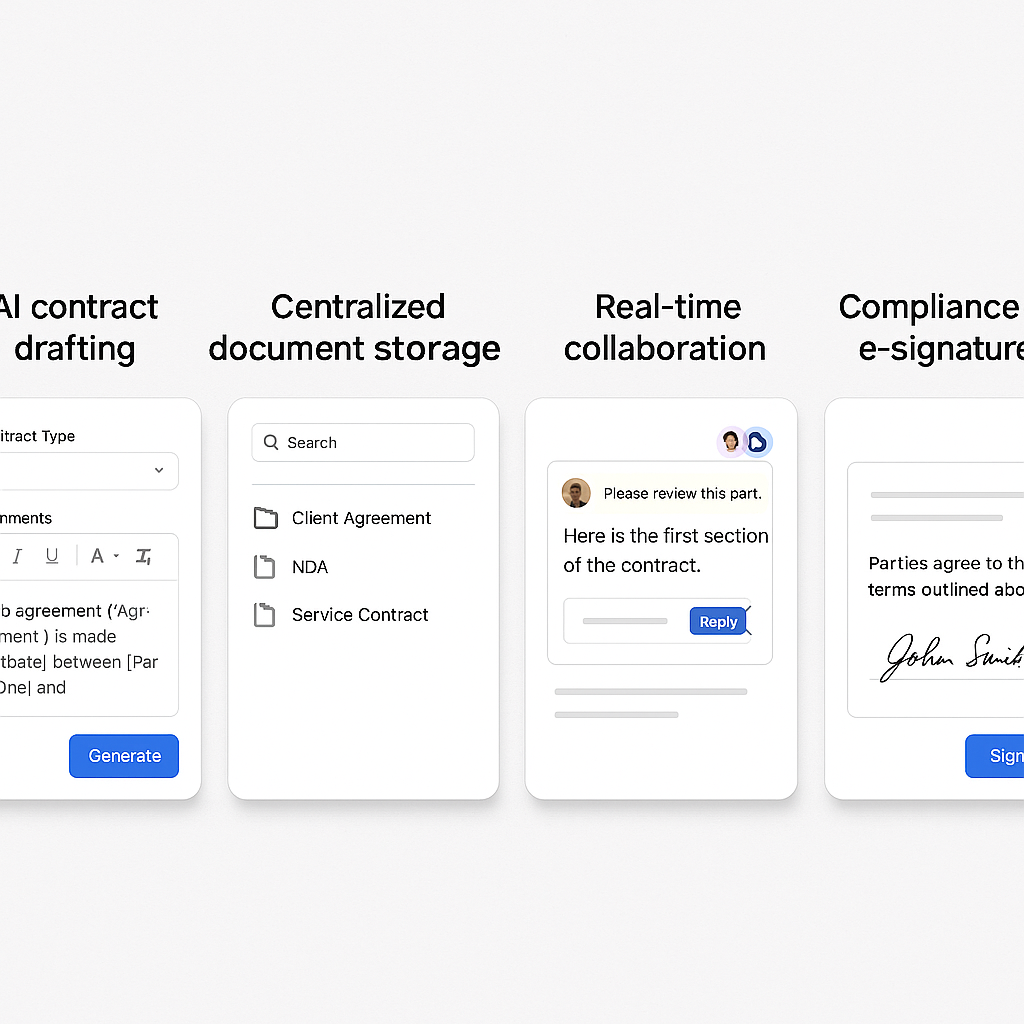
New 2026 legal operations software guides are zeroing in on a specific buyer: the fast-growing small business that needs big‑firm capabilities without big‑firm budgets. The latest rankings and buyer’s guides compare platforms on AI‑assisted contract drafting, centralized document storage, real‑time collaboration, and compliance‑ready e‑signatures—while explicitly flagging which tools are practical for lean teams and founders who still wear multiple hats.
Why Legal Operations Software Rankings Now Target Small Teams
The explosion of legal tech over the past two years has shifted from experimentation to deployment. Multiple surveys show AI adoption across the legal profession doubling or tripling year over year, as tools move from “nice to have” pilots into everyday workflows. (lawnext.com) At the same time, small firms and solo practitioners have become some of the fastest adopters of generative AI, with one report finding usage among small practices nearly doubled between 2023 and 2024. (lawnext.com)
While much of the early conversation focused on large law departments, recent research highlights how smaller teams stand to gain the most from automation. A 2025 benchmarking survey found that legal teams could cut contract cycle times by up to 73% with automation, reducing processing from 19 days to just 3—but nearly half still rely on email, Word documents and shared folders to manage contracts. (legalreader.com) For small businesses and startups, those manual bottlenecks can directly delay revenue, hiring and fundraising.
Industry analysts also note that AI‑driven contract review is moving quickly into the mainstream. One 2025–2026 study of in‑house legal teams found active use of AI in contract review doubled in a year and nearly quadrupled since 2024. (legalontech.com) Another survey reported a 75% year‑over‑year increase in AI adoption for contract review, with nearly two‑thirds of legal teams actively evaluating solutions. (legaltech-talk.com)
“AI for contract review is no longer a hypothetical—it’s becoming an essential tool to save time, turnaround contracts faster, and automate tedious work,” one survey author observed, adding that many teams are quickly reaching the point where they wonder how they ever managed contracts without it. (legaltech-talk.com)
This backdrop explains why 2026 legal ops rankings now devote entire sections to SMB‑friendly options—tools that unify contracts, matters and document workflows, integrate with familiar productivity suites, and price themselves for tight budgets rather than enterprise legal departments.
What the 2026 Legal Ops Rankings Emphasize for SMBs
Across multiple buyer’s guides and market analyses, four themes recur when tools are evaluated for growing small businesses, startups and independent professionals:
1. AI‑Assisted Contract Drafting, Not Just Review
Earlier generations of legal tech focused heavily on review and redlining. The 2026 wave of rankings, however, highlight platforms that also generate first drafts of contracts, NDAs and basic service agreements from structured inputs or prompts. That shift reflects broader legal tech trends: AI is now expected to augment legal expertise by embedding playbooks and templates directly into workflows, not just speeding up the back‑end review. (summize.com)
For small businesses, AI‑assisted drafting is often more impactful than sophisticated analytics. Founders need to spin up a solid, “80% there” agreement in minutes, then tweak it, rather than start from a blank page or a decade‑old Word template. Guides therefore reward tools that can:
- Generate common agreements—NDAs, service contracts, consulting agreements—based on a short form or natural‑language description of the deal.
- Apply house style and clause preferences consistently, so every contract doesn’t reinvent the wheel.
- Surface risky or missing terms in plain language, especially around termination, liability and data protection.
This is where modern SMB‑oriented tools such as QuickSign.it are carving out a niche. QuickSign offers AI Document Generation tailored to small businesses, helping users create contracts and NDAs from a simple prompt, then send them for signature in the same workflow—without needing an army of in‑house counsel.
2. Centralized, Cloud‑Based Document Storage as a Baseline
Another throughline in recent surveys is the near‑universal shift toward cloud‑based legal tools. An American Bar Association technology report found that roughly 73% of firms now use cloud platforms, with document management among the most common applications. (americanbar.org)
For SMBs, the latest rankings treat cloud storage and document centralization as table stakes. Instead of scattered PDFs in email threads and shared drives, recommended tools provide:
- A single source of truth for contracts, NDAs and key business documents.
- Searchable repositories, often with AI‑assisted search to find clauses or contract types in seconds.
- Clear version history and audit trails, necessary for compliance and fundraising due diligence.
Guides also note that centralized storage matters beyond legal teams. Sales, HR, finance and operations all benefit when they can access up‑to‑date templates and signed agreements without chasing someone in “legal” (often the founder or COO at an early‑stage company).
3. Collaboration Built for Distributed, Non‑Legal Teams
Today’s small businesses rarely operate from a single office or time zone. Rankings therefore give higher marks to legal ops platforms that make collaboration intuitive for non‑lawyers—sales reps, account managers, external counsel and contractors—who only touch these tools occasionally.
Common collaboration features highlighted include:
- Commenting and task assignment inside documents, so teams don’t have to juggle parallel email threads.
- Role‑based permissions that allow business users to propose changes while preserving legal guardrails.
- Shareable, trackable links instead of large attachments, reducing version confusion.
This trend extends beyond traditional legal tech and into broader business automation and CRM ecosystems, which many founders already explore through “best software for business automation” and “top CRM for small business” guides and videos. The legal ops rankings increasingly cross‑reference these resources, since contracts are often where sales and finance workflows intersect with legal.
4. Compliance‑Ready E‑Signatures and Flat, Predictable Pricing
Finally, rankings consistently evaluate whether a platform’s e‑signature functionality meets modern compliance expectations (for example, alignment with eIDAS and ESIGN/UETA standards) and whether the pricing model is sustainable for small teams. While enterprise solutions often lean on per‑seat pricing, many SMB‑oriented guides point out that such models can quickly become cost‑prohibitive when every stakeholder or occasional signer adds to the bill. (flowsign.com)
Instead, guides are starting to single out tools with:
- Clear, flat‑rate pricing that doesn’t penalize collaboration.
- Unlimited recipients for e‑signing workflows.
- Basic compliance and audit trails included, rather than buried in premium tiers.
QuickSign is frequently cited in this emerging category: unlike many enterprise‑focused solutions, it offers a $15/month flat rate for the whole team, a free tier that includes two AI document generations and one document send to unlimited recipients, and compliance‑ready e‑signatures wrapped in a streamlined workflow. That pricing structu
How All‑in‑One Tools Are Replacing Patchwork Workflows
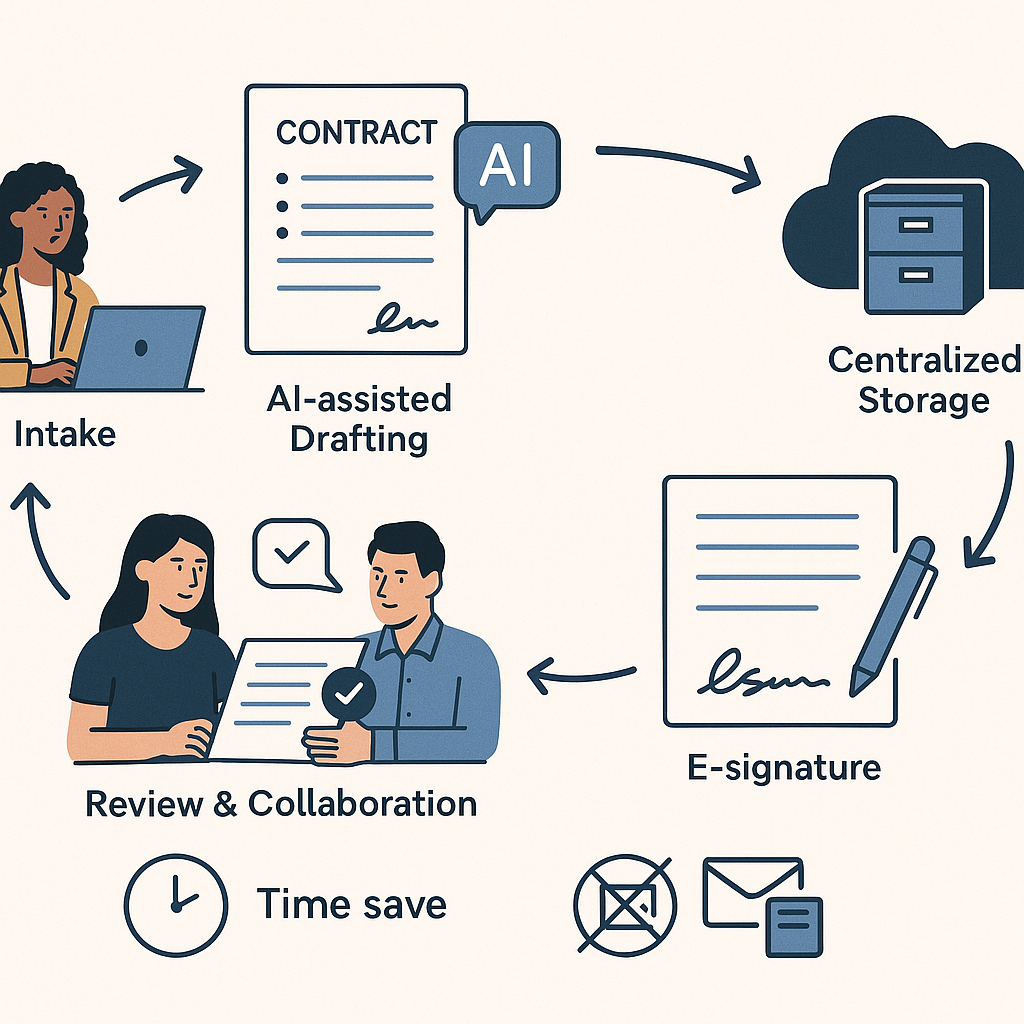
Another clear pattern in the 2026 rankings is a preference for all‑in‑one tools that unify what used to be fragmented across multiple products: contract creation, approval, e‑signatures, and storage. Market analyses of AI contract and CLM platforms note a steady shift from standalone tools toward more integrated, workflow‑centric solutions, often built around familiar environments such as Microsoft Word or cloud productivity suites. (contractreview.net)
For small businesses, that consolidation delivers three practical benefits:
- Reduced tool sprawl and subscription fatigue. Instead of paying separately for a template library, a contract editor, an e‑signature vendor and a document repository, SMBs increasingly gravitate toward single platforms that “do it all well enough.”
- Faster onboarding. Staff who already live in tools like Google Workspace or Microsoft 365 can ramp up quickly when legal ops software integrates tightly rather than imposing a separate, complex system.
- Cleaner data and reporting. Centralized workflows make it easier to answer basic business questions: How many contracts are awaiting signature? Which clients are stuck in legal review? Where are bottlenecks forming?
These priorities mirror broader AI‑driven contracting research, which shows that buyers increasingly prioritize seamless integration into existing systems, with Microsoft Word integration alone cited as a top requirement for nearly half of buyers. (contractreview.net)
QuickSign’s Perspective: Legal Ops That Match Small Business Reality
While many legal operations platforms were initially built for in‑house departments of large enterprises, the 2026 rankings underscore that fast‑growing small businesses need a different balance of power and simplicity. As a modern, SMB‑first e‑signature and document workflow platform, QuickSign.it reflects several of the trends highlighted in these guides:
- AI Document Generation for contracts and NDAs. Rather than forcing users to maintain their own template libraries, QuickSign lets small businesses generate standard legal documents using AI, then customize as needed—mirroring the market‑wide shift toward AI‑augmented drafting rather than pure review. (summize.com)
- Effortless sending and tracking. Users can upload a PDF, drag and drop signature and form fields, and send documents in a few clicks. Real‑time tracking shows when recipients open, view and sign, giving SMBs the kind of process visibility that industry studies link to significantly improved deal velocity. (quicksign.it)
- Flat‑rate, collaboration‑friendly pricing. With a $15/month flat rate for the entire team and unlimited recipients, QuickSign avoids the per‑seat pricing structure that many rankings now warn can constrain collaboration and inflate total cost of ownership for small organizations. (flowsign.com)
- Built for non‑legal users. The interface is designed so business owners, operations leads and freelancers can manage legal workflows without needing specialized training, aligning with rankings that prioritize ease of use for non‑lawyer stakeholders.
In other words, the same criteria that 2026 guides now use to flag “SMB‑ready” legal ops software—AI‑assisted drafting, unified workflows, simple collaboration, and transparent pricing—map closely to QuickSign’s core design choices.
What Growing Small Businesses Should Watch in 2026
For founders, operations leaders and solo professionals who want to use these rankings effectively, several practical takeaways emerge:
Focus on Workflows, Not Feature Lists
Many legal ops tools boast long feature matrices, but the most valuable rankings for SMBs walk through real workflows: “Create a client agreement, send it for signature, store it, and find it again during an audit.” When evaluating software, small businesses should mirror that approach—pick two or three critical workflows and test how efficiently a tool handles them end‑to‑end.
Prioritize AI That Saves Time Immediately
Industry research consistently notes that time savings and faster turnaround are the top benefits legal teams expect from AI. (legalontech.com) Rather than chasing exotic capabilities, SMBs can focus on tools that:
- Generate usable first drafts of standard agreements.
- Flag risky clauses in vendor contracts or NDAs.
- Automate reminders, approvals and follow‑ups around signatures.
These use cases typically deliver measurable impact within weeks, making it easier to justify the investment.
Insist on Clear Pricing and No Surprise “User Taxes”
Per‑seat models can appear affordable at first, but they often discourage teams from inviting everyone who should be involved in contract workflows. Guides increasingly recommend flat or volume‑based pricing that allows SMBs to scale usage without renegotiating plans. When comparing tools, buyers should model what happens when they double headcount or involve more departments in their contract processes—and favor platforms whose pricing remains predictable.
Look for Integrations with the Tools You Already Use
Finally, the most useful 2026 rankings pay close attention to integrations: with email, CRM, accounting systems and productivity suites. Market analyses show buyers heavily favor tools that embed into existing environments rather than require users to juggle additional logins. (contractreview.net) For SMBs, that can mean prioritizing legal ops solutions that connect cleanly to their CRM, invoicing platform or project management stack.
As legal tech matures, the message of today’s rankings is clear: you don’t need to be a large enterprise to benefit from sophisticated legal operations software. For growing small businesses and independent professionals, AI‑powered, all‑in‑one tools like QuickSign.it can now deliver contract management, document storage, collaboration and compliance‑ready e‑signatures in a single, affordable package.
Looking for an affordable e-signature solution? Try QuickSign for free - no credit card required.