Lone Wolf Launches Inkless, an API-First E-Signature Platform Aiming Squarely at Legacy Vendors
Discover Inkless, the API-first e-signature platform by Lone Wolf, streamlining workflows and challenging legacy vendors with secure, modern document signing.
Lone Wolf Launches Inkless, an API-First E-Signature Platform Aiming Squarely at Legacy Vendors
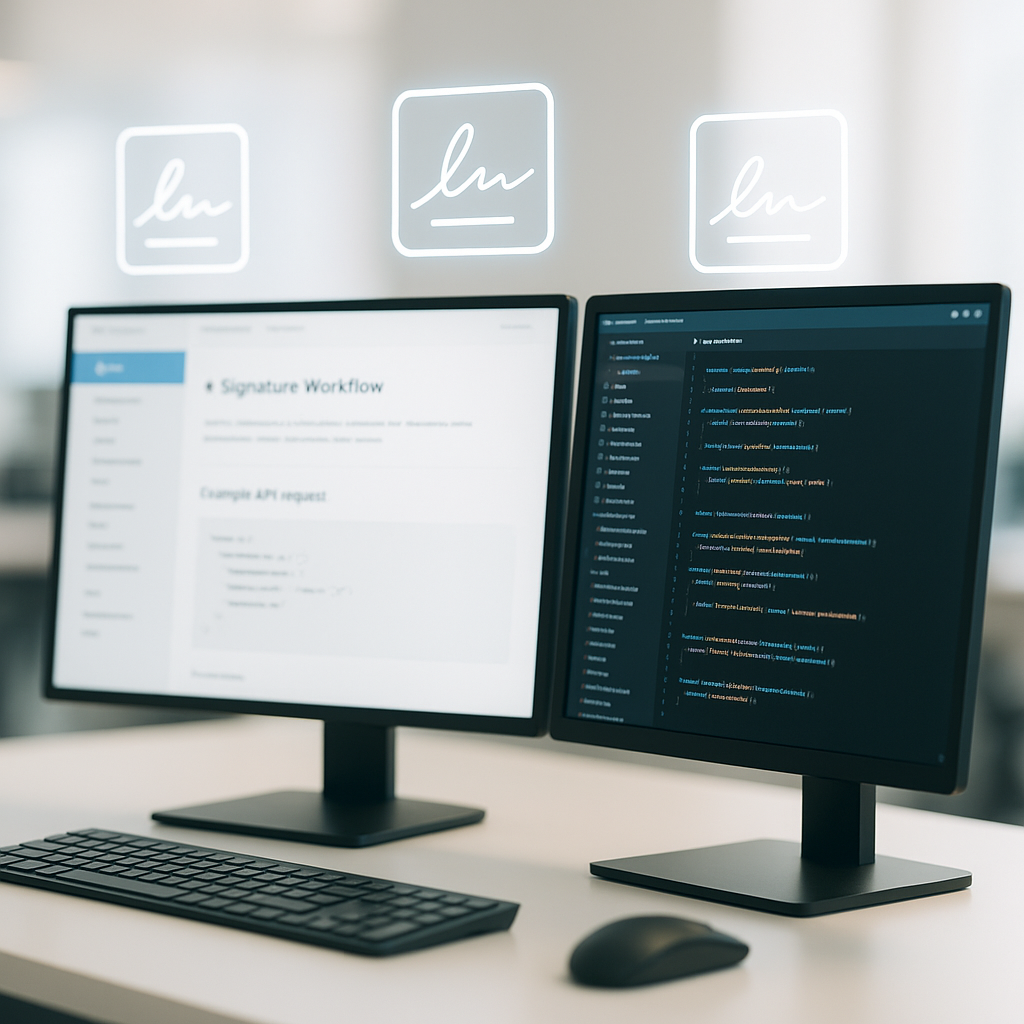
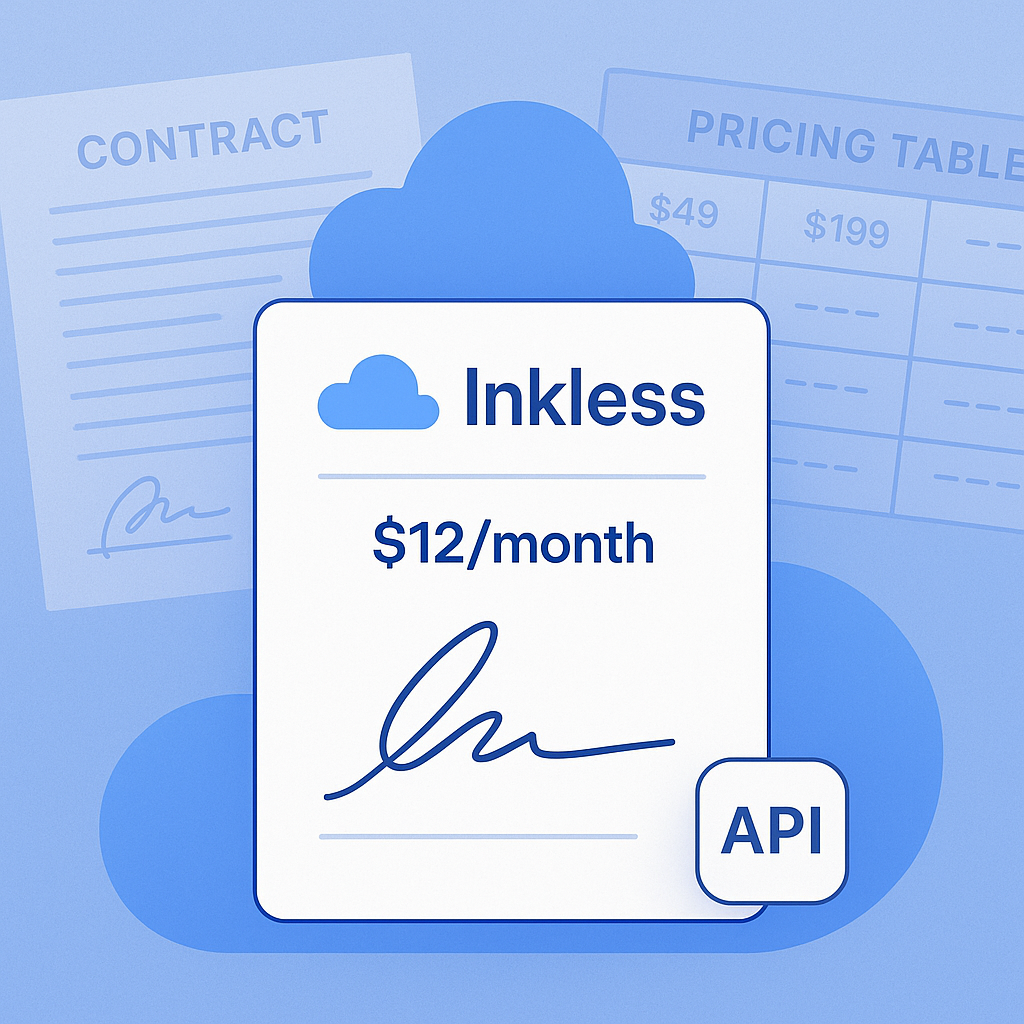
Lone Wolf Technologies has introduced Inkless, a standalone, API-first e-signature platform designed for developers and software companies that want to embed digital signing directly into their applications—without the opaque contracts and feature gating that have long characterized the enterprise e-signature market. Built on Lone Wolf’s battle-tested Authentisign engine, which processes more than 40 million envelopes annually, Inkless promises transparent, published pricing, month-to-month flexibility, and full API access from day one. (globenewswire.com)
Why Inkless Matters Now for Business Professionals
The e-signature market has matured into a critical layer of digital infrastructure. From real estate deals and insurance onboarding to SaaS subscription flows and HR contracts, signatures are now a core part of how revenue is recognized and compliance is maintained. Over the past decade, the dominant players have shifted their focus toward large enterprise contracts, complex bundles, and tiered feature models—often locking advanced capabilities like webhooks, bulk sending, or branding behind high-priced plans.
That dynamic has created a widening gap: mid-market companies and software vendors need the same robust, compliant e-signature stack as enterprises, but with more flexible contracts and predictable, developer-friendly pricing. Inkless arrives squarely in this gap, offering a usage-based, API-centric alternative riding on Lone Wolf’s existing infrastructure and compliance footprint. (globenewswire.com)
What Lone Wolf Announced
A Standalone, Developer-First E-Signature Brand
On August 25, 2025, Dallas-based Lone Wolf Technologies—best known as a leader in residential real estate software—formally launched Inkless as a distinct, standalone e-signature platform. While Authentisign remains deeply embedded in Lone Wolf’s real estate transaction products and MLS partnerships, Inkless is explicitly positioned as a horizontal, all-industry solution for developers and product teams. (globenewswire.com)
Inkless runs on the same enterprise-grade infrastructure and engine that power Authentisign, which Lone Wolf has evolved over years of usage by hundreds of thousands of agents and millions of transactions. Authentisign already handles more than 30–40 million digital signings annually, with strong adoption via MLS and brokerage integrations. (lwolf.com)
“Inkless is the culmination of everything we’ve learned from decades of powering one of the most trusted e-signature solutions in real estate,” said Aaron Kardell, GM of Innovation and Partnerships at Lone Wolf. “We’re taking that experience and putting it directly into the hands of developers, without the friction of long-term contracts or gated APIs.” (globenewswire.com)
Key Features: Full API Access from Day One
Inkless is built as an API-first e-signature service. According to Lone Wolf’s launch announcement, the platform exposes full capabilities across every plan level, including: (globenewswire.com)
- Signing APIs for creating, sending, and tracking envelopes programmatically
- Templating for reusable document workflows and pre-mapped fields
- Webhooks to stream real-time events back into customer applications (e.g., document viewed, signed, completed)
- Usage-based pricing with published rates and no minimum commitment
- Month-to-month terms instead of multi-year enterprise contracts
Security and compliance mirror what Lone Wolf already offers with Authentisign, including ESIGN and UETA compliance, AES-256 encryption, tamper-evident audit logs, and multi-factor authentication. (globenewswire.com)
Inkless specifically targets “onerous contract structures employed by legacy providers,” positioning itself as a 40–60% lower-cost alternative with transparent pricing and contract-free implementation. (globenewswire.com)
Frictionless Onboarding: Sandbox Without a Sales Call
In a clear nod to developer trends shaped by API-native fintech and communications platforms, Lone Wolf is making Inkless available via instant sandbox access at its dedicated site, allowing teams to begin integration without engaging sales or signing preemptive contracts. Prospective customers can experiment with the API, build proof-of-concept integrations, and then move to production on a usage plan. (globenewswire.com)
Early adopters highlighted in Lone Wolf’s announcement include companies in insurtech, legal practice management, and enterprise SaaS, where embedded signing is a cor

Industry Context: A Shift Away from Heavyweight E-Signature Contracts
The launch of Inkless aligns with broader pressures in the e-signature landscape:
- Cost sensitivity: As e-signatures have become a commodity capability, CIOs and product leaders increasingly question premium enterprise pricing for what is now a standard feature in many software stacks.
- Developer expectations: Teams are accustomed to plug-and-play APIs with self-service onboarding, transparent usage-based pricing, and full-feature access at any scale.
- Vertical expansion: Lone Wolf’s historical concentration in residential real estate has given it scale, but the e-signature engine itself is industry-agnostic. Inkless is a way to monetize that capability across verticals without diluting the Authentisign brand. (prnewswire.com)
Inkless also enters a space where alternative solutions—such as QuickSign—have already been pushing in the direction of simpler, more transparent e-signature and document-generation models, especially for teams that want to quickly assemble and distribute documents without a heavy enterprise sales process.
What Inkless Means for the E-Signature Market
1. Renewed Competition Around Pricing Transparency
Lone Wolf is openly framing Inkless as a challenge to large incumbents that gate core API functionality behind enterprise tiers. By committing to published, usage-based pricing and offering “complete developer control” on all plans, Inkless could pressure competitors to revisit their own tier structures, particularly around: (globenewswire.com)
- Access to webhooks and event streams
- Advanced templating and automation features
- Branding and white-label capabilities
- Minimum contract sizes and pre-purchased envelope blocks
If Inkless gains traction, it could normalize a model where even smaller software vendors get the same technical capabilities as large enterprises, paying only for actual usage.
2. Vertical Specialists Going Horizontal
Lone Wolf built its reputation as a vertical specialist, serving real estate professionals with end-to-end transaction management, forms, and back-office tools. Over 1.5 million professionals use its software across North America, and partnerships like its 2025 deal with First Multiple Listing Service (FMLS) have expanded the reach of Authentisign significantly. (prnewswire.com)
By spinning out Inkless as a general-purpose, API-first e-signature layer, Lone Wolf follows a playbook seen in other vertical SaaS companies that convert internal infrastructure into standalone products. For the broader e-signature market, that means new entrants can be both:
- Battle-tested in a demanding vertical (here, real estate), and
- Ready-made for broader use in fintech, legal, HR, and SaaS applications.
3. A Strong Signal About “Embedded E-Signature”
Rather than focusing on standalone web portals, Inkless is clearly optimized for embedding—be it via iFrames, redirect-based signing flows, or complete white-label implementations via API. That mirrors a broader move toward embedding core workflow components (payments, identity verification, communications, and now e-signatures) directly inside vertical applications.
In that sense, Inkless competes not only with traditional e-signature vendors, but also with players like QuickSign, which emphasize easily embeddable flows for generating and sending documents, especially for startups and SMBs that need fast time-to-value.
Practical Implications for Businesses Using E-Signatures
For Software Vendors and SaaS Platforms
Product leaders and CTOs evaluating their e-signature stack should consider the Inkless launch as an opportunity to revisit both cost and flexibility. Key questions to ask include:
- Are critical developer features gated? If you need webhooks, templates, or multi-tenant support, are these only available at expensive tiers?
- Can you scale down as easily as you scale up? Many enterprise contracts make it easy to expand usage, but difficult or expensive to reduce it.
- How predictable is pricing? Published, usage-based models—as Inkless promotes—make forecasting simpler and give procurement teams greater leverage. (globenewswire.com)
For developer-centric teams, the ability to spin up a sandbox, integrate, and test without a sales cycle is particularly appealing, shortening proof-of-concept timelines and enabling incremental migrations from existing providers.
For Regulated and Compliance-Sensitive Industries
Because Inkless inherits Authentisign’s security and compliance posture, it may be particularly attractive to sectors with high regulatory oversight—such as financial services, insurance, and legal. Authentisign already complies with ESIGN and UETA and emphasizes tamper-evident logs and comprehensive audit trails, capabilities that transfer directly to Inkless. (globenewswire.com)
However, organizations in these sectors will still need to perform due diligence around:
- Data residency and regional hosting options
- SOC 2 or ISO 27001 certifications
- Integration with existing identity and access management (IAM) systems
For Real Estate and Existing Lone Wolf Customers
For current Authentisign users in real estate—agents, brokers, MLSs—the launch of Inkless is less about a new product they need to adopt and more about a signal: Lone Wolf is investing further in its signature engine and expanding its reach beyond real estate. That may ultimately translate into faster innovation cycles and more robust infrastructure for all Lone Wolf customers. (prnewswire.com)
At the same time, smaller brokerages that have felt constrained by large, multi-module platforms may now see an opportunity to selectively adopt only the e-signature component—via Inkless—into their own tech stacks, potentially alongside other best-of-breed tools.
How to Evaluate Inkless Against Other E-Signature Options
For business and technology leaders comparing Inkless with other solutions, including QuickSign and incumbent enterprise platforms, a structured evaluation might focus on:
- API Depth and Documentation
Assess the completeness of the API (signing, templates, webhook events, branding), the quality of documentation and SDKs, and the availability of client libraries in your stack’s primary languages. - Pricing Transparency and TCO
Compare total cost of ownership over one to three years, not just list prices. Consider envelope volume, overage fees, minimum commitments, and any add-on costs for premium features. - Onboarding Speed
Measure how quickly your team can move from sandbox to production, including legal, security review, and technical integration. - Regulatory and Contractual Needs
Ensure the solution can meet your legal and compliance obligations without forcing you into an oversized enterprise tier.
The most strategic move for many organizations may be a hybrid approach: using one provider, such as Inkless, as the embedded signature engine in proprietary apps, while also maintaining a user-facing portal or lighter-weight option like QuickSign for ad hoc document generation and sending.
Conclusion: A More Competitive, Developer-Centric Future for E-Signatures
With Inkless, Lone Wolf Technologies is making a calculated bet: that the next wave of e-signature growth will be driven less by monolithic enterprise deployments and more by embedded, API-first integrations across vertical software and digital workflows.
For business professionals, the message is clear: the e-signature layer of your stack is no longer a fixed commodity. Between Inkless’s API-first, transparent-pricing approach and alternative platforms like QuickSign that emphasize simplicity and speed for document generation and sending, there is more room than ever to optimize for cost, flexibility, and developer experience.
Call to Action: As you reassess your e-signature strategy in light of Inkless and other emerging options, consider experimenting with multiple providers to benchmark experience, performance, and pricing. To get started quickly with a modern, lightweight solution, you can Try QuickSign for free - generate 2 documents and send 1 document to unlimited recipients at no cost, while exploring how newer API-first offerings like Inkless might fit into your longer-term embedded workflow strategy.