New Year, New Toolkits: Real Estate Trade Groups Push Low-Cost Tech Resources for Agents
Discover how real estate technology is evolving as trade groups roll out low‑cost toolkits, giving agents powerful digital resources to grow their business.

New Year, New Toolkits: Real Estate Trade Groups Push Low-Cost Tech Resources for Agents
As real estate professionals head into 2026, industry associations are quietly redefining what “member benefits” mean for individual agents and small offices. January is turning into a de facto “planning season,” with trade groups bundling discounted and free digital tools, AI-powered marketing resources, and workflow planning webinars specifically tailored to help agents modernize their tech stack—without enterprise-level budgets.
Why January 2026 Is Different for Small Real Estate Offices
Real estate has been on a fast technology curve for several years, but 2026 is emerging as an inflection point. The National Association of REALTORS® (NAR) has adopted a new 2026–2028 strategic plan that explicitly calls out advanced technology and tooling as core to helping members “thrive in their day-to-day business,” with a focus on modernizing member experience and expanding educational offerings around digital tools and data-driven practice. (nar.realtor)
At the same time, the broader ecosystem around agents—education providers, technology vendors, and event organizers—is leaning into AI as a practical assistant rather than a distant buzzword. Events and summits marketed to individual agents now bundle hands-on access to AI-powered social media systems, content templates, and “top tools” lists designed to be deployed in small operations, not just at national brokerages. (realestateaisummit.com)
Key shift for 2026: Member benefits are moving from passive discounts to curated toolkits—webinars, AI content systems, and workflow templates—that agents can plug directly into their existing operations.
For small brokerages and solo practitioners, this shift matters. It’s no longer about whether to “go digital”—it’s about choosing affordable, interoperable tools that reduce admin work, keep clients informed, and simplify transactions from listing to closing.
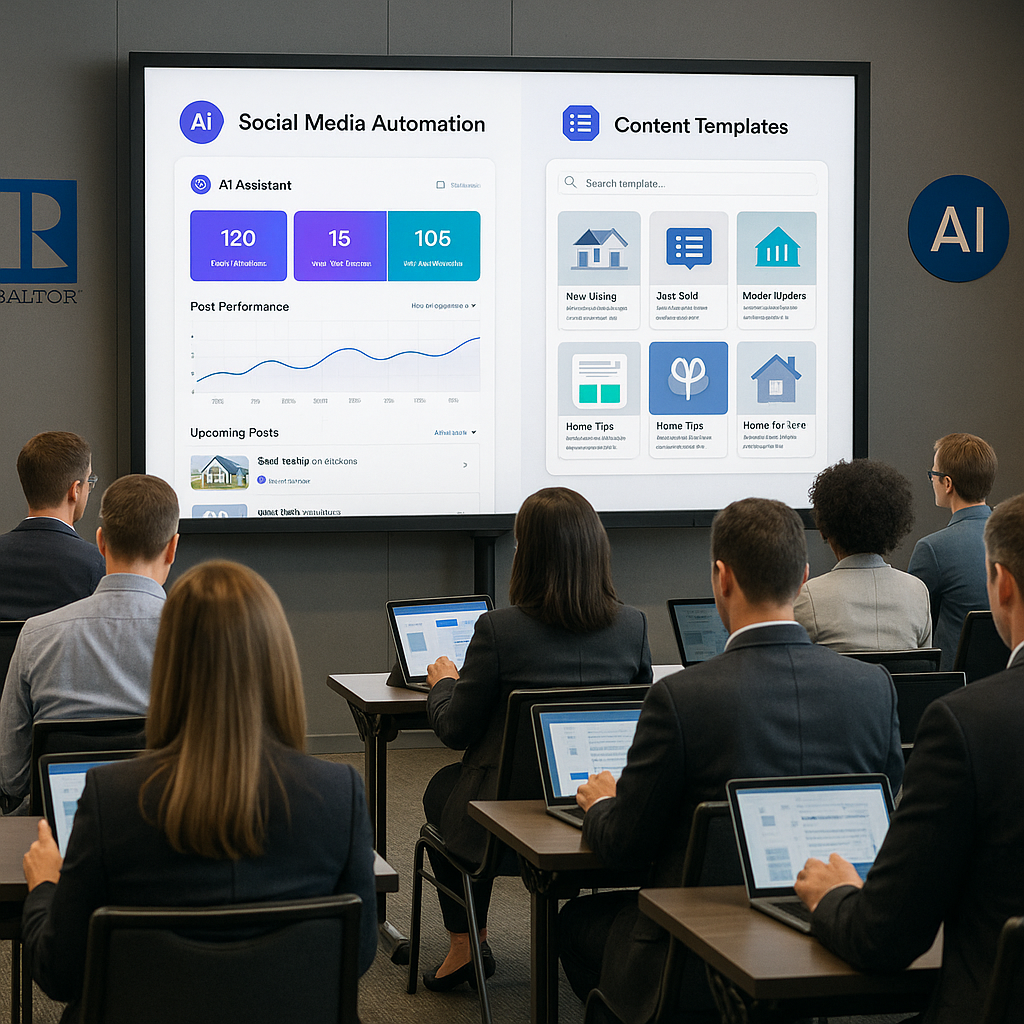
What Trade Groups Are Rolling Out: Bundles, Webinars, and AI Toolkits
AI-Centric Training and Webinars for Front-Line Agents
Education calendars for early 2026 show a clear emphasis on AI as a day-to-day productivity booster for agents, not just a speculative technology trend. For example, upcoming training sessions such as “2026 Tech Trends for REALTORS®: Tools to Streamline, Scale, and Stay Ahead” focus on practical uses of agentic AI, automation, and emerging tools to reduce repetitive tasks and enhance client service. These webinars are being offered as digital products, often free or deeply discounted for association members through limited-time offers. (store.realtor)
Similarly, local education centers are hosting hands-on “AI agent” workshops that walk REALTORS® through free or low-cost AI tools for content creation, organization, and follow-up, positioning AI as a realistic way to “scale smarter” in 2026 rather than an overwhelming add-on. (eventbrite.com)
In these sessions, instructors focus on concrete outcomes: saving time on daily tasks, generating marketing content more efficiently, and creating repeatable workflows that smaller offices can sustain.
Discounted Access to AI Marketing and Social Media Systems
Beyond training, a growing number of real estate-focused platforms are running “planning season” promotions targeted at individual agents and small teams. Website and marketing providers are packaging 2026 bundles that mix discounted subscriptions with free add-ons like AI-powered social media software, content templates, and standard operating procedures (SOPs) for running consistent campaigns. (agentfire.com)
Common elements in these bundles include:
- AI-assisted social media content planners and post generators.
- Template libraries for listing marketing, neighborhood spotlights, and market updates.
- Guides and prompts for using general-purpose AI tools to draft listing descriptions, emails, and prospecting messages.
- Workflow checklists for planning quarterly campaigns and tracking follow-up.
The goal is to give agents plug-and-play systems: prebuilt campaigns and content structures that can be lightly customized for each market, not built from scratch.
Workflow Planning as a Member Benefit
Associations are also reframing January as a time for structured business planning. Planning-focused promotions urge agents to “build the machine for 2026” by formalizing their workflows—across lead capture, marketing, and transaction management—rather than improvising mid-year. (agentfire.com)
This dovetails with a wider education push around emerging technologies in real estate: webinars and content that highlight how agentic AI, autom

Affordable Tech, Not Enterprise Suites: What This Means for Small Offices
For small brokerages, independent professionals, and teams of just a few agents, the new generation of member toolkits is notable for what it is not: it is not a mandate to adopt sprawling, enterprise-grade platforms with complex contracts and per-seat licensing.
Instead, the emphasis is on:
- Low or no upfront cost: Free trial periods, “MVP” freebies, and deeply discounted bundles for members, often time-limited to early 2026. (store.realtor)
- Modularity: Tools that can be layered onto an existing tech stack—such as adding AI content tools or e-signature to a current CRM, rather than replacing the CRM itself.
- Practical training: Short, focused webinars and workshops that show how to integrate tools into real workflows, not just introduce abstract concepts.
- Planning-first mindset: Encouraging agents to map their 2026 workflows (lead, nurture, offer, contract, close) and then plug in tools where they eliminate manual friction.
That mindset aligns directly with how small businesses and freelancers increasingly evaluate software: instead of asking “What’s the biggest platform I can buy?” they’re asking “What’s the smallest, most affordable toolset that covers 90% of my real work without breaking my budget?”
Where E‑Signatures and Document Workflows Fit in the 2026 Toolkit
One of the most critical—yet often overlooked—pieces of a modern real estate tech stack is the document workflow: everything from listing agreements and buyer representation contracts to addenda, disclosures, and closing documents.
The same trends driving AI content bundles and planning webinars apply here:
- Clients expect digital-first experiences. They want to review and sign documents on any device, track what’s pending, and avoid printing or scanning whenever possible.
- Agents need consistency and auditability. Filling forms manually, retyping clauses, or chasing signatures over email is not just slow—it’s risky and hard to track.
- Budgets are under pressure. Smaller offices and independent agents need tools that won’t spike their overhead just to send a handful of documents each month.
This is where modern, small-business-focused platforms such as QuickSign come in. Unlike enterprise-focused solutions that rely on complex per-seat pricing, QuickSign is built for lean operations that prioritize predictable costs and simple workflows.
QuickSign Perspective: Building a Realistic 2026 Document Stack
Against this backdrop of new association bundles and AI education, QuickSign fits naturally into the “New Year, New Toolkit” mentality for real estate professionals.
AI Document Generation Tailored to Everyday Real Estate Needs
While many January bundles emphasize AI for marketing—social media posts, listing videos, and email campaigns—document generation remains a huge time sink for agents. QuickSign addresses this directly with built-in AI Document Generation for contracts, NDAs, and other repeatable legal documents common to small businesses and agent teams.
Instead of starting from a blank template or copy-pasting clauses, agents can:
- Use AI to generate a starting contract or agreement based on a short prompt.
- Customize terms and clauses to their brokerage standards or local practices.
- Save reusable versions that become part of their 2026 “document toolkit.”
For solo agents and small offices, this pairs well with association training on AI basics: once an agent is comfortable using AI for content, extending it to document drafting is a logical, high-impact next step.
Effortless Sending and Real-Time Tracking
Most planning-season webinars emphasize workflow clarity: knowing exactly where each deal stands. That clarity should extend into document workflows. With QuickSign, agents can:
- Upload a PDF from their existing forms library.
- Drag and drop signature, date, and text fields in minutes.
- Send agreements to clients and partners with a single, shareable link.
- Monitor real-time status updates—sent, viewed, signed—without digging through email threads.
This level of simplicity aligns with the same ethos driving January 2026 association toolkits: practical, immediately usable tools that reduce friction in daily work.
Pricing That Matches the “Small Office First” Trend
Perhaps the most important alignment is pricing. Many association initiatives are explicitly about reducing cost barriers for members, whether via free AI webinars, “MVP” product giveaways, or limited-time discounts. (store.realtor)
QuickSign follows that same philosophy:
- Free tier: 2 AI document generations and 1 document send to unlimited recipients—enough for agents to test-drive digital workflows on real deals.
- Flat-rate pricing: $15 per month for the whole team, avoiding the per-seat creep that can make other tools prohibitively expensive for small offices.
Unlike enterprise-focused solutions that assume a large staff and high volume, this structure keeps e‑signature and document automation accessible to the very agents most targeted by January’s planning-season initiatives.
Practical Takeaways for Your 2026 Document and Workflow Plan
With trade groups and associations concentrating their January programming around technology and planning, real estate professionals have a narrow but valuable window to reset their operations for 2026. A practical approach might look like this:
- Audit your current workflow. Map the steps from first contact to closed deal. Note where paper, email-based signatures, or manual drafting slow things down.
- Leverage association toolkits. Register for at least one AI or tech trends webinar from your trade group and download any included templates, AI prompts, or planning guides. (store.realtor)
- Standardize your documents. Identify your “top 5” recurring agreements (listing agreements, buyer representation, simple addenda, referral agreements, NDAs with vendors) and move them into a digital-first workflow.
- Pilot AI document generation. Use a tool like QuickSign to generate and refine new versions of these documents, then save them as reusable templates for 2026.
- Roll out e‑signature as a default. Make digital signing your standard for all parties, reserving paper only when absolutely necessary.
- Measure time savings. Track how long it takes to go from “draft needed” to “document fully signed” before and after you adopt new tools—this is the concrete ROI your 2026 tech investments should deliver.
The real measure of these January 2026 initiatives is not how many tools you sign up for—but how many hours you win back in the core workflows that drive your business.
As real estate trade groups push low-cost, AI-enabled toolkits, small offices and independent agents are in a strong position to build lean, modern tech stacks that support them through the next market cycle. With thoughtful planning—and the right mix of affordable tools for marketing, planning, and document workflows—2026 can be the year when “going digital” finally translates into quieter inboxes, faster deals, and more predictable income.
Looking for an affordable e-signature solution? Try QuickSign for free - no credit card required.