Portugal Pushes Qualified Digital Signature Mandate for Invoices Back to 2027
Portugal pushes qualified digital signature mandate for invoices back to 2027—learn what this means for Portugal businesses, compliance, and e-invoicing plans.

Portugal Pushes Qualified Digital Signature Mandate for Invoices Back to 2027
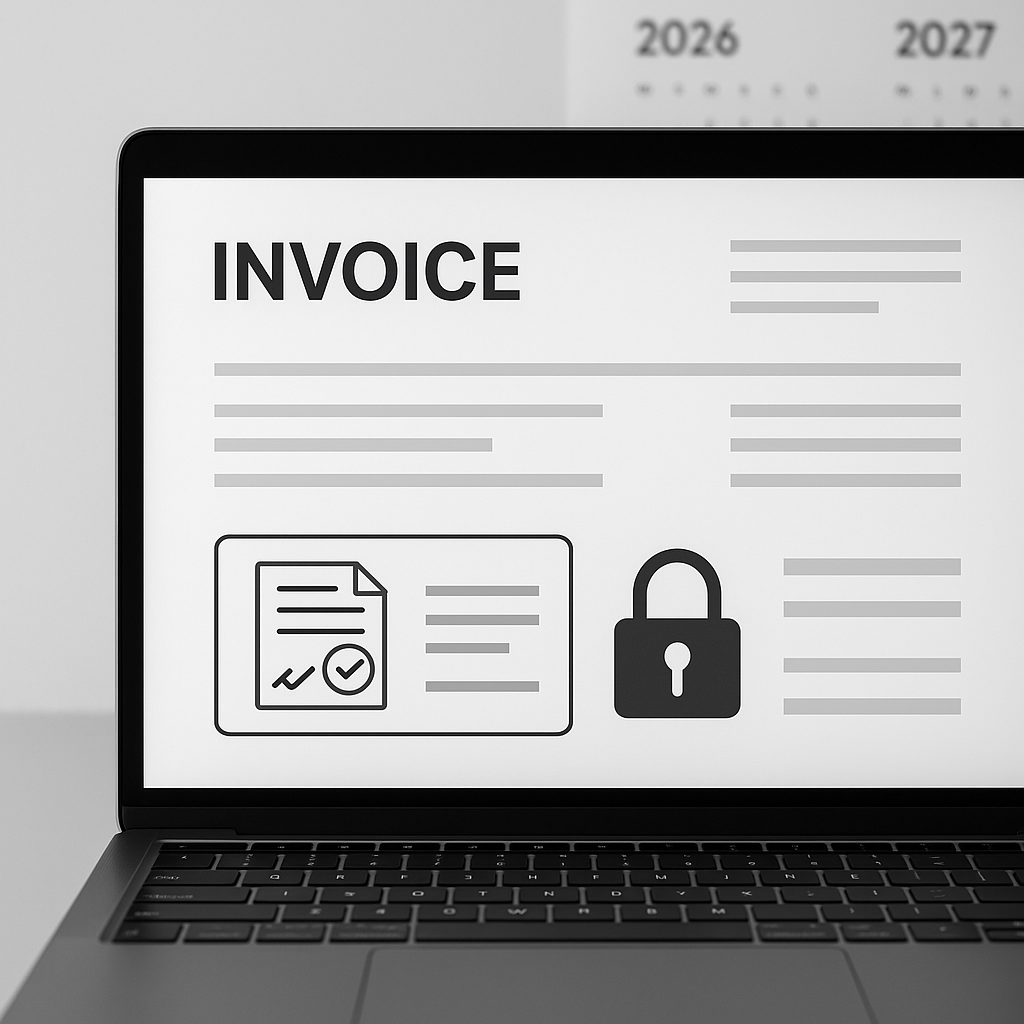
Portugal has officially postponed its requirement for qualified electronic signatures on PDF invoices from 2026 to 2027, giving businesses an extra year to overhaul their invoicing and signing workflows. Under the 2026 State Budget bill adopted by Parliament on 27 November 2025, standard PDF invoices without a qualified signature will remain fully valid for tax purposes until 31 December 2026.(kpmg.com)
Why This Matters for Finance, Tax, and Operations Teams
This latest delay is more than a technical adjustment. It reshapes planning timelines for finance, tax, IT, and operations teams across Portugal and for foreign companies invoicing Portuguese customers.
- Compliance runway extended: Companies now have until 1 January 2027 before a qualified electronic signature (QES) becomes mandatory on non-EDI electronic invoices such as PDFs.(kpmg.com)
- Digital transformation reprioritized: The postponement gives organizations time to consolidate invoicing tools, rethink e-signature providers, and avoid rushed, costly implementations.
- SME breathing room: Smaller businesses, often the slowest to adopt structured e-invoicing and QES, gain an extra year to modernize without risking non-compliance.
For vendors of digital signature and e-invoicing solutions, the shift to 2027 also changes go-to-market strategies: demand will likely move from emergency compliance projects in 2025–2026 to more deliberate, value-driven digitization programs.
What Exactly Did Portugal Change?
Portugal has been on a multi-year path toward stricter e-invoicing and tax digitization, including mandatory QES on PDF invoices and extended SAF-T (Standard Audit File for Tax) reporting. The latest 2026 Budget Bill, formalized in Law No. 37/XVII/1, adjusts that journey again.(fiscal-requirements.com)
Key elements of the 2026 Budget decision
- QES on PDF invoices delayed to 2027: Until 31 December 2026, invoices in PDF format may continue to be issued without a qualified electronic signature or digital certificate and will still be treated as valid invoices for all tax purposes.(asd-int.com)
- Mandatory QES start date: From 1 January 2027, PDF invoices (and other non-EDI electronic invoices) must carry a qualified electronic signature or qualified seal to be valid.(comarch.com)
- Alignment with SAF-T accounting obligations: The same law postpones the first mandatory annual SAF-T accounting file for 2026 transactions to 2028, giving companies more time to adapt their accounting systems and data pipelines.(kpmg.com)
The move continues a long pattern of deferrals: Portugal’s QES requirement was originally expected to begin as early as July 2021, then shifted repeatedly to 2024, 2025 and 2026 before this latest delay to 2027.(theinvoicinghub.com)
“Until December 31, 2026, invoices in PDF format will continue to be accepted and regarded as valid invoices for all purposes under tax leg
islation. However, starting January 1, 2027, PDF invoices must include a QES to comply with invoicing requirements.”(kpmg.com)
Understanding Qualified Electronic Signatures in the EU Context
Qualified electronic signatures sit at the top of the EU’s eIDAS trust hierarchy. A QES is a digital signature created using a qualified signature creation device and based on a qualified certificate issued by an EU-trusted provider. Under eIDAS, it has the same legal effect as a handwritten signature across all EU member states.(kpmg.com)
For Portuguese invoicing, that means from 2027:
- Businesses issuing PDF or other non-EDI electronic invoices will need:
- A qualified certificate from a listed EU trust service provider.
- Integration of QES into their billing or e-invoicing platform.
- Procedures to ensure signing keys and certificates are managed securely and renewed on time.
- The tax authority will rely on the QES to ensure authenticity (who issued the invoice) and integrity (no tampering).(kpmg.com)
This is part of broader EU and OECD trends toward near-real-time, fully digital tax reporting, where invoice authenticity and structured data are central to combating fraud and closing the VAT gap.
What the Postponement Means for E‑Signature and E‑Invoicing Strategy
From “minimum compliance” to “strategic modernization”
The extra year can be a blessing or a trap. Businesses that treat 2026 as a grace period to do nothing risk another last‑minute scramble in late 2026. Those that move early can use the time to modernize more thoughtfully:
- Consolidate tools: Many finance teams currently juggle separate invoicing systems, PDF tools, and legacy signature solutions. The new deadline is an opportunity to consolidate into a single workflow that covers document generation, e-signature, and tracking.
- Re-think vendor choices: Established enterprise platforms like DocuSign or Adobe Acrobat Sign are often sold on a per-seat basis and optimized for large enterprises, which can be overkill and expensive for SMEs.
- Design for future regulatory changes: Portugal’s history of yearly postponements suggests the regulatory landscape will keep evolving. Flexible, API-friendly tools can help businesses adapt without re-platforming each time.
Modern, lightweight solutions like QuickSign.it are positioning themselves around this need for agility. Rather than locking customers into complex multi-year contracts, they focus on simple onboarding, flat pricing, and automation-friendly features.
How QuickSign fits into the evolving QES landscape
While the Portuguese law focuses specifically on qualified signatures and tax compliance, businesses also need to manage a much wider universe of contracts and documents: NDAs, sales agreements, HR forms, supplier contracts, and more. This is where QuickSign differentiates itself from traditional, heavyweight e-signature platforms:
- AI Document Generation: Instead of starting from a blank page or hunting for templates, QuickSign lets users generate legal-style documents with AI, then send them for electronic signature in a few clicks. This is particularly useful for standardizing recurring contracts alongside compliant invoices.
- Effortless sending workflow: Users can upload an existing PDF, drag and drop signature, date, and text fields, and send – with no complex configuration or admin overhead.
- Real-time tracking: Finance and legal teams gain status visibility (sent, opened, signed, completed), closing the loop between invoicing, collections, and compliance.
- AI-powered variables: Document variables allow smart auto-fill of customer names, amounts, and other frequently used data, reducing manual errors in billing and contract documents.
- Affordable pricing: With a generous free tier (2 AI document generations and 1 document send to unlimited recipients) and flat-rate pricing starting at $15/month, QuickSign.it is designed for solo entrepreneurs and small businesses who find per-seat pricing from incumbents too costly.
While larger providers will undoubtedly compete aggressively for Portugal-focused QES integrations as 2027 approaches, smaller businesses now have time to experiment with alternatives like QuickSign, build out internal processes, and decide where they truly need qualified signatures versus more flexible electronic signatures for everyday workflows.
Operational Implications for Businesses in Portugal and Abroad
1. Compliance for invoices sent to Portuguese customers
If you are issuing invoices subject to Portuguese tax rules, the message is clear for 2026:
- You may continue sending compliant PDF invoices without QES until 31 December 2026, provided they meet other requirements such as certified invoicing software, ATCUD codes, and QR codes.(asd-int.com)
- You should, however, start planning your QES implementation now – identifying a trusted service provider, reviewing your invoicing systems, and budgeting for 2026–2027 upgrades.
2. SAF‑T and data-readiness
The postponement of annual SAF-T accounting submissions to 2028 for 2026 transactions doesn’t remove the obligation; it simply stretches the timeline.(comarch.com) Businesses should continue cleaning up chart-of-accounts structures, mapping tax codes reliably, and ensuring their invoicing systems capture all the metadata that SAF-T files require.
3. Vendor and process audit in 2026
With the pressure valve temporarily released, 2026 is an ideal year to run a structured audit of your invoicing and signature stack:
- Map document flows: Identify which invoices and documents will need QES in 2027 and which can rely on standard electronic signatures.
- Rationalize tools: Consider whether having one system that can generate, send, and track documents (like QuickSign) could replace multiple legacy tools.
- Pilot QES where it makes sense: For high-value or cross-border invoices, piloting QES workflows in 2026 will surface integration and UX issues early.
Industry Outlook: A Slow March Toward “Real” E‑Invoicing
Portugal’s repeated postponements may frustrate vendors eager for mandatory QES to drive adoption, but they reflect a broader reality: many businesses are still not ready for full-fledged, signed and structured electronic invoices.
At the same time, the direction of travel is clear. EU and national tax authorities are converging on real-time or near-real-time e-invoicing and digital reporting, with strong guarantees of authenticity and integrity built in. In that sense, the 2027 deadline is less of an endpoint and more of a checkpoint along a longer road.
The extra year is not an invitation to delay indefinitely, but a chance to design e-signature and invoicing workflows that are sustainable, user-friendly, and adaptable to future regulatory changes.
For solution providers, this is an opening to move beyond “checkbox compliance” and deliver tools that genuinely improve the day-to-day work of finance and operations teams. AI-powered document generation, intuitive drag-and-drop workflows, and transparent pricing – all areas where QuickSign.it focuses – will matter just as much as formal compliance certifications.
Looking for an affordable e-signature solution? Try QuickSign for free - no credit card required.