Remote Contract Attorneys Help Small Firms Scale Workloads On Demand
Remote contract attorneys help small firms scale workloads on demand, cut costs, and access top legal talent fast. Hire expert remote attorneys today.
Remote Contract Attorneys Help Small Firms Scale Workloads On Demand
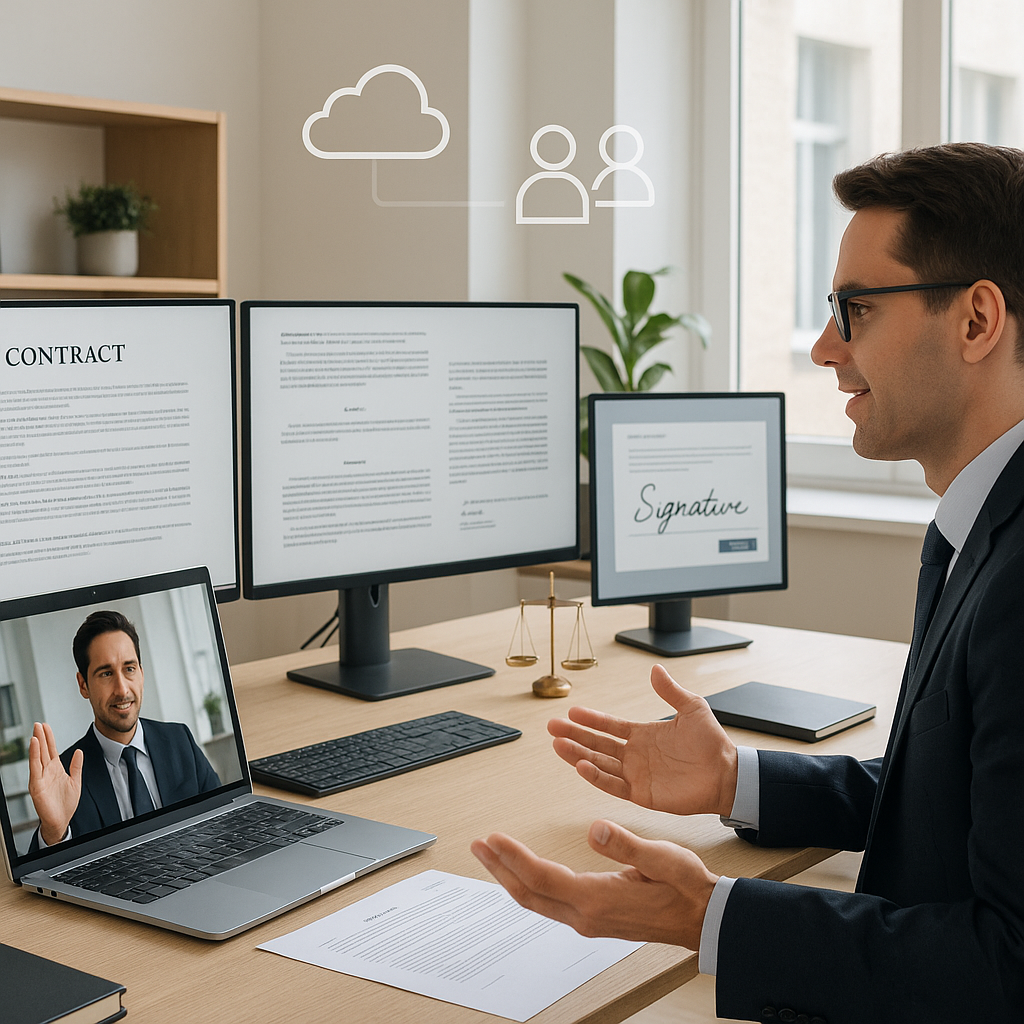
For solo and small law firms, managing sudden spikes in document-heavy work has always been a balancing act: hire full-time and risk excess overhead, or turn away matters and stunt growth. A new wave of remote contract attorneys—and the online marketplaces that connect them to firms—are reshaping that equation, making on‑demand legal staffing a viable, often essential, strategy for small practices.
A recent practice-management podcast episode has spotlighted how solo and small firms are tapping fully remote freelance attorneys for research, document drafting, and contract review. Combined with cloud-based workflows, e-signatures, and AI-assisted document tools, these remote relationships are letting small firms scale up (and down) without adding permanent headcount.
Why Remote Contract Attorneys Are Booming in Small Firms
The rise of remote contract attorneys sits at the intersection of two powerful trends: the normalization of remote legal work and the rapid adoption of cloud technology in solo and small practices.
According to Clio’s latest Legal Trends reporting for solo and small firms, roughly four out of five small practices now rely on cloud-based tools such as e-signatures, video conferencing, and online document storage to run their operations, with e-signature adoption alone above 70% among solos and small firms.(clio.com) This digital foundation makes it far easier to plug in remote attorneys, share files securely, and collaborate on matters from anywhere.
At the same time, staffing pressures are pushing firms to rethink traditional hiring. Billing rates for small firms have climbed—by more than 6% in 2024 for many practices—yet 14% of billable hours still go unbilled and 10% of billed fees go uncollected, underscoring how thinly stretched many small firms remain.(runsensible.com) Hiring full-time associates to cover occasional surges can be financially risky, especially in niches where workflow is cyclical or tied to deals, real estate closings, or seasonal litigation.
Online legal talent platforms have stepped into this gap, connecting thousands of U.S.-based freelance attorneys with small firms that need help on demand. One major remote-attorney marketplace reports more than 20,000 successful placements and a network of over 12,000 U.S. freelance lawyers, with most engagements coming from solo and small firms that want to “get more work done, faster” without traditional hiring friction.(lawclerk.legal)
The new staffing playbook for small firms is simple: keep your core team lean, then flex capacity up and down with remote contract attorneys, supported by cloud-based document and e-signature workflows.

From Overflow Relief to Strategic Capacity
Initially, many firms turned to freelance lawyers purely for overflow—outsourcing a brief here, a research memo there. But as remote work matured, the scope of freelance legal work has expanded dramatically.
What Remote Contract Attorneys Actually Do
For solo and small firms, remote contract attorneys typically handle:
- Legal research and memo drafting for litigation, regulatory, or niche subject-matter questions.
- Contract and document drafting—from NDAs and service agreements to lease reviews and asset purchase agreements.
- Discovery and document review in litigation matters, including summarizing depositions and organizing evidence.
- Contract review and redlining for transactions, vendor agreements, and policy updates.
- Back-office support like drafting demand letters, client status updates, or internal templates.
On many platforms, firms can choose from flat-fee projects (e.g., drafting a motion or contract), hourly arrangements with part-time remote associates, or subscription-based models that provide a set number of hours per month.(lawclerk.legal)
Why This Matters for Small and Solo Practices
For small firms, the appeal goes beyond simple overflow relief:
- Lower fixed overhead: Firms avoid long-term salary, benefits, and office costs while still delivering full-service support.
- Access to niche expertise: A two-lawyer business firm can temporarily bring in an IP, employment, or privacy specialist as needed, rather than referring work out.
- Faster turnaround: Distributed remote associates can work in parallel on research, document drafting, and contract review, compressing timelines.
- Geographic flexibility: Remote attorneys in other jurisdictions can assist with local procedural nuances, subject to supervision and ethics rules.
Clio’s Legal Trends data suggests that small firms that embrace digital tools such as e-signatures and online intake tend to see higher revenue and better hiring velocity, indicating that te
Workflow Is the New Bottleneck: Where E‑Signatures and AI Fit In
For all the upside, one reality remains: adding more people to a broken workflow just creates more follow-up emails. The small firms getting the most from remote contract attorneys are pairing flexible staffing with streamlined digital workflows for intake, drafting, and signing.
Standardizing Document Drafting with AI
Document-heavy work—contracts, NDAs, engagement letters, policy updates—is often what firms offload first. But if every freelance attorney is working from scratch, the firm risks inconsistent language and version chaos.
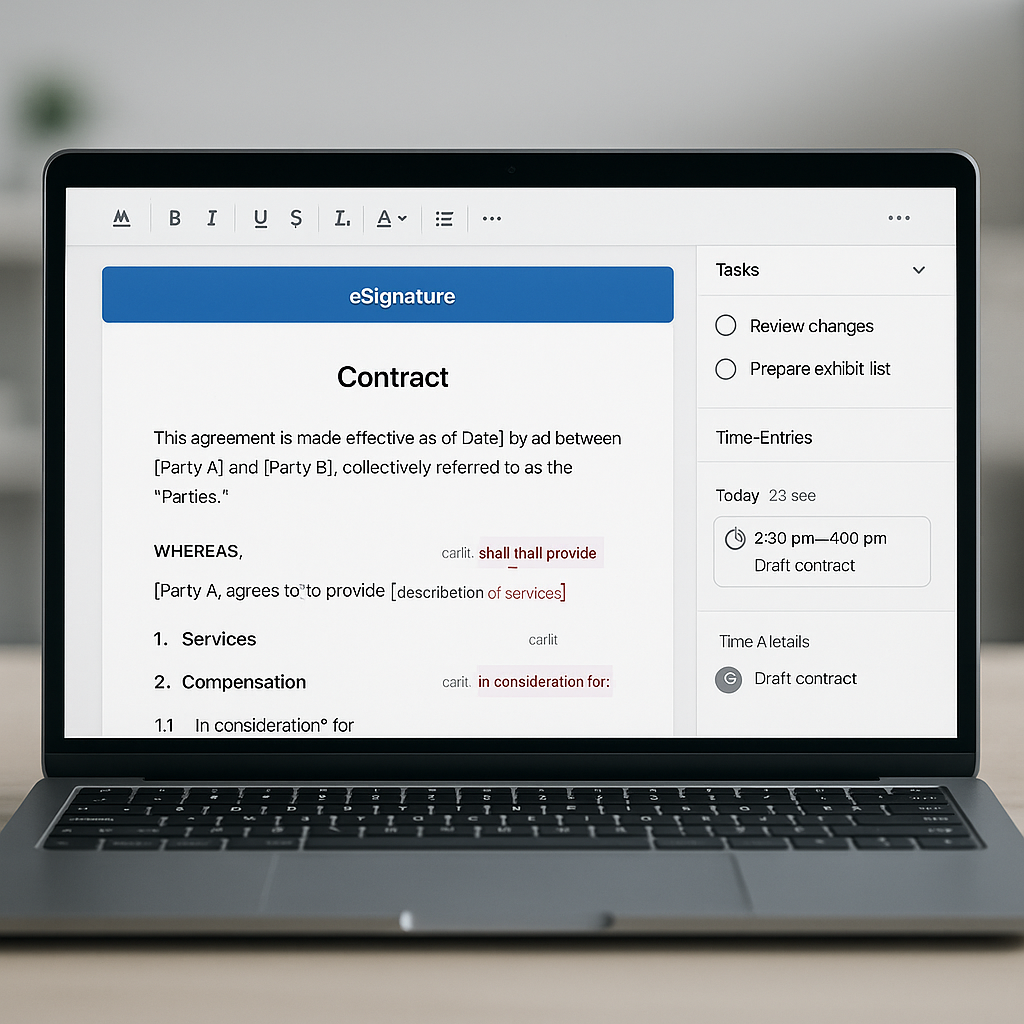
Modern tools like QuickSign address this by combining e-signatures with AI document generation. Instead of emailing half-complete templates back and forth, a small firm can:
- Use AI to generate a first-draft NDA, services agreement, or engagement letter from firm-approved clauses.
- Assign a remote contract attorney to refine and customize the draft for a specific client or transaction.
- Route the final version for e-signature—all within the same digital workflow.
This approach keeps control over structure and risk language with the firm, while allowing remote attorneys to focus on higher-value customization rather than formatting or hunting for old precedents.
Effortless Sending and Real-Time Tracking
Once documents are ready, e-signature tools have become non-negotiable for remote-first firms. Legal tech research shows that small firms using e-signatures and related intake tools report higher conversion rates and faster hiring timelines, in part because clients can review and sign from any device without in-person meetings.(irglobal.com)
With QuickSign, for example, the process is deliberately lightweight for lean teams:
- Effortless sending: Upload a PDF, drag and drop signature, date, and text fields, and send in minutes—even if your remote attorney prepared the draft.
- Real-time tracking: See when clients or counterparties open, review, and sign documents, which reduces chasing signatures and lets remote staff focus on billable work.
- Unlimited recipients: Even on QuickSign’s free tier, firms can send one document to unlimited signers—a useful perk for multi-party agreements or engagement letters.
Unlike many enterprise-focused tools that charge per seat, QuickSign offers flat-rate pricing at $15/month for the whole team, aligning far better with the economics of solo and small practices that frequently collaborate with external, remote attorneys.
Building a Remote-First Legal Team: Practical Considerations
Working with remote contract attorneys can be transformative, but it works best when firms are intentional about process and technology.
1. Define the Scope and Workflow Upfront
Borrowing from best practices often discussed in virtual assistant and remote staffing content, clarity is everything. Firms should:
- Specify deliverables (e.g., “first-draft asset purchase agreement with issue-spotting memo” rather than just “help with contract”).
- Clarify how documents will move from draft to review to signature, including which tools are used for sharing and signing.
- Set timelines, revision expectations, and communication channels.
Structuring remote relationships this way mirrors the “treat remote support like a process, not a task” advice popularized in virtual assistant strategy videos and helps avoid misalignment.
2. Centralize Templates and Precedents
To avoid version sprawl, solo and small firms should maintain a central, cloud-accessible library of templates—engagement letters, NDAs, standard vendor contracts, and common pleadings. Pairing that library with AI document generation can further streamline the work of remote attorneys by giving them consistent starting points.
With QuickSign, small firms can generate repeatable contracts and NDAs with AI, then save those as preferred versions. A remote contract attorney can adapt them for a specific matter, confident that the base language aligns with the firm’s risk profile.
3. Protect Confidentiality and Ethics
Remote work doesn’t change core ethical obligations. Reputable online marketplaces emphasize conflicts checks, NDAs, and secure document sharing for every engagement.(lawclerk.legal) Small firms remain ultimately responsible for supervising contract attorneys’ work and ensuring compliance with local rules on unauthorized practice and fee sharing.
Firms should document supervision expectations, ensure that client communications clearly identify the responsible attorney, and use encrypted channels for sensitive data. E-signature tools with audit trails and secure storage can further strengthen compliance and record-keeping.
4. Align Incentives and Billing Models
As AI and remote staffing improve efficiency, many firms are re-examining purely hourly billing. Industry surveys indicate growing adoption of flat-fee and subscription-based pricing, particularly for standardized work that lends itself to templates and AI-assisted drafting.(runsensible.com)
Remote contract attorneys can fit neatly into this model: they help the firm deliver a predictable package (e.g., a startup formation bundle with customized contracts and policies) while keeping internal costs variable. That, in turn, makes technology investments like affordable, flat-rate e-signature platforms easier to justify.
What This Means for Small-Firm Document Workflows
For many solo and small firms, the shift to remote contract attorneys is less about outsourcing and more about redesigning how work moves from intake to signed document. In that redesigned workflow:
- Clients complete intake forms and upload documents online.
- Remote attorneys handle research, drafting, and review from anywhere.
- AI tools help generate standardized documents and first drafts.
- E-signatures close the loop quickly, with tracking that keeps everyone on the same page.
The firms that thrive in this model typically share a few traits:
- They treat remote contract attorneys as part of a defined process, not ad hoc rescue.
- They invest in the right-sized tech stack—cloud storage, secure messaging, and an affordable e-signature platform—rather than a sprawling, enterprise-style toolkit.
- They constantly refine templates, checklists, and playbooks so that each new matter runs more smoothly than the last.
In that context, platforms like QuickSign become more than a signature capture tool—they are the final, client-facing step in a lean, remote-first document pipeline that can scale up or down with the firm’s use of freelance legal talent.
Looking for an affordable e-signature solution? Try QuickSign for free - no credit card required.