Signature Verification Market Accelerates on Regulatory Pressure and AI-Driven Fraud Analytics
Discover how the signature verification market is accelerating with regulatory pressure and AI-driven fraud analytics, reshaping security and compliance.

Signature Verification Market Accelerates on Regulatory Pressure and AI-Driven Fraud Analytics
Signature Verification Becomes a $2.8 Billion Battleground
The once-niche world of signature verification is rapidly becoming a strategic battleground for regulators, banks, healthcare providers, and digital workflow vendors. Fresh research from Mordor Intelligence pegs the global signature verification market at $2.8 billion in 2025, with revenues expected to reach $3.6 billion by 2030, reflecting a robust 20.6% CAGR over the forecast period.(mordorintelligence.com)
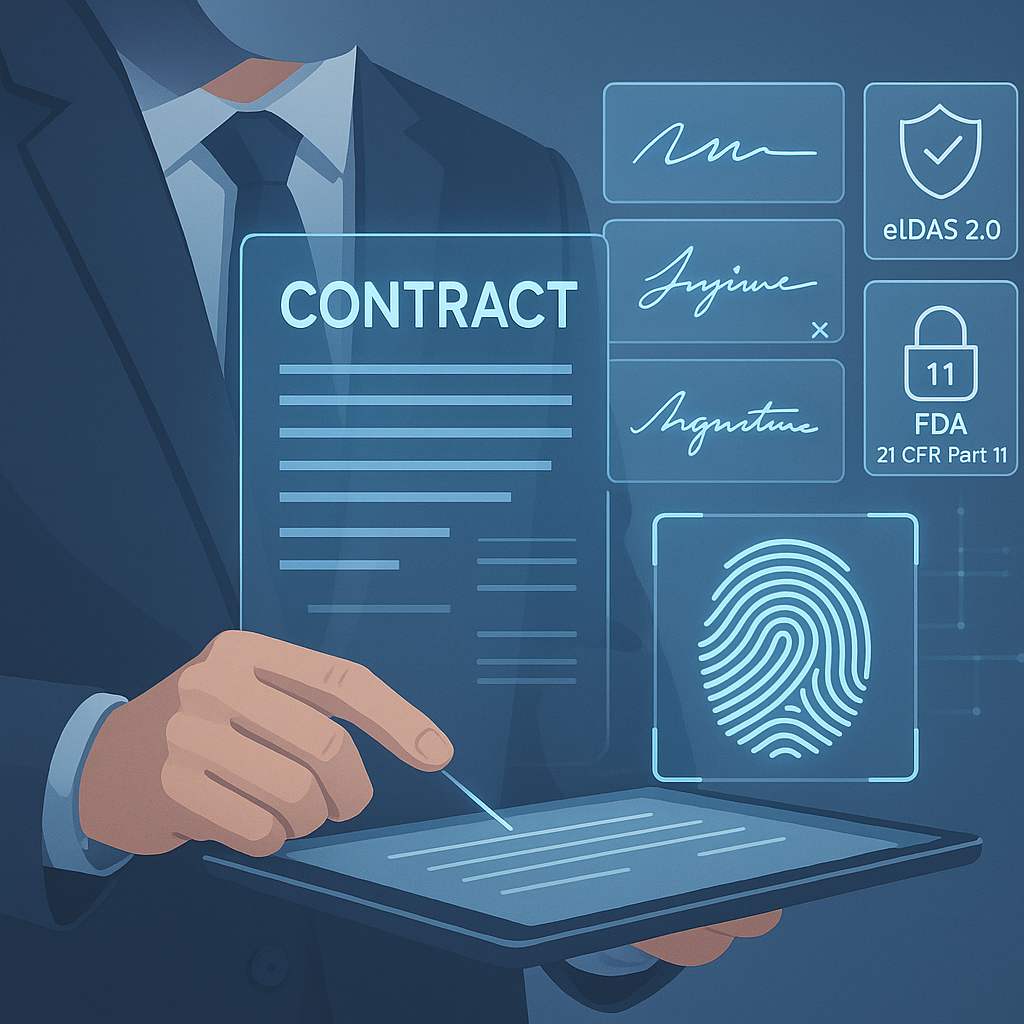
This growth is being driven by a potent combination of factors: tougher rules such as eIDAS 2.0 in Europe and FDA 21 CFR Part 11 in the United States, escalating fraud losses, the rise of AI-based forgery analytics, and the rapid shift toward cloud-based, API-first verification services that plug directly into e-signature and document workflows.(mordorintelligence.com)
Why This Matters for Business Leaders
For many organizations, “signature verification” has long meant a basic compliance checkbox—ensuring a signed PDF or a scanned autograph looks legitimate enough. That mindset is changing fast.
Regulators are clarifying what “trustworthy” digital signatures actually mean in practice, while fraudsters are deploying AI to generate convincing forgeries at scale. The result: signature verification is shifting from back-office formality to front-line risk control with real financial and reputational stakes.
For business professionals overseeing digital transformation, this emerging market signals three key shifts:
- From documents to risk signals: Signatures, metadata, device fingerprints, and signer behavior are increasingly treated as analyzable risk signals, not just static artifacts.
- From siloed tools to embedded workflows: Verification is moving into the fabric of e-signature, CRM, and ERP systems via APIs, rather than existing as a stand-alone forensic step.( y-reports/signature-verification-market?utm_source=openai" target="_blank" rel="noopener noreferrer">mordorintelligence.com)
- From manual review to AI triage: Human experts are still essential—but AI now does the first pass, flagging anomalous signatures and high-risk transactions for deeper review.
Regulatory Pressure: eIDAS 2.0 and 21 CFR Part 11 Raise the Bar
The regulatory environment is a primary driver behind the market’s acceleration.
eIDAS 2.0: Europe’s New Trust Framework
The revised EU regulation on electronic identification and trust services, commonly referred to as eIDAS 2.0, establishes a stricter, pan-European framework for electronic identification, qualified trust services, and the forthcoming European Digital Identity Wallets. It places strong emphasis on qualified electronic signatures (QES) and interoperable trust services that must be verifiable across borders.(mordorintelligence.com)
To comply, organizations operating in or with the EU increasingly need:
- Reliable mechanisms to verify that a signature is backed by a qualified certificate and trusted service provider.
- Automated checks against updated EU trust lists (TLv6 and beyond) for signature and certificate status.(mordorintelligence.com)
- Defensible audit trails linking the identity of the signer, the document, and the time of signing.
That, in turn, pushes CIOs and legal teams toward more sophisticated signature verification components, often bundled into broader digital identity and e-signature platforms.(mordorintelligence.com)
FDA 21 CFR Part 11: Life Sciences Under the Microscope
In the United States, the Food and Drug Administration’s 21 CFR Part 11 governs how electronic records and electronic signatures must be controlled in regulated industries such as pharmaceuticals, biotech, and medical devices. The guidance reinforces expectations around system validation, record integrity, and the authenticity of electronic signatures used in clinical trials, manufacturing, and quality systems.(fda.gov)
Companies subject to Part 11 must demonstrate that:
- Electronic signatures are individually unique and linked to their respective signers.
- Audit trails and system controls make it difficult to repudiate or tamper with signatures and records.
- Verification processes ensure the reliability, integrity, and authenticity of stored records over time.(fda.gov)
As more FDA-regulated firms migrate to digital and remote workflows, they are investing in verification technologies that can survive inspections and audits, not just satisfy internal IT standards.
AI Forgery Detection: From Nice-to-Have to Non-Negotiable
While regulations set the baseline, AI-driven fraud is what’s turning signature verification into an arms race. Mordor Intelligence notes that AI-enhanced signature verification software is growing faster than traditional solutions, with AI components projected to expand at a CAGR exceeding 23% through 2030.(mordorintelligence.com)
In parallel markets such as identity verification and passive authentication, vendors report explosive growth in AI-generated fraud (including deepfakes and synthetic identities), which is pushing organizations toward behavioral analytics, biometric liveness checks, and multi-factor verification.(mordorintelligence.com)
AI is redefining signature verification from a visual comparison exercise into a probabilistic risk discipline—where every stroke, pressure pattern, device ID, and geolocation can factor into a fraud score.
Financial institutions, for example, are using deep learning to analyze:
- Dynamic signature characteristics (speed, pressure, stroke order) captured on tablets or signature pads.
- Historical patterns of how a given customer signs, to detect anomalies.
- Contextual data—IP address, device fingerprint, location mismatch—around the signing event.
Government agencies are also ramping up investments, from AI-assisted mail-in ballot verification in elections to large-scale ID programs that couple signatures with biometrics and digital identity wallets.(mordorintelligence.com)
Cloud and API-First Delivery: Verification Becomes an Invisible Service
A pivotal shift highlighted by the research is the move from on-premise verification tools toward cloud/SaaS deployments, which are forecast to grow at close to 30% annually in the signature verification segment.(mordorintelligence.com)
This mirrors broader patterns across e-signature and digital identity markets, where:
- Cloud-based digital signature platforms already account for the majority of new deployments.(mordorintelligence.com)
- Identity verification and passive authentication services are increasingly consumed via APIs, making them easy to embed into apps and workflows.(mordorintelligence.com)
For business software buyers, the practical outcome is that signature verification is becoming an invisible, API-first layer that powers:
- Automated acceptance or rejection of signatures in loan, onboarding, or contract workflows.
- Real-time risk scoring of high-value transactions and regulatory filings.
- Cross-channel consistency—whether a signer uses a mobile app, web portal, or in-branch tablet.
Where QuickSign Fits: Modern Verification for Small Businesses
While the market data often focuses on large banks and heavily regulated enterprises, the same trends are reshaping expectations for small and mid-sized businesses. Clients, partners, and regulators increasingly assume that even a two-person firm can offer secure, trackable, and compliant e-signature flows.
This is where modern platforms such as QuickSign.it come in. Unlike many legacy providers that emphasize complex enterprise contracts and per-seat licensing, QuickSign is designed around the realities of solo entrepreneurs and growing teams:
- AI Document Generation: Instead of starting with a blank PDF, users can generate legal documents with AI, then send them for signature in a single flow.
- Effortless sending: Upload a PDF, drag and drop signature and form fields, and send—no admin consoles or multi-week onboarding.
- Real-time tracking: Status updates show who has opened, viewed, and signed, helping teams spot bottlenecks and potential issues quickly.
- AI-powered variables: Smart auto-fill capabilities reduce manual data entry and minimize errors across high-volume templates.
- Pricing built for SMBs: A flat-rate starting at $15/month, plus a generous free tier (2 AI document generations and 1 document send to unlimited recipients), contrasts sharply with per-seat pricing from large incumbents.
As vendors like DocuSign and Adobe Sign continue to prioritize enterprise bundles and raise list prices, alternatives such as QuickSign.it are positioning themselves as agile, affordable options for businesses that nonetheless need modern verification capabilities integrated into their signing workflows.
Implications for Organizations Using E-Signatures Today
For organizations already using e-signature tools—or planning to roll them out—the acceleration of the signature verification market has concrete implications.
1. Treat Signature Verification as a Risk Control, Not a Checkbox
Given the rise of AI-enabled forgery and regulatory scrutiny, companies should evaluate whether their current workflows can:
- Detect suspicious signing behavior and flag anomalies for review.
- Maintain auditable records that clearly link signature events to verified identities.
- Scale verification without overwhelming legal or compliance teams.
2. Align with eIDAS 2.0 and Part 11 Where Relevant
Even if your organization is not directly subject to eIDAS 2.0 or 21 CFR Part 11 today, aligning with these frameworks can future-proof your operations and support cross-border business:
- In Europe, ensure your provider supports trusted-list checks and qualified signature validation for regulated contracts.(mordorintelligence.com)
- In life sciences and healthcare, verify that audit trails, access controls, and identity binding satisfy Part 11 expectations.(fda.gov)
3. Favor Cloud, API-First Platforms
Given the rapid evolution of fraud techniques, static on-premise tools are increasingly at a disadvantage. Cloud-native and API-first platforms can push AI model updates and new verification checks far more quickly, which is crucial when defending against novel forgery methods.(mordorintelligence.com)
4. Right-Size Your Solution: Enterprise-Grade vs. SMB-Friendly
Not every business needs a multi-year, enterprise-wide trust platform deployment—but every business needs defensible, transparent signing workflows. For many SMBs, this will mean choosing tools that:
- Offer straightforward pricing rather than per-seat sprawl.
- Bundle AI-driven conveniences like document generation without requiring a dedicated legal-ops team.
- Provide clear audit logs, signer tracking, and configurable verification steps.
Platforms such as QuickSign aim precisely at this intersection: modern verification and tracking capabilities, packaged inside an intuitive, low-friction e-signature interface.
The Road Ahead: From Signatures to End-to-End Trust
The signature verification market’s projected 20.6% CAGR through 2030 is less about the inked squiggle on a page and more about a broader shift toward end-to-end digital trust. As digital identity wallets, AI fraud analytics, and stricter regulations converge, organizations will increasingly be judged on how well they can:
- Prove who signed what, when, and under which legal framework.
- Detect and deter sophisticated tampering or impersonation attempts.
- Offer seamless, user-friendly signing experiences without sacrificing assurance.
In that landscape, the winners—whether large enterprises or nimble SMBs—will be those that treat signature verification not as a discrete product but as a core design principle of their digital workflows.
Looking for an affordable e-signature solution? Try QuickSign for free - no credit card required.