SignQuantum Debuts Post‑Quantum Crypto Add‑On for E‑Signature Platforms
SignQuantum debuts a post-quantum cryptography add-on for e-signature platforms, future-proofing digital contracts against emerging quantum threats.

SignQuantum Debuts Post‑Quantum Crypto Add‑On for E‑Signature Platforms
SignQuantum has unveiled a post‑quantum cryptography (PQC) add‑on for e‑signature platforms, promising to shield digitally signed documents from future quantum computer attacks while preserving today’s workflows. The self‑hosted module cross‑signs documents with NIST‑recommended post‑quantum algorithms and anchors their hashes on a quantum‑resistant blockchain for tamper‑proof verification and time‑stamping, marking a significant step toward “crypto‑agile” e‑signature infrastructure for high‑security transactions. (signquantum.com)
Why This Launch Matters Now
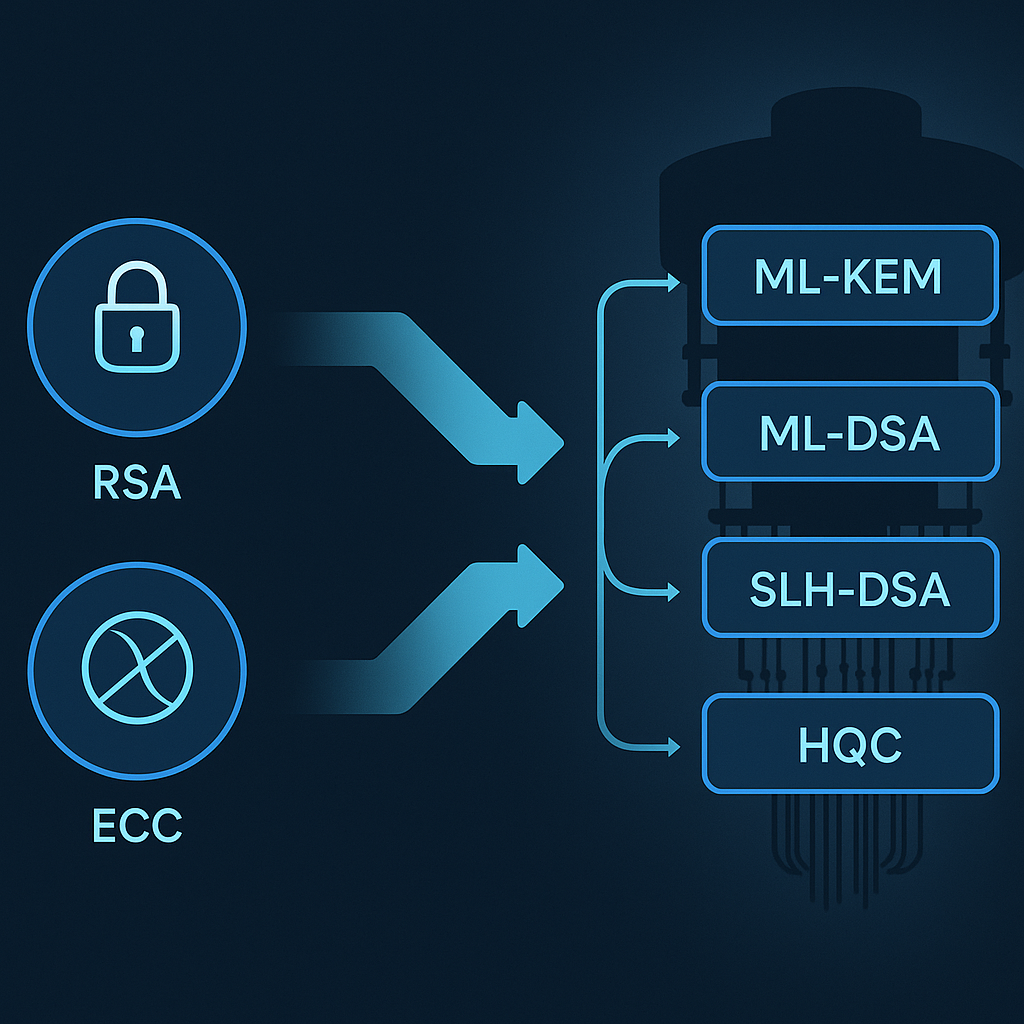
The debut of SignQuantum’s solution comes as regulators and standards bodies move decisively toward post‑quantum cryptography. In August 2024, the U.S. National Institute of Standards and Technology (NIST) finalized its first three post‑quantum standards—FIPS 203, 204, and 205—based on the CRYSTALS‑Kyber, CRYSTALS‑Dilithium, and SPHINCS+ algorithms, now known respectively as ML‑KEM, ML‑DSA and SLH‑DSA. (nist.gov) In March 2025, NIST added HQC as a fifth algorithm, underscoring the need for diverse, quantum‑resistant options. (en.wikipedia.org)
For business leaders, this is more than a technical upgrade. High‑value contracts, loan agreements, IP assignments, M&A documents and long‑tail compliance records may need to remain verifiable for 10–20 years or more. Yet many of today’s public‑key schemes—particularly RSA and elliptic‑curve cryptography (ECC)—are expected to be vulnerable to sufficiently powerful quantum computers due to Shor’s algorithm, raising the specter of retroactive forgery and “harvest‑now, decrypt‑later” attacks. (techradar.com)
As a result, there is rising pressure on e‑signature providers and their enterprise customers to adopt post‑quantum cryptography and build crypto‑agile signing stacks that can evolve as standards mature.
Inside SignQuantum’s Post‑Quantum Add‑On
Cross‑Signing with NIST‑Recommended PQC Algorithms
SignQuantum positions itself as a “post‑quantum security add‑on” that integrates with existing e‑signature tools—such as DocuSign, Dropbox Sign, Adobe Sign, PandaDoc, and others—without forcing organizations to abandon their current platforms. Instead, it runs alongside them, automatically applying an additional, quantum‑resistant signature. (signquantum.com)
According to the company, the module:
- Automatically cross‑signs documents that have already been signed using today’s standard algorithms (such as RSA/ECC‑based signatures) with a NIST‑recommended post‑quantum digital signature algorithm.
- Uses the FIPS 204 standard, implementing ML‑DSA, the NIST‑standardized version of CRYSTALS‑Dilithium, as its primary PQC scheme for digital signatures. (signquantum.com)
- Is deployed as a self‑hosted component so that cryptographic keys and signing workflows stay under the customer’s control—whether on‑premises or in a private cloud. (signquantum.com)
By cross‑signing documents with ML‑DSA and anchoring their hashes in a quantum‑resistant blockchain, SignQuantum aims to preserve both the authenticity and timing proof of today’s e‑signatures in a future quantum era.
Quantum‑Resistant Blockchain for Time‑Stamping
The second pillar of SignQuantum’s approach is immutable time‑stamping. The system records a hash of each signed document on the QAN Enterprise Blockchain, described as a quantum‑resistant ledger that can be run on the customer’s own infrastructure. (signquantum.com)
This design serves two purposes:
- Independent time‑proof: Storing document hashes on a distributed ledger provides a verifiable, third‑party‑independent timestamp. Any later alteration to the document body would produce a different hash, exposing tampering attempts.
- Defense against “time‑travel” attacks: SignQuantum explicitly frames the risk of future quantum attackers who could regenerate signatures and backdate or modify documents. By combining post‑quantum signatures with blockchain anchors, the company claims to make such retroactive manipulation “mathematically impossible” without detection. ( signquantum.com/?utm_source=openai" target="_blank" rel="noopener noreferrer">signquantum.com)
Hashes can be stored on the self‑hosted QAN Enterprise chain and, optionally, mirrored to a public blockchain for additional transparency and redundancy. (signquantum.com)
Who’s Involved and How It Integrates
Plug‑In for Existing E‑Signature Providers
Rather than competing directly with established e‑signature platforms, SignQuantum targets large enterprises and regulated industries that already rely on tools like DocuSign or Adobe Sign but need stronger long‑term assurances. The add‑on integrates via APIs and webhooks, automatically detecting completed signatures and triggering the cross‑signing and time‑stamping workflow. (signquantum.com)
Key implementation details highlighted by the company include:
- No change to front‑end user flows: End‑users continue to sign documents in their familiar interfaces; the PQC and blockchain operations occur behind the scenes.
- Branded certificates: Organizations can generate customized post‑quantum certificate artifacts that align with their brand and compliance requirements. (signquantum.com)
- Regulatory configurability: Deployment can be tailored to meet regional data‑protection laws (e.g., GDPR) and sector‑specific regulations, a critical point for cross‑border contracts and financial services. (signquantum.com)
“Crypto‑Agility” in Practice
Security experts increasingly emphasize crypto‑agility—the ability to swap cryptographic algorithms and parameters without rewriting entire systems—as a core requirement for the post‑quantum era. Recent industry analysis suggests that migrating to PQC will be a multi‑year process involving asset inventories, risk assessments, and phased upgrades across application stacks and supplier ecosystems. (techradar.com)
SignQuantum’s modular, cross‑signing design effectively wraps existing signatures in a post‑quantum envelope, exemplifying a crypto‑agile strategy: protect high‑value data now, while leaving room to adopt new PQC standards as they emerge.
What This Means for the E‑Signature Industry
From “Good Enough” Security to Quantum‑Safe Assurance
E‑signature vendors have long relied on widely adopted public‑key infrastructure and digital signature standards, which—while robust against classical attacks—are not designed to withstand a sufficiently powerful quantum adversary. With NIST’s formal PQC standards in place and global regulators beginning to reference them, the baseline for what counts as “secure enough” is shifting. (nist.gov)
SignQuantum’s entry suggests several likely industry trends:
- Pressure on major providers: Market leaders will face increasing expectations to offer native post‑quantum options, at least for high‑risk use cases and long‑retention documents.
- Growth of PQC add‑ons and gateways: Until core platforms fully migrate, enterprises may use intermediaries—like SignQuantum—to bridge the gap, especially in regulated sectors such as banking, insurance, energy, and government contracting.
- Hybrid signature models: For the near term, “dual” or hybrid signatures (classical + post‑quantum) are likely to become best practice for critical transactions, mirroring network security strategies that combine multiple cryptographic schemes. (techradar.com)
Blockchain as a Compliance and Audit Backbone
While blockchain has been a controversial buzzword in enterprise IT, its role as an immutable log for proving document existence and time of signing is increasingly recognized—particularly for cross‑jurisdictional disputes and audits. Quantum‑resistant chains like QAN aim to ensure that this assurance persists in a post‑quantum world. (signquantum.com)
For e‑signature workflows, that means:
- Stronger, independently verifiable evidence packages in court or arbitration.
- More robust audit trails that are not solely dependent on a single vendor’s database or logs.
- Clearer chain‑of‑custody for document versions over long time horizons.
Implications for Businesses Using E‑Signatures Today
Assessing Quantum Risk by Document Type
Not every document justifies post‑quantum safeguards. Short‑lived approvals or low‑risk internal memos may not need 20‑year cryptographic durability. But many business‑critical records do:
- Long‑term financial agreements (loans, leases, project finance)
- Strategic supplier and distribution contracts
- IP‑related documents (licensing, assignments, patent‑related filings)
- Regulated records with statutory retention (e.g., healthcare, public sector, utilities)
For these categories, organizations should begin to classify which documents require quantum‑resistant assurance and identify where they are currently being signed and stored.
Integrating PQC Without Disrupting Workflows
One advantage of an add‑on model is that businesses don’t have to rip and replace their existing e‑signature platforms. Modern solutions like QuickSign, for example, focus on streamlined digital workflows and API‑friendly integrations, making it easier for security teams to bolt on additional controls such as PQC modules, advanced identity verification, or blockchain anchoring where needed.
In practice, a phased roadmap might look like this:
- Inventory and classify: Map which document types are signed where, and assign quantum‑risk levels based on sensitivity and retention time.
- Pilot PQC for high‑risk flows: Start with a narrow slice—such as M&A deals or large‑value contracts—using an add‑on like SignQuantum while keeping existing e‑signature front‑ends.
- Align vendors and policies: Update procurement criteria to require PQC or crypto‑agility roadmaps from e‑signature and document‑management vendors.
- Standardize evidence packages: Define how post‑quantum signatures and blockchain proofs are stored, audited, and presented in legal disputes or regulatory reviews.
Strategic Takeaways for Digital Workflow Leaders
For CIOs, CISOs, and legal ops leaders, SignQuantum’s launch is a signal that the e‑signature ecosystem is entering a new phase:
- Quantum risk is now an operational issue, not just an academic topic. NIST standards are finalized, and industry tools are emerging to implement them.
- Crypto‑agility should be a design principle for all new signing and document workflows, with the ability to adopt new algorithms and key sizes without large‑scale rewrites.
- Hybrid architectures will persist for years, with classical and post‑quantum signatures coexisting, often anchored on quantum‑resistant ledgers for evidentiary strength.
The organizations that begin experimenting with post‑quantum e‑signature security today will be better positioned to meet future regulatory demands, defend long‑term contracts, and reassure counterparties that their legal commitments can stand up in a quantum future.
Conclusion and Call to Action
SignQuantum’s post‑quantum cryptography add‑on illustrates how the e‑signature landscape is evolving from “digitally convenient” to “quantum‑resilient.” By blending NIST‑standard algorithms with a quantum‑resistant blockchain, the company offers a path for enterprises to future‑proof their most critical documents without sacrificing current user experience.
For organizations evaluating their next steps in e‑signature security, it makes sense to pair experimentation with PQC add‑ons like SignQuantum with flexible, integration‑friendly e‑signature platforms. Solutions such as QuickSign are designed to plug into broader digital workflows and security stacks, helping teams pilot advanced capabilities like post‑quantum signing, enhanced audit trails, and automated compliance checks.
Try QuickSign for free - generate 2 documents and send 1 document to unlimited recipients at no cost