Sparkle Update Framework Flaw Exposes Cracks in Software Update Signing Confidence
Discover how a critical Sparkle update framework flaw exposes cracks in software update signing confidence and learn what it means for app security.
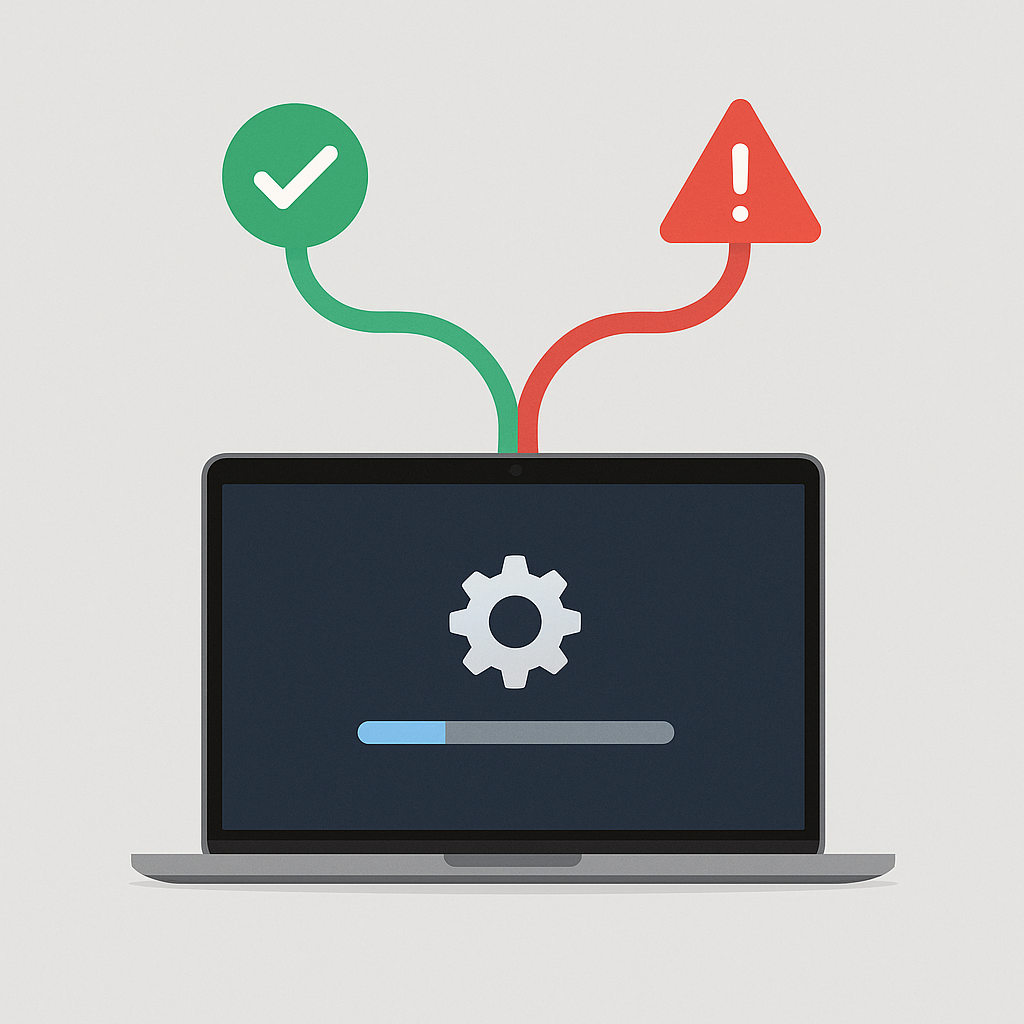
Sparkle Update Framework Flaw Exposes Cracks in Software Update Signing Confidence
CVE-2025-0509, a newly disclosed authentication bypass in the popular Sparkle update framework, is forcing software vendors and enterprise security leaders to re-examine a core assumption of modern software security: that a digitally signed update can be trusted. The vulnerability, present in Sparkle versions prior to 2.6.4, allows an attacker to replace a signed application update with a malicious payload by bypassing Sparkle’s (Ed)DSA-based signature checks, opening the door to arbitrary code execution on macOS systems that depend on Sparkle for updates. (nvd.nist.gov)
Why This Matters for Digital Business and E‑Signature Workflows
Digital signatures underpin nearly every aspect of contemporary business software: from code signing and automatic updates to e-signature workflows for contracts, HR files, and regulatory documents. When the mechanism that validates signed updates is compromised, it is not just the endpoint that is at risk—it is the integrity of the business processes that run on that endpoint.
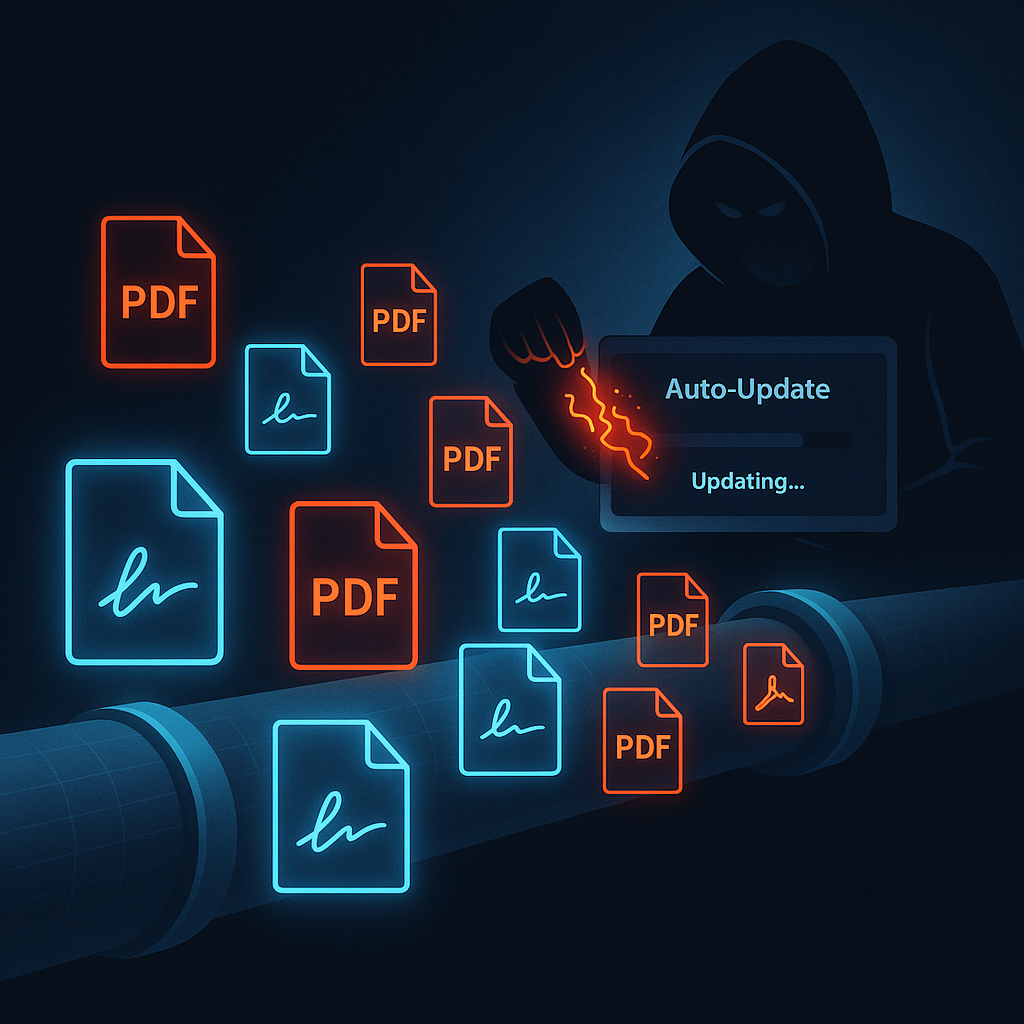
Many macOS productivity tools, document editors, and even PDF and e-signature clients rely on Sparkle’s auto-update mechanism to deliver security fixes and new features outside the Mac App Store. If an attacker can silently hijack those updates, they may gain the ability to read, alter, or exfiltrate the very documents and signatures that organizations depend on for legal and compliance assurance.
Key takeaway: A break in software update signing can quickly ripple into a break in trust for every digital document and e-signature handled by that software.
What Happened: Inside CVE-2025-0509
The vulnerability in brief
According to the NIST National Vulnerability Database and multiple security advisories, CVE-2025-0509 is a signing checks bypass affecting Sparkle prior to version 2.6.4. (nvd.nist.gov) The flaw allows an attacker with access to the same (adjacent) network as the victim to replace a legitimate, signed update package with a different payload while defeating Sparkle’s (Ed)DSA verification.” (sentinelone.com)
Key technical facts:
- Affected component: Sparkle update framework (commonly embedded in macOS apps for in-app updating).
- Affected versions: Sparkle versions earlier than 2.6.4. (nvd.nist.gov)
- Impact: Potential arbitrary code execution by replacing signed updates with malicious binaries that bypass (Ed)DSA signature checks. (sentinelone.com)
- Attack vector: Adjacent network (e.g., same Wi‑Fi or local network), with high attack complexity and high privileges required, but with high impact on confidentiality, integrity, and availability if successfully exploited. (app.opencve.io)
- Severity: CVSS v3.1 base score of 7.3 (High). (app.opencve.io)
How the auth bypass works conceptually
While technical writeups vary in detail, public analyses agree on the core issue: Sparkle’s update mechanism fails to fully enforce its (Ed)DSA signature checks, enabling an attacker to swap a legitimate signed update for another payload that Sparkle incorrectly accepts as valid. (sentinelone.com)
In practical terms, a targeted attacker on the same network could:
- Intercept or influence the app’s request for an update feed or package.
- Serve a malicious update bundle that exploits the signature bypass.
- Have that bundle installed as though it were
a legitimate, signed update.
Once installed, the malicious update would run with the privileges of the affected application, which for document- and signature-related tools often includes access to sensitive files, cryptographic tokens, and network APIs.
Who Is Affected: Beyond Mac Utilities
Sparkle is widely used across independent macOS applications and even in some embedded or appliance-like products. OpenCVE and other trackers list the Sparkle project itself as well as NetApp components (HCI Compute Node and OnCommand Workflow Automation) among affected products. (app.opencve.io) This underscores that the impact extends beyond consumer utilities into data center and infrastructure contexts.
For businesses that rely on macOS tools to prepare, review, and sign documents—including PDF editors, contract lifecycle management clients, and workflow automation agents—any app using a vulnerable Sparkle version becomes part of the risk surface. Even if the e-signature service itself is securely hosted in the cloud, a compromised desktop client could:
- Harvest login credentials or session tokens for e-signature platforms.
- Exfiltrate documents before or after signing.
- Silently modify local copies of contracts, NDAs, or compliance records.
- Inject malicious scripts or macros into files that are later distributed.
Industry Analysis: Code Signing Is Necessary—but Not Sufficient
The Sparkle incident reinforces a broader lesson in software security: code signing by itself is not a silver bullet. Researchers have long warned that the systems and workflows around signing—update frameworks, identity providers, and client-side verification logic—can become weak links even when cryptography is sound. (arxiv.org)
“Code signing enables users to verify authenticity and integrity, but clients must enforce verification correctly. Any bypass in the signing workflow effectively nullifies those guarantees.” (arxiv.org)
In this case, the cryptographic primitives ((Ed)DSA signatures) were not broken. Instead, the implementation and validation logic around them allowed an attacker to slip past checks that organizations assumed were airtight. This distinction matters for digital business leaders: risk often lies not in the math, but in the software glue that integrates signatures into real-world workflows.
The Sparkle vulnerability also echoes a familiar pattern from earlier macOS Sparkle-related issues, where insecure transport (non-HTTPS update feeds) enabled attackers to inject malicious updates. (imore.com) Together, these episodes illustrate that software update security depends on both:
- Robust cryptographic signing and verification; and
- Secure, well-audited implementation of the distribution pipeline (feeds, frameworks, permissions, and client logic).
Implications for E‑Signature and Digital Workflow Platforms
The indirect-but-serious risk to signed documents
At first glance, a flaw in a macOS update framework might seem orthogonal to the world of electronic signatures and digital contracting. In reality, it is closely related. E‑signature workflows rest on three pillars:
- Identity: Knowing who is signing.
- Integrity: Ensuring documents are not altered after signing.
- Non‑repudiation: Being able to prove that a signature is valid and intentional.
If the software used to review, sign, or store documents is compromised via a malicious update, all three pillars can be undermined:
- Malware could tamper with on-screen documents so users sign one version while a different version is stored or transmitted.
- Credentials for cloud-based signing services could be stolen and reused to sign unauthorized agreements.
- Local evidence (logs, caches, PDFs) could be manipulated to create confusion in audits or legal disputes.
Why SaaS-based signing can be safer—if clients are controlled
Cloud-first providers such as QuickSign approach the problem from a different angle. By centralizing the signing logic, key management, and audit trails in a hardened SaaS environment, they reduce the attack surface on user devices. Even so, endpoint compromise remains a realistic concern—which is why secure update channels and OS-level hardening remain critical.
For organizations running high-value e-signature workflows—such as financial services, real estate, and cross-border supply chains—the Sparkle case is a reminder to:
- Inventory which client tools and desktop apps actually use auto-update frameworks like Sparkle.
- Prioritize patching those apps to Sparkle 2.6.4 or later where applicable. (nvd.nist.gov)
- Reassess whether sensitive signing operations should occur only in vetted environments (managed workstations, VDI, or browser-only flows).
- Prefer solutions that offer strong, tamper-evident audit trails and server-side integrity guarantees, so a compromised client has limited scope to alter official records.
What Organizations Should Do Now
1. Identify and patch vulnerable Sparkle-based apps
Security teams should immediately:
- Scan macOS fleets for applications bundling Sparkle versions earlier than 2.6.4. (app.opencve.io)
- Check vendor release notes or advisories referencing CVE-2025-0509.
- Update affected applications to versions that include Sparkle 2.6.4 or later, or temporarily disable auto-updates where patching is not yet possible.
2. Review update and signing policies for critical workflow tools
For any software used to handle sensitive or signed documents:
- Verify that update channels are both encrypted (HTTPS/TLS) and cryptographically signed.
- Confirm that vendors have a documented response to CVE-2025-0509 and similar supply-chain risks.
- Consider restricting signing of mission-critical contracts to a smaller set of locked-down applications and environments.
3. Strengthen your e‑signature architecture
Businesses can also reduce exposure through architectural choices. Cloud-native e-signature platforms like QuickSign centralize document storage, signature validation, and audit logging in the cloud, which allows:
- Server-side validation of document integrity independent of any one desktop client.
- Centralized monitoring and anomaly detection on signing activity.
- Simplified client posture—often just a modern browser—so fewer native auto-update frameworks are in play.
Strategic shift: Move from “trust every desktop client” to “trust a hardened, auditable signing service and treat clients as potentially untrusted display devices.”
Conclusion: A Wake-Up Call for Software and Signature Trust
CVE-2025-0509 is not just another macOS bug. It is a reminder that the trust we place in digitally signed software updates—and by extension in the tools we use to sign documents—depends on a delicate chain of cryptography, implementation quality, and operational discipline. When any link in that chain fails, attackers can turn trusted mechanisms into powerful attack vectors.
For business leaders responsible for digital transformation, e-signatures, and regulatory compliance, the message is clear:
- Demand transparency from vendors about their update and code-signing practices.
- Treat update frameworks as critical security infrastructure, not plumbing.
- Favor architectures where the official “source of truth” for signed documents lives in a hardened, centrally managed service rather than on individual devices.
To explore how a cloud-first, security-focused e-signature platform can fit into that strategy, consider evaluating solutions that combine strong cryptography with robust operational controls and auditability.
Call to action: Try QuickSign for free - generate 2 documents and send 1 document to unlimited recipients at no cost. This kind of SaaS-based model can help insulate your critical e-signature workflows from endpoint-level risks—including those arising from vulnerabilities like CVE-2025-0509 in third-party update frameworks.