U.S. Congress Weighs Nationwide Standards for Remote and Electronic Notarization
Discover how U.S. Congress may reshape remote online notarization with nationwide standards, boosting security, convenience, and legal trust across states.

U.S. Congress Weighs Nationwide Standards for Remote and Electronic Notarization
Remote online notarization has moved from pandemic workaround to core business infrastructure. Now, Congress is stepping in. The SECURE Notarization Act of 2025 (H.R. 1777), introduced in the U.S. House of Representatives on March 3, 2025, aims to create federal standards for electronic and remote notarization and require courts and states to recognize notarizations performed across state lines when they affect interstate commerce.(congress.gov)
Why Federal Notarization Standards Matter Now
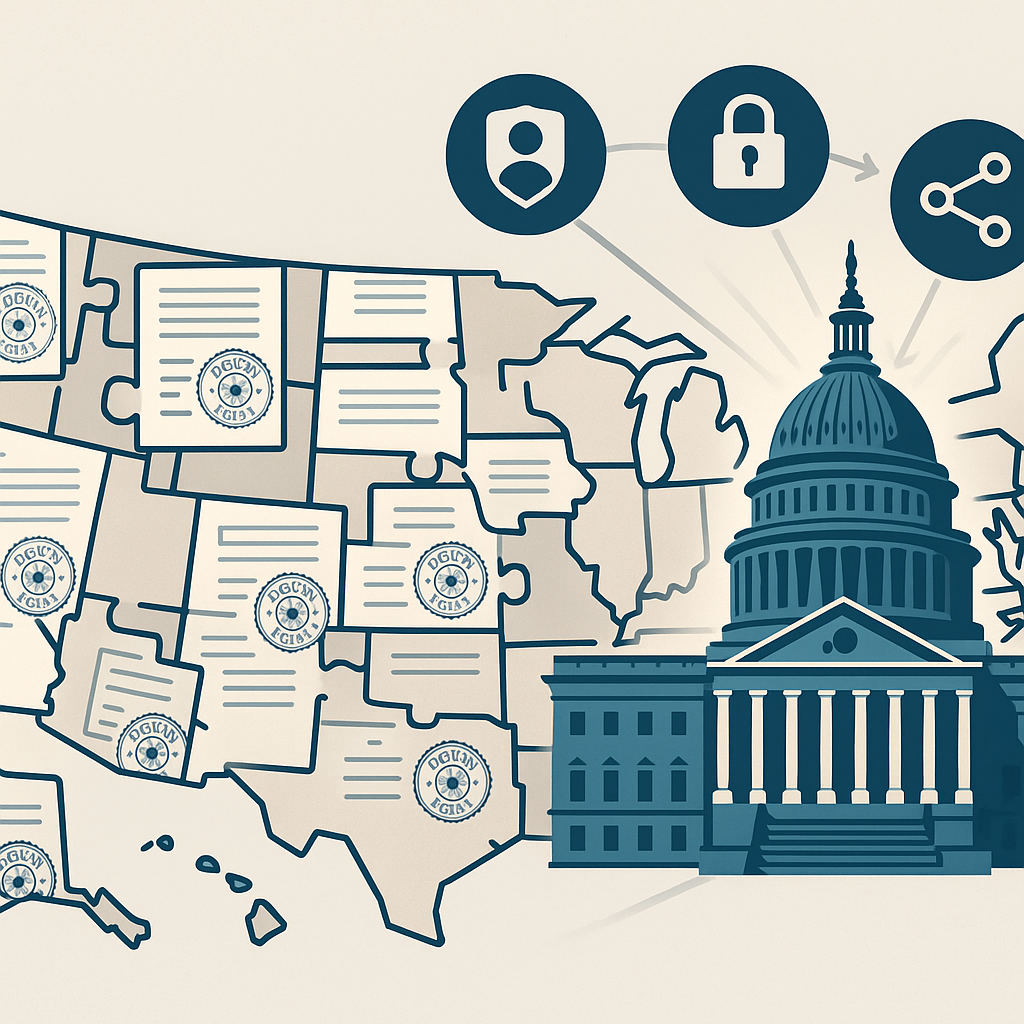
Notarization is a small but critical step in high‑stakes transactions: real estate closings, loan documents, estate planning, and corporate governance paperwork. For years, businesses have wrestled with a patchwork of state rules governing remote online notarization (RON), with varying technology requirements, identity‑verification standards, and recognition of out‑of‑state notarial acts.
That patchwork has become harder to manage as digital workflows and interstate commerce have accelerated. As of early 2025, 47 states plus the District of Columbia have enacted permanent RON laws, while remaining states rely on temporary measures, pilot programs, or more limited forms of remote notarization.(americanbar.org) For nationwide lenders, title companies, and legal practices, that means every cross‑border transaction raises a new compliance question.
The SECURE Notarization Act of 2025 is designed to smooth those edges by creating a federal floor of standards for remote and electronic notarization and clarifying when states and federal courts must recognize notarizations performed elsewhere.
Inside the SECURE Notarization Act of 2025
Scope and Purpose
H.R. 1777—formally titled the “Securing and Enabling Commerce Using Remote and Electronic Notarization Act of 2025”—was introduced by Rep. Cliff Bentz (R‑OR), with bipartisan co‑sponsors including Rep. Madeleine Dean (D‑PA) and Rep. Janelle Fedorchak (R‑PA).(congress.gov) The bill’s core goal is to authorize notaries nationwide to perform electronic notarizations and remote notarizations that occur in or affect interstate commerce, and to ensure those notarizations are recognized across state lines.
Key elements of the bill include:
- Authorization of electronic and remote notarization: Notaries public would be expressly authorized under federal law to perform notarizations for electronic records and for remotely located individuals, so long as the transaction occurs in or affects interstate commerce.(congress.gov)
- Minimum technology and process standards: The act defines “communication technology” as an electronic process that allows the notary, the remotely located individual, and any credible witness to communicate simultaneously by sight and sound. It also imposes requirements around identity verification, multi‑factor authentication, and tamper‑evident attachment of electronic signatures.(congress.gov)
- Recognition by federal courts: Every federal court would be required to recognize any notarization (paper or electronic, in‑person or remote) performed by a notarial officer of any state, if it’s valid under that state’s law or under the federal act.(congress.gov)
- Recognition across state lines: States would be required to recognize notarizations from other states when the notarization is valid where performed and either relates to a public act or judicial proceeding of that state or affects interstate commerce.(congress.gov)
- Preservation of state authority: States retain power to set additional standards and licensing requirements for their own notaries, as long as those rules are consistent with the federal minimums and do not mandate or favor a specific technology provider.(congress.gov)
- Recording and auditability: For remote notarizations, states must require retention of an audio‑visual recording of the session for at least five years.(congress.gov)
The bill stops short of forcing anyone to go digital: it explicitly states that nothing in the act requires a notary to perform electronic or remote notarizations or use a technology they have not chosen.(congress.gov)
Current Status in Congress
As of early December 2025, H.R. 1777 remains at the “Introduced” stage. It has been referred to the House Committee on Energy and Commerce and, in addition, to the House Judiciary Committee for consideration of provisions within their jurisdictions.(
ouse-bill/1777/all-info?utm_source=openai" target="_blank" rel="noopener noreferrer">congress.gov) Previous iterations of the SECURE Notarization Act introduced in prior Congresses gained bipartisan support and strong backing from banking, mortgage, and real‑estate trade groups, but did not make it to the president’s desk.The Bigger Picture: Remote Notarization in 2025
The legislative push comes in the context of a rapid shift toward remote notarization nationwide. The American Bar Association notes that, by early 2025, permanent RON authorization was on the books in most states, with holdouts experimenting with pilot programs or limited forms of remote notarization and considering new bills.(americanbar.org) At the same time, businesses across sectors are pushing to eliminate remaining paper and in‑person choke points in otherwise digital workflows.
For business professionals, the practical challenges are familiar:
- Multi‑state lenders and title companies must maintain different playbooks for each jurisdiction.
- Law firms managing cross‑border matters have to reconcile varying standards for identity proofing and audio‑visual recording.
- Small businesses and solo entrepreneurs often discover late in the process that their remote notarization may not be accepted in another state, leading to re‑work and delays.
Federal standards would not replace state law, but they would reduce uncertainty in transactions that clearly fall under interstate commerce—such as a mortgage with an out‑of‑state lender or a corporate loan involving multiple jurisdictions.
What This Means for Digital Workflow and E‑Signature Platforms
From E‑Signature to E‑Notarization
Remote online notarization is the natural next step in digitizing workflows built on electronic signatures. Many providers already offer integrations between e‑signature platforms and RON solutions, particularly for mortgage and real‑estate transactions. A federal framework could accelerate this trend by giving national players clearer rules of the road.
For platforms like QuickSign, federal standards would simplify how small businesses, law practices, and independent professionals design their document workflows:
- AI‑assisted document creation: With AI document generation, QuickSign can help users draft notarization‑ready templates—such as powers of attorney, affidavits, or consent forms—that include the right signature and notary blocks from the start.
- Effortless sending and routing: A typical flow—upload PDF, drag‑and‑drop signature and notary fields, send to all parties—becomes easier to standardize when the underlying notarial rules are aligned across states.
- Real‑time tracking: Status updates on who has signed, what’s waiting on notarization, and when the process is complete help businesses avoid the last‑minute scramble before a closing or filing deadline.
While large incumbents like DocuSign and Adobe Sign focus increasingly on enterprise clients—with complex contracts and per‑seat licensing—alternatives such as QuickSign are positioning themselves for smaller firms that need flexibility. Instead of multi‑seat plans and steep annual commitments, QuickSign emphasizes a generous free tier (2 AI document generations and 1 document send to unlimited recipients) and flat‑rate pricing starting at $15/month, avoiding per‑user fees that can make scaling digital workflows costly for small teams.
Compliance and Vendor Lock‑In
One of the more consequential, if less visible, aspects of the SECURE Notarization Act is its technology‑neutral stance. The bill expressly warns against state rules that “accord greater legal effect to the implementation or application of a specific technology or technical specification” for performing notarizations.(congress.gov)
For businesses, that’s important. It means regulators should focus on outcomes—secure identity verification, tamper‑evident records, and reliable recordings—rather than mandating a specific vendor or proprietary stack. In practice, this could reduce the risk of “de facto” lock‑in where a single RON provider becomes the only compliant option in a given state.
In such an environment, lighter‑weight solutions like QuickSign can compete on usability and cost:
- AI‑powered variables can auto‑fill names, dates, and transaction details across signature and notarization blocks, cutting error rates in high‑volume workflows.
- Simple, modern UI is designed for non‑technical users—solo attorneys, independent brokers, or small finance teams—who don’t have IT staff to administer complex enterprise platforms.
- No enterprise lock‑in gives businesses flexibility to pair their e‑signature tool with the RON providers or notary networks that best match their industry and geography.
Implications for Key Sectors
Financial Services and Mortgage Lending
Mortgage lenders have been among the strongest advocates for federal RON legislation. Nationally active organizations routinely handle transactions where the borrower, property, and lender are in different states. Today, they navigate a maze of state‑specific rules about when remote notarization is permitted and whether an out‑of‑state remote notarization will be accepted for recording.
Under the SECURE Notarization Act, lenders would gain clearer authority to rely on valid remote notarizations performed by notaries in any state, so long as the transaction affects interstate commerce. That could support more fully digital “e‑closing” experiences, shorten closing timelines, and reduce reliance on in‑branch visits or traveling notaries—especially valuable for remote and hybrid borrowers.
Real Estate and Title Companies
Title and settlement companies have already embraced RON where permitted, but often maintain parallel processes for non‑RON states. A federal floor would help them expand standardized digital closing packages nationwide. Combined with integrated e‑signature tools, real‑estate professionals could move more of the transaction—from listing agreements to closing disclosures—to a single digital workflow with clear audit trails.
Legal and Professional Services
Law firms, especially those running remote or hybrid practices, have leaned into RON to serve clients across jurisdictions. An ABA analysis of the 2025 landscape underscores how close the country already is to universal RON, but also how lingering variances create risk for cross‑border practice.(americanbar.org) A federal recognition standard would give lawyers more confidence that a remote notarization executed for one state’s law will be accepted in another’s court or recording office.
For small firms that already rely on e‑signature tools to manage engagement letters, settlement agreements, and corporate records, layering in standardized e‑notarization capabilities—whether through integrations or specialist providers—becomes more straightforward when the federal rules are clear.
What Businesses Should Do Now
Even while H.R. 1777 is still in committee, business leaders can take steps to prepare for a more standardized remote notarization future:
- Audit your notarization‑heavy workflows. Identify where notarization currently forces a paper or in‑person detour—mortgage documents, vendor contracts, HR forms, board resolutions, etc.
- Standardize templates. Use AI‑assisted tools to build document templates with consistent signature and notary blocks that are easier to adapt as regulations evolve.
- Consolidate e‑signature usage. Move ad‑hoc signing scattered across email and PDFs into a dedicated platform with clear tracking, audit trails, and access controls.
- Follow the legislation. Monitor the progress of H.R. 1777 and any related Senate companion bills so compliance teams can quickly update policies once federal standards are finalized.
For many small businesses and solo professionals, the barrier to digitizing notarization isn’t intent but complexity and cost. A combination of clear federal rules and affordable software can change that equation.
Looking for an affordable e-signature solution? Try QuickSign for free - no credit card required.