Upcoming Legal Automation Summit Puts Contract Workflows for Lean Teams in the Spotlight
Discover how the Upcoming Legal Automation Summit puts contract workflows for lean teams center stage. Join this contract automation summit to scale smarter.
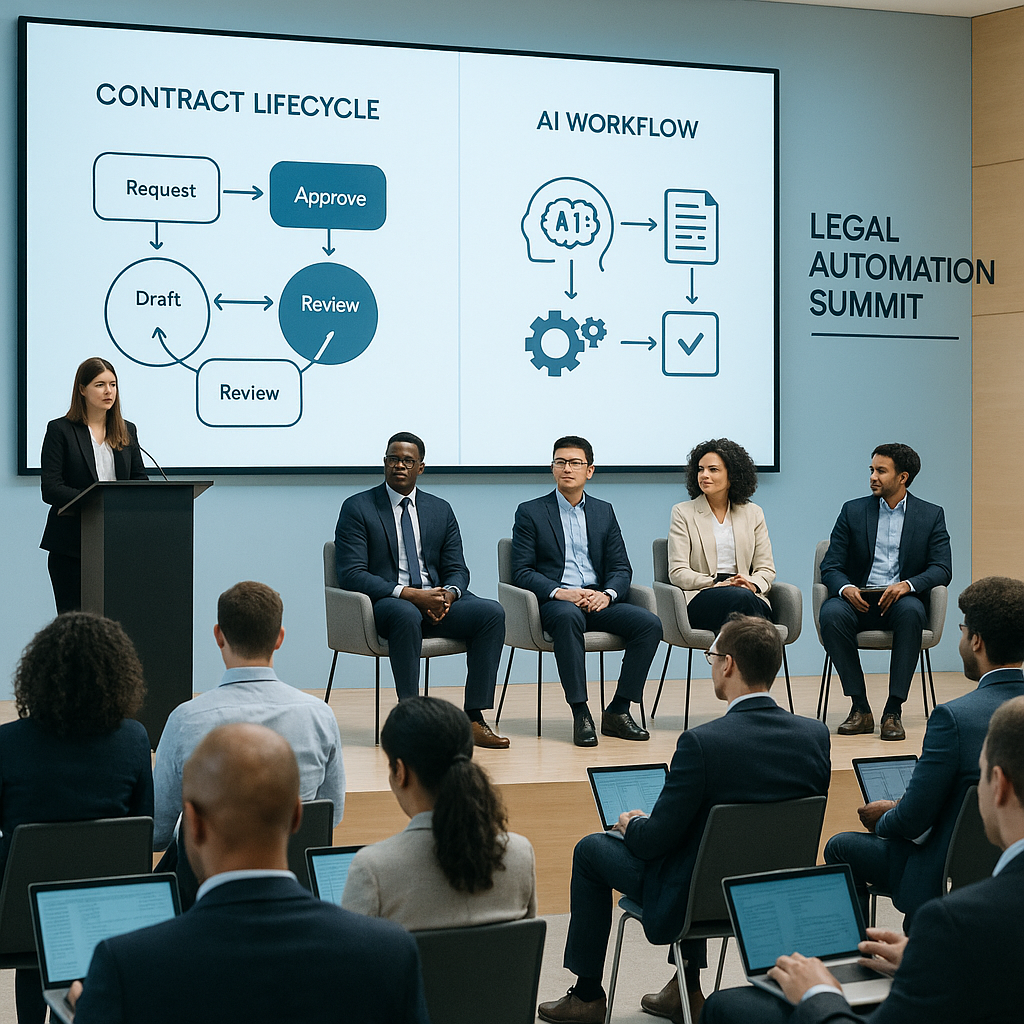
Upcoming Legal Automation Summit Puts Contract Workflows for Lean Teams in the Spotlight
An upcoming legal automation summit is zeroing in on a timely question for lean legal teams: how can AI and workflow tools make contract lifecycle management faster, cheaper, and more predictable—without requiring a big-firm IT budget? Organizers say the event will spotlight practical templates, low‑code automations, and ready‑to‑use playbooks that in‑house counsel at startups, small law firms, and fractional GCs can implement in weeks, not months.
Why Contract Automation Matters Now for Small Legal Teams
Across the US, solo and small firms are under pressure to deliver big‑firm responsiveness at small‑firm prices. Recent research shows that small‑firm lawyers have increased the share of time spent on billable work from 56% to 61% in just one year, largely by trimming administrative overhead and embracing automation tools like online intake and e‑signatures. Firms using these tools report up to 20% higher revenue and 15% faster client conversion, underscoring how efficiency directly impacts the bottom line. (runsensible.com)
At the same time, corporate legal departments are increasingly shifting work away from large firms to more agile small and midsized practices. In one survey, 39% of in‑house departments said they plan to move work from Big Law to smaller firms, citing lower cost, greater responsiveness, and higher efficiency. (gavel.io) This trend creates an opportunity—but only for small teams that can scale their service delivery without adding headcount.
AI is becoming a key part of that equation. Adoption of AI tools in legal practice has surged from under 20% to nearly 80% usage in some segments in just a year, with applications ranging from document drafting and contract analysis to client intake and workflow management. (runsensible.com) For lean teams, the promise is straightforward: do more high‑value legal work with fewer manual steps in the contract lifecycle.
“For small legal teams, contract automation is no longer a ‘nice to have’—it’s rapidly becoming the backbone of sustainable service delivery and competitive pricing.”

Inside the Summit: From Theory to Click‑and‑Run Workflows
The legal automation summit is designed to be highly tactical, focusing on how small teams can operationalize contract workflows end‑to‑end. While the agenda is still being finalized, organizers and early speakers highlight a few core themes.
1. Workflow Templates for the Entire Contract Lifecycle
Sessions are expected to walk attendees through pre‑built workflows covering the full contract lifecycle:
- Intake and triage – standardized request forms that route NDAs, MSAs, vendor contracts, and employment agreements to the right stakeholders.
- Drafting and review – clause libraries and AI‑assisted drafting tools that generate first drafts in minutes.
- Approvals – automated routing to finance, security, and management with clear SLAs and reminder sequences.
- Signature and execution – integrated e‑signature flows to minimize back‑and‑forth and eliminate printing or scanning.
- Post‑signature obligations – automated reminders for renewals, termination windows, and key commercial milestones.
For lean legal teams, the appeal is that these are not theoretical frameworks; they are intended as plug‑and‑play templates that can be adapted to a firm’s or startup’s existing tech stack without extensive development work.
2. Low‑Code and No‑Code Automation for Non‑Technical Lawyers
Another focal point: giving non‑technical lawyers the tools to design and maintain automation themselves. Industry guidance increasingly recommends starting with “simple, repeatable workflows”—like intake, NDAs, and basic vendor contracts—before expanding to more complex scenarios. (thriveautomations.io)
Summit workshops are expected to show, step by step, how to:
- Map a current contract process (from request to signature) and identify bottlenecks.
- Use drag‑and‑drop builders to create approval routes and notifications.
- Connect contract templates, e‑signature tools, and repositories with minimal integration work.
- Measure cycle times and identify where automation has the biggest impact.
The goal is to help small firms reclaim dozens of hours per month without hiring additional operations or IT staff—an outcome that some automation programs already report, particularly in mid‑size practices reclaiming 40–60 hours per week across the team. (thriveautomations.io)
3. AI in Contracts: From Drafting to Risk Flags
Given the broader AI boom in legal tech, it’s no surprise that AI‑powered contract tools will feature prominently. Recent investments and adoption trends show AI being deployed for contract drafting, clause comparison, and risk analysis across both corporate legal departments and law firms. (reuters.com)
Summit speakers are expected to show practical examples such as:
- Generating first‑draft NDAs and basic commercial agreements from a short description.
- Highlighting deviations from playbook positions during third‑party paper review.
- Summarizing long contracts into deal memos for executives or clients.
- Creating negotiation checklists tailored to a particular c
ounterparty or deal type.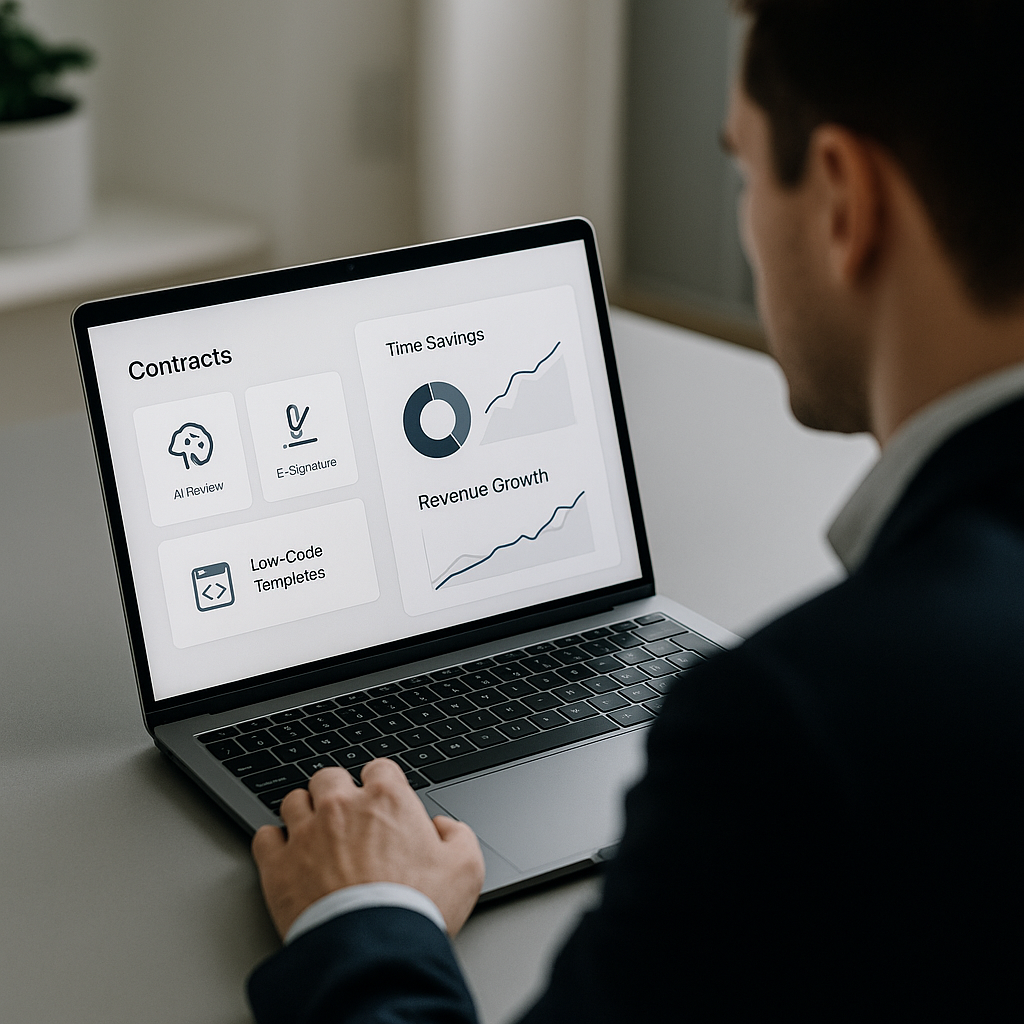
“The real win for small teams isn’t AI that replaces lawyers; it’s AI that gives lean teams a ‘virtual’ paralegal bench for drafting, tracking, and follow‑through on every contract.”
What This Means for Startups, Small Firms, and Fractional GCs
For business owners and independent professionals, the summit’s focus reflects a broader shift: legal services—and particularly contract work—are becoming more productized and workflow‑driven. That has several implications for small organizations relying on lean legal support.
Faster Turnaround Without More Staff
Automation and standardized templates let a single GC or small firm handle a higher volume of contracts with shorter turnaround times. Studies show that firms embracing workflow automation see quicker intake‑to‑resolution cycles and better client conversion, outcomes that directly translate into increased revenue and improved client satisfaction. (runsensible.com)
More Predictable Pricing and Flat‑Fee Models
As more of the contract lifecycle becomes automated and measurable, flat‑fee and subscription models become easier to offer. This aligns closely with client demand: a majority of legal consumers prefer flat‑fee pricing for their matters, and many businesses are actively seeking predictable legal spend. (runsensible.com)
Less Reliance on Big‑Firm Infrastructure
Cloud‑based tools mean that small law firms and fractional GCs can deliver sophisticated contract workflows without enterprise IT teams. As the American Bar Association notes, cloud‑native platforms and automation of routine tasks—from contract review to compliance checks—are now key trends reshaping the legal profession. (americanbar.org) For startups and SMEs, that means you can get “Big Law‑style” contract rigor from smaller, more nimble providers.
The QuickSign.it Perspective: Making Contract Workflows Accessible
For readers of QuickSign’s news hub, the summit’s emphasis on accessible, automation‑ready contract workflows dovetails with what QuickSign is building for small businesses, freelancers, and independent legal professionals.
AI Document Generation for Everyday Contracts
Many small teams’ bottlenecks begin before signature—at the drafting stage. QuickSign offers AI Document Generation specifically tuned for contracts, NDAs, and similar business documents, allowing users to produce first drafts in minutes based on a short description of the deal or relationship.
For example, a fractional GC supporting several startups can quickly generate tailored NDAs, consulting agreements, or simple SaaS terms without switching tools or hunting through old files. Those drafts can then move seamlessly into e‑signature workflows.
Effortless Sending and Real‑Time Tracking
Once a contract is ready, QuickSign keeps the execution process simple:
- Effortless sending: upload a PDF, drag and drop signature, date, and text fields, then send to one or many recipients.
- Real‑time tracking: monitor who has opened, viewed, or signed the document so you know exactly where a deal stands.
- Unlimited recipients even on the free tier’s one send, making it easy to finalize multi‑party agreements or collect signatures from a full board.
These features align closely with the summit’s focus on low‑friction, template‑driven workflows that don’t require complex configuration or expensive integrations.
Flat‑Rate Pricing for Lean Teams
Unlike many enterprise‑focused solutions that rely on per‑seat pricing, QuickSign is built for small teams and budget‑conscious professionals. The platform offers:
- A free tier including 2 AI document generations and 1 document send to unlimited recipients.
- A simple, flat‑rate $15/month plan that covers the whole team, avoiding the complexity and cost of per‑user licensing.
For small firms and startups exploring ideas presented at the legal automation summit, that pricing model makes it feasible to pilot modern contract workflows without committing to large, long‑term software contracts.
Practical Takeaways for Small Business Contract Workflows
Even before the summit kicks off, small businesses, freelancers, and lean legal teams can act on several clear lessons from current legal tech trends:
- Start with your highest‑volume documents. Focus first on NDAs, vendor agreements, and simple service contracts—the areas where templates and AI generation can save the most time.
- Standardize your approval and signature steps. Document who needs to review or sign which types of contracts, then implement that sequence as a repeatable workflow.
- Use AI as a drafting assistant, not a replacement. Let AI produce first drafts and clause suggestions, but keep a human in the loop for final review and negotiation judgment.
- Measure cycle time from request to signature. Track how long each step takes; even modest reductions in turnaround can translate into faster deals and better client satisfaction.
- Choose tools that match your size and budget. Look for flat‑rate, small‑team‑friendly platforms like QuickSign instead of complex systems built for large enterprises.
For visual learners and those interested in presentation workflows more broadly, there is a growing ecosystem of tutorials on using drag‑and‑drop design and automation concepts in everyday tools. While not legal‑specific, resources like YouTube’s presentation and design tutorials (for example, Canva hacks) demonstrate how non‑technical professionals can quickly build polished, repeatable assets—an approach that translates well to legal and contract templates when paired with specialized platforms.
Looking Ahead
The upcoming legal automation summit underscores a broader reality: contract workflows are becoming the operational backbone of modern legal services, especially for lean teams serving startups and SMEs. With AI, low‑code automation, and workflow templates becoming increasingly accessible, small firms and in‑house counsel no longer need enterprise budgets to offer fast, structured, and data‑driven contract support.
For business leaders and legal professionals alike, the message is clear: now is the time to modernize your contract lifecycle, before manual processes and slow turnaround become a competitive liability.
Looking for an affordable e-signature solution? Try QuickSign for free - no credit card required.