Updated Electronic Signature Apps Market Outlook Emphasizes Deep CRM and ERP Integrations
Discover the latest electronic signature apps market outlook, highlighting deep CRM and ERP integrations to streamline workflows and boost digital approvals.

Updated Electronic Signature Apps Market Outlook Emphasizes Deep CRM and ERP Integrations
The electronic signature apps market is moving into a new phase where standalone signing tools are no longer enough. A refreshed market outlook points to a decisive shift toward deep integrations with CRM and ERP platforms, as players like DocuSign and OneSpan embed contract lifecycle management (CLM), identity, and e-signature workflows directly into systems such as Salesforce and SAP. The result is a new generation of end-to-end agreement workflows that are more automated, secure, and data-rich than ever before.
Why Deep CRM and ERP Integrations Matter Now
For many enterprises, the pandemic-era rush to digitize agreements solved the “wet ink” problem—but left behind a fragmented landscape of manual steps, email attachments, and disconnected contract repositories. Today, as organizations push for agentic automation, AI-enabled insights, and tighter compliance, the focus has shifted from digitizing signature moments to optimizing entire agreement lifecycles inside the systems where sales, finance, and operations already work.
Recent industry analysis and vendor moves converge around a central theme: electronic signature apps are becoming embedded agreement engines inside CRM and ERP platforms, rather than separate destinations. DocuSign’s Intelligent Agreement Management (IAM) platform and its CLM integration into Salesforce, as well as OneSpan’s embedding of its secure signing tools into SAP environments, highlight how agreement workflows are now being treated as first-class processes in enterprise software stacks.(investor.docusign.com)
“Disconnected workflows lead to outdated information and inefficiencies. The new competitive advantage lies in integrating agreement data and workflows directly into systems like Salesforce and SAP, where decisions are actually made.”
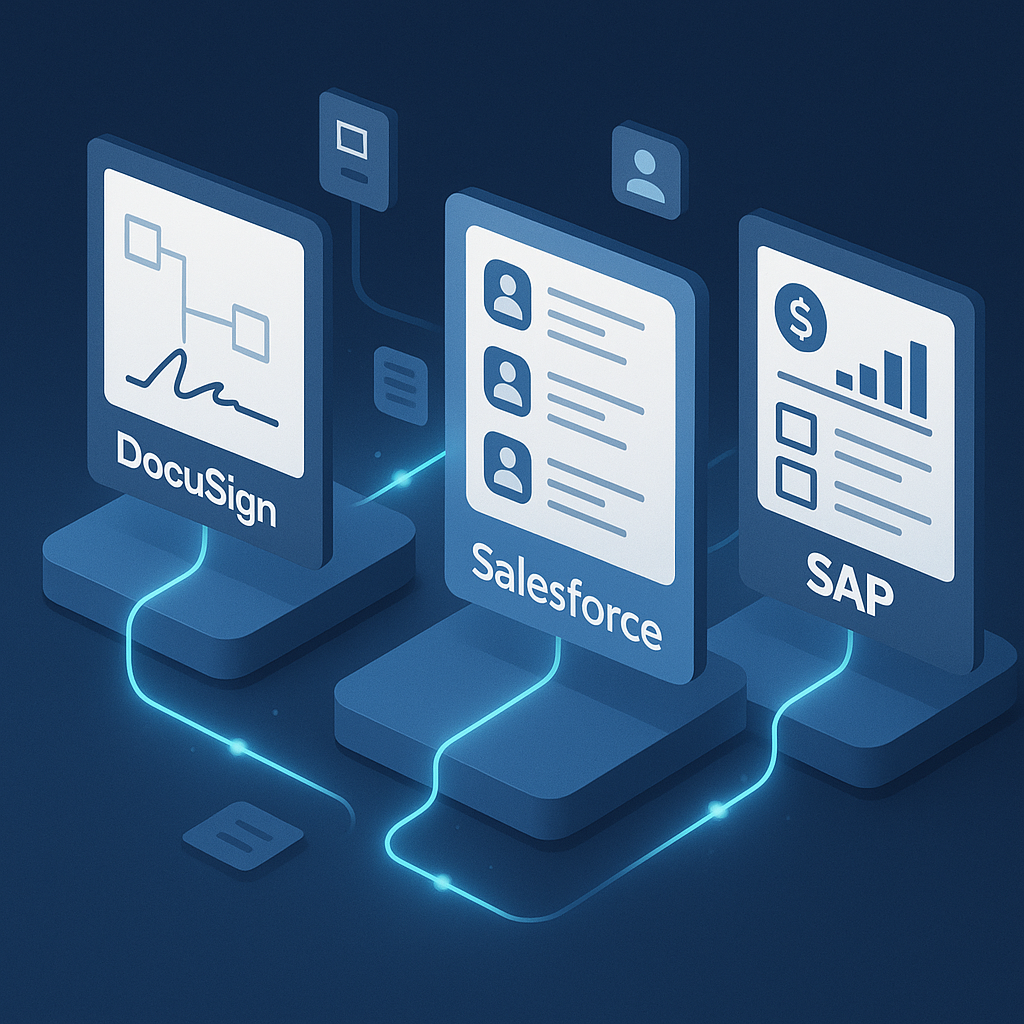
What’s Changing: From Point Solutions to Embedded Agreement Platforms
DocuSign: CLM and eSignature Deepen Inside Salesforce
DocuSign has spent the past two years repositioning itself as an Intelligent Agreement Management platform, and its Salesforce strategy illustrates how far e-signature has evolved. DocuSign CLM and eSignature now offer native integrations with Salesforce that allow teams to generate, negotiate, sign, and track agreements without leaving the CRM environment.(investor.docusign.com)
According to a recent IDC MarketScape assessment of AI-enabled buy-side CLM applications, DocuSign’s platform is recognized as a leader in part because of its seamless eSignature and workflow integration with major business systems, including Salesforce and SAP Ariba. These integrations support end-to-end agreement workflows, combining document generation, automated routing, and audit trails in a single environment.(investor.docusign.com)
DocuSign’s Salesforce-focused “IAM for Sales” solution has also been recognized in the Salesforce 2025 Partner Innovation Awards, underscoring the business impact of embedding agreement processes directly in the sales workflow. Customers can automatically pull Salesforce data into templates, orchestrate approvals, and surface AI-powered agreement insights directly inside Salesforce’s Agentforce environment.(investor.docusign.com)
DocuSign notes that customers are now “generating polished agreements in just a few clicks directly within Salesforce,” with some organizations shortening sales cycles by a week and cutting multiple days of IT effort per deal through automation.(investor.docusign.com)
OneSpan: Embedding Secure Signing in SAP Workflows
While DocuSign is tightening its grip on CRM-centric workflows, OneSpan has been doubling down on the ERP side—particularly by embedding its signing tools and digital identity capabilities into SAP environments. Over the past few years, OneSpan has launched integrations that allow SAP customers to initiate, manage, and archive e-signature processes within SAP-driven processes such as procurement, finance approvals, and HR onboarding.
By embedding e-signatures into SAP applications, OneSpan leverages its heritage in security and identity verification to address high-stakes workflows like banking, insurance, and regulated manufacturing. The strategy mirrors the broader trend seen across the market: use the ERP system as the “source of truth,” while e-signature and CLM logic runs quietly in the background, automating approvals, enforcing policy, and recording tamper-proof evidence of every action.
For SAP-centric organizations, the value proposition is clear: reduce swivel-chair work between systems, harden compliance, and centralize agreement metadata where finance and operations already live.
Specialists and Regional Players: QuickSign and Others
The integrated-agreement trend is not limited to the global giants. Regional and vertical specialists are building deeply integrated workflows tailored to the needs of specific industries. QuickSignquicksign.com)
These providers are positioning themselves
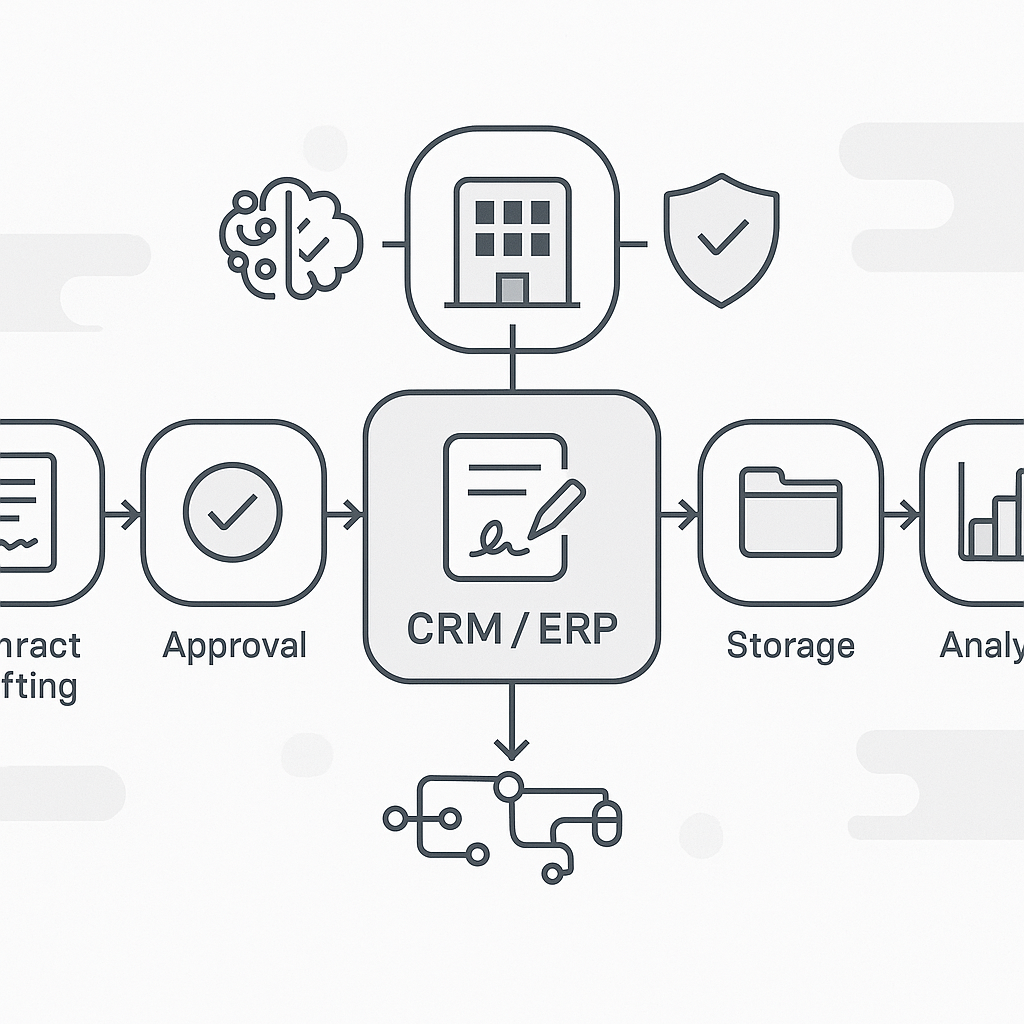
The Bigger Picture: E‑Signature as Part of Intelligent Agreement Management
Analyst commentary and recent vendor announcements suggest that e-signature apps are gradually being subsumed under a broader category: intelligent agreement management. This shift is driven by three converging forces:
- AI and automation: Providers like DocuSign are rolling out AI contract agents that can analyze, summarize, and flag risks in agreements, then push recommended actions directly into CRM or ERP workflows.(investor.docusign.com)
- Data-centric operations: Agreement data—renewal dates, pricing terms, SLAs—is increasingly treated as operational data that must flow seamlessly into revenue, procurement, and support systems.
- Regulation and trust: In regions such as the EU, frameworks like eIDAS are raising the bar for identity verification, auditability, and cross-border recognition of signatures, pushing vendors to embed stronger compliance controls into existing enterprise platforms.(quicksign.com)
The market is moving from “click to sign” to “manage every clause, signature, and identity event as structured data inside CRM and ERP systems.”
Implications for Businesses Using E‑Signature Apps
1. Expect E‑Signatures to Disappear into the Workflow
For end users, the future of e-signature looks almost invisible. Rather than logging into a separate portal, sales reps, procurement managers, and HR teams will:
- Generate documents from CRM/ERP data using prebuilt templates.
- Route approvals and signatures using role-based workflows already defined in Salesforce, SAP, or other core systems.
- See real-time agreement status, risk flags, and renewal alerts inline with customer or vendor records.
Vendors integrating with marketplaces like Salesforce’s AgentExchange are already letting users trigger document generation and route agreements for signature through agentic workflows, without building their own AI orchestration.(investor.salesforce.com)
2. Governance and Compliance Will Tighten
As agreements become deeply embedded in enterprise platforms, governance will become more uniform and data-driven. Instead of each business unit improvising its own signing process:
- Legal teams can define global clause libraries and approval rules in a CLM system.
- These rules automatically apply to agreements generated from Salesforce, SAP, or other systems.
- Identity verification steps (such as KYC or qualified signatures) can be triggered conditionally based on deal size, jurisdiction, or product type.
Providers like QuickSign, with eIDAS-certified signatures and robust consent management for financial products, illustrate how specialized vendors are turning compliance into a reusable service that sits underneath CRM and ERP workflows.(quicksign.com)
3. Integration Strategy Is Now a Board-Level Question
For CIOs, CDOs, and heads of revenue or procurement, the question is no longer “Which e-signature app should we buy?” but rather:
- “How do we unify our agreement workflows across Salesforce, SAP, ServiceNow, and niche line-of-business systems?”
- “Can we treat contracts and signatures as shared data assets, not siloed PDFs?”
- “Where should AI agents live—in the CRM, in a standalone agreement platform, or both?”
The right answer will vary by organization, but the common imperative is clear: e-signature decisions are now architecture decisions. They affect data strategy, regulatory exposure, and the ability to deploy AI safely across critical workflows.
Practical Considerations for Enterprises Planning the Next Step
Assess Current Agreement Workflows End-to-End
Before jumping into a new integration, enterprises should map their contract flows across systems. Key questions include:
- Where do agreements originate—CRM, ERP, HRIS, custom portals?
- Which steps are still manual, email-based, or spreadsheet-driven?
- Where are audit trails and signed documents stored—and who owns that data?
This assessment often reveals overlapping tools and fragmented contract repositories that can be consolidated into a more integrated CLM + e-signature stack.
Prioritize High-Value Integrations First
Most organizations see the fastest ROI by starting with a small number of high-volume, high-value workflows, such as:
- Sales contracts and order forms in Salesforce or another CRM.
- Vendor contracts and purchase orders within SAP or a similar ERP.
- Customer onboarding journeys in financial services, where providers like QuickSign bring pre-built compliance patterns.(quicksign.com)
From there, organizations can extend CLM-integrated e-signatures to renewals, amendments, NDAs, and HR processes.
Leverage Low-Code and No-Code Approaches
As seen in broader enterprise automation trends—including low-code integration tutorials for connecting tools like AppSheet with ERP systems—IT teams are increasingly using low-code platforms and marketplace components to wire agreements into existing workflows without heavy custom development. While not specific to e-signature, this model is reshaping expectations: line-of-business teams expect to configure contract flows visually, not wait months for custom integrations.
Conclusion: E‑Signature Is Becoming Infrastructure
The latest electronic signature apps market outlook is clear: e-signature is no longer a discrete category of software—it is becoming infrastructure for digital agreements, embedded deep inside CRM and ERP platforms. DocuSign’s CLM and IAM integrations with Salesforce, OneSpan’s embedding into SAP, and the rise of specialized players like QuickSign all underscore the same reality: the competitive frontier is now about who can deliver the most automated, compliant, and intelligent agreement workflows in the systems businesses already use.
For business and technology leaders, the strategic task ahead is to treat contracts and signatures as a connected, data-rich fabric across the enterprise. That means prioritizing deep integrations, standardizing governance, and selecting vendors who view e-signature not as an endpoint—but as the connective tissue of modern digital operations.
Call to action: If you’re evaluating how to modernize your agreement workflows without overhauling your entire stack, consider starting with a flexible, integration-ready solution. Try QuickSign for free - generate 2 documents and send 1 document to unlimited recipients at no cost and experiment with embedding compliant e-signatures into your existing customer and onboarding journeys.