Top 10 Best Practices for Contract Management to Implement in 2025
Discover the top 10 best practices for contract management. Streamline workflows, reduce risk, and boost efficiency with these actionable expert tips.
In a fast-paced business environment, contracts are more than just legal documents; they are the backbone of your operations, defining relationships, mitigating risks, and driving revenue. Yet, many small businesses and teams struggle with disorganized, manual, and inefficient contract processes that lead to missed deadlines, compliance issues, and lost opportunities. Moving beyond a reactive approach is crucial for sustainable growth and operational stability.
This guide provides a comprehensive roundup of the 10 best practices for contract management, tailored to help you build a proactive, streamlined, and scalable system. We will move beyond generic advice to deliver actionable strategies you can implement immediately. You will learn how to:
- Establish a centralized contract repository for complete visibility.
- Automate workflows to accelerate approvals and reduce manual effort.
- Proactively manage renewals and key obligations to prevent missed deadlines.
- Implement robust governance to ensure compliance and control.
From leveraging AI-powered analysis to establishing clear governance structures, each practice offers concrete steps to transform your contracts into strategic assets, ensuring every agreement you sign moves your business forward. For small teams, platforms like QuickSign are designed to make these advanced practices accessible, integrating secure e-signatures with powerful workflow automation to simplify every stage of the contract lifecycle. This article will show you not just what to do, but how to do it effectively.
1. Master the Full Lifecycle with CLM (Contract Lifecycle Management)
Viewing contracts as static documents is a critical mistake. One of the most impactful best practices for contract management is to treat agreements as dynamic assets with a distinct lifecycle. A Contract Lifecycle Management (CLM) system provides a systematic, centralized approach to shepherd a contract through every stage: from initial request and authoring to negotiation, execution, and post-award management, including obligation tracking and eventual renewal or termination.
Adopting a CLM mindset means moving beyond simple e-signatures and building a cohesive, end-to-end process. This comprehensive oversight ensures no stage is overlooked, preventing missed deadlines, unfulfilled obligations, and lost revenue opportunities. For small businesses, this structured approach eliminates the chaos of managing contracts through scattered emails and spreadsheets.
Why It's a Best Practice
A full CLM approach provides unparalleled visibility and control. By standardizing each phase, you reduce bottlenecks, minimize human error, and create an auditable trail for compliance. This strategic oversight is essential for scaling operations effectively, as it transforms reactive contract handling into a proactive business function. Companies like Deloitte have reportedly used CLM to cut their contract cycle times by 50%, demonstrating its power to drive significant efficiency gains.
How to Implement This Practice
Getting started with CLM doesn't require an immediate enterprise-level investment. Small teams can begin by implementing its core principles.
- Map Your Process: Document your current contract workflow from start to finish. Identify who is involved at each stage and where delays typically occur.
- Start Small: Focus on a single high-value, high-volume contract type, such as sales agreements or vendor contracts, to pilot your new CLM process.
- Define Clear Roles: Assign specific responsibilities for each stage (e.g., who drafts, who reviews, who approves). This clarity prevents confusion and enhances accountability.
- Leverage Integrated Tools: Use platforms like QuickSign that centralize document storage, automate approval workflows, and integrate e-signatures, effectively creating a foundational CLM system. As technology evolves, systems are incorporating more advanced features, with some platforms even adding AI to manage agreements more intelligently. You can read more about the future of intelligent agreement management to understand where the industry is heading.
2. Automated Contract Analysis and AI-Powered Extraction
Manually reviewing every contract clause is time-consuming, expensive, and prone to human error. A transformative best practice for contract management involves leveraging artificial intelligence (AI) to automate contract analysis and data extraction. This technology uses machine learning and natural language processing to read agreements, identify key terms, extract critical data points like renewal dates and liability caps, and even flag risky or non-standard language automatically.
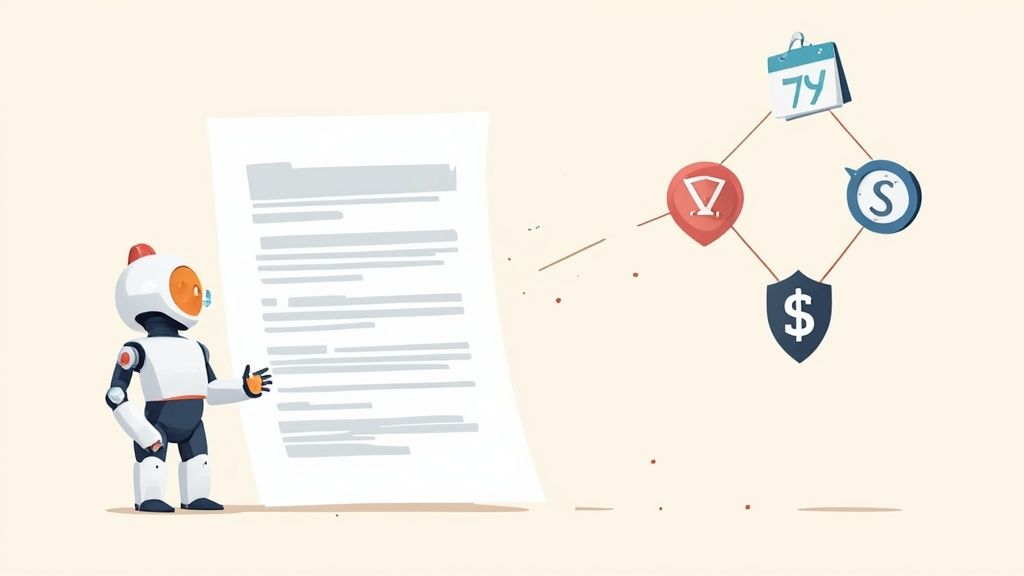
This approach empowers small teams to process high volumes of contracts with the diligence of a large legal department. It turns static PDF or Word documents into structured, searchable data, providing instant insights without the need for line-by-line manual review.
Why It's a Best Practice
AI-powered analysis dramatically accelerates due diligence and risk assessment. It ensures consistency by applying the same rules across all contracts, eliminating subjective interpretations. This frees up legal and operational teams to focus on strategic negotiation and relationship management rather than tedious administrative review. Companies like LawGeex have shown that AI can reduce contract review time by over 90%, turning a multi-day process into a matter of minutes while improving accuracy.
How to Implement This Practice
Integrating AI into your workflow can be done incrementally, even for small businesses. The key is to start with a focused application and build from there.
- Target Routine Contracts: Begin with high-volume, standardized agreements like NDAs or vendor contracts. Their predictable structure makes them ideal for training an AI model.
- Prioritize Clean Data: Ensure the documents you feed into the system are clean and legible. High-quality inputs lead to more accurate AI-driven outputs.
- Maintain Human Oversight: Use AI as a powerful assistant, not a complete replacement. A human expert should always perform a final review on high-risk or high-value contracts.
- Validate and Refine: Regularly compare the AI's extracted data against a manual review to check for accuracy. Use this feedback to continuously refine the AI model's performance. You can read more about how AI-powered tools are gaining momentum to understand their growing capabilities.
3. Centralized Contract Repository and Version Control
Storing contracts across personal hard drives, email inboxes, and various cloud folders creates organizational chaos and significant risk. A core component of the best practices for contract management is establishing a single, secure, and centralized repository. This "single source of truth" ensures that every stakeholder, from legal to sales, is working from the most current and accurate version of an agreement.
A centralized system is more than just a digital filing cabinet; it's a dynamic library with robust version control and access management. It eliminates the danger of team members acting on outdated terms, provides a clear history of all amendments and negotiations, and secures sensitive information from unauthorized access. This organized approach is fundamental for compliance, audits, and operational efficiency.
Why It's a Best Practice
A centralized repository turns contract chaos into controlled, accessible information. It drastically reduces the time spent searching for documents and mitigates the risk of non-compliance due to lost or outdated agreements. By providing a full audit trail of every change, it enhances transparency and accountability. For growing businesses, centralizing contracts is a non-negotiable step toward building scalable, predictable operations. For instance, legal departments often use systems like NetDocuments to ensure every version is tracked and accessible, preventing costly legal disputes.
How to Implement This Practice
Creating a centralized repository is an achievable goal for teams of any size, providing immediate organizational benefits.
- Establish Naming Conventions: Before migrating any documents, create a clear, standardized naming convention (e.g.,
ClientName_AgreementType_ExecutionDate_v1.0). Consistency is key. - Implement Role-Based Access: Use permissions to control who can view, edit, or approve contracts. Your sales team may need to view templates, but only legal should be able to edit master terms.
- Tag with Metadata: Apply metadata tags for key information like contract value, renewal date, counterparty, and governing law. This makes searching and reporting significantly faster and more accurate.
- Use an Integrated Platform: A solution like QuickSign provides secure, cloud-based storage as part of a larger workflow. This connects your repository directly to your drafting, negotiation, and signing processes, ensuring seamless version control. To see how this fits into a broader strategy, you can learn more about document workflow automation and its benefits.
4. Proactive Contract Renewal and Obligation Management
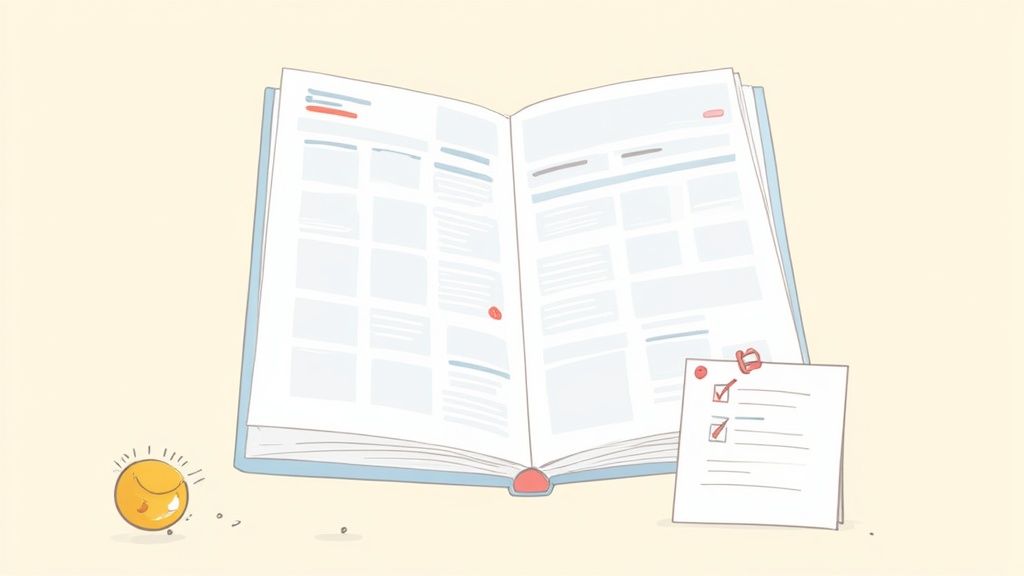
Allowing a high-value contract to auto-renew without review or expire unintentionally can be a costly mistake. One of the most critical best practices for contract management is to shift from reactive handling to proactive management of key dates and obligations. This involves implementing systems that actively track and alert you to upcoming renewal deadlines, milestone dates, and contractual duties, ensuring you have ample time to take strategic action.
This proactive stance prevents unwanted auto-renewals with unfavorable terms, avoids service disruptions from expired agreements, and ensures all parties meet their commitments. For small businesses, this foresight is crucial for managing cash flow and maintaining strong vendor and client relationships. By automating alerts and using dashboards, you transform contract dates from potential liabilities into opportunities for negotiation and optimization.
Why It's a Best Practice
Proactive management provides the leverage needed for successful negotiation and risk mitigation. When you know a renewal is 90 days away, you have time to assess performance, explore alternatives, and negotiate better terms from a position of strength, not desperation. This prevents service lapses and missed opportunities for cost savings or improved service levels. For example, procurement teams using systems like Coupa leverage automated alerts to consolidate vendor spending and renegotiate volume discounts well before renewal dates hit.
How to Implement This Practice
Establishing a proactive system is straightforward and delivers immediate returns. It’s about creating a safety net that guarantees no critical date goes unnoticed.
- Create Early Renewal Windows: Set automated alerts for 90, 60, and 30 days before a contract's expiration date. This provides a structured timeline for review and action.
- Assign Clear Owners: Every contract in your portfolio should have a designated owner responsible for managing its lifecycle, including renewals and obligations.
- Track Key Obligations: Go beyond renewal dates. Use a centralized system to track other important commitments, such as reporting deadlines, price adjustments, or service level agreements (SLAs).
- Use Automated Tracking Tools: Platforms like QuickSign can be configured to send automated reminders for key dates. Centralizing documents in such a system ensures that all relevant dates are captured and tracked, eliminating reliance on manual calendar entries which are prone to error.
5. Standardized Contract Templates and Clause Libraries
Reinventing the wheel with every new agreement is a recipe for inefficiency and risk. A cornerstone among best practices for contract management is the creation of standardized, pre-approved contract templates and a modular clause library. This involves developing a set of legally vetted, core agreement frameworks and individual clauses that can be inserted as needed, ensuring every contract aligns with your organization's risk tolerance and strategic goals.
This approach transforms contract creation from a bespoke, time-consuming task into a streamlined, assembly-line process. Instead of drafting from scratch, your team can quickly assemble a robust agreement by selecting the appropriate template and adding pre-approved clauses for specific scenarios, like confidentiality or liability limitations.

Why It's a Best Practice
Standardization is the bedrock of scalability and consistency. It drastically reduces contract drafting time, minimizes reliance on legal review for routine agreements, and ensures that your company's core legal protections are consistently applied. By eliminating ad-hoc language, you reduce the risk of introducing unfavorable terms. Major corporations like Microsoft rely heavily on template libraries for their vendor contracts, enabling their procurement teams to operate with speed and confidence.
How to Implement This Practice
Building a robust template and clause library is a strategic project that pays long-term dividends. Here’s how small teams can get started.
- Involve Key Stakeholders: Collaborate with legal, sales, and procurement teams to identify common contract types and essential clauses. Their buy-in ensures the templates are both legally sound and commercially practical.
- Create Tiered Templates: Not all agreements carry the same risk. Develop different templates for low, medium, and high-risk scenarios (e.g., a simple one-page NDA vs. a complex master service agreement).
- Build a Clause Library: Isolate frequently used or negotiated clauses (e.g., indemnification, payment terms, termination) and create pre-approved standard, fallback, and "walk-away" versions. This empowers negotiators while maintaining control.
- Leverage Centralized Storage: Use a platform like QuickSign to store and manage your templates and clauses. This ensures everyone is working from the latest approved versions and simplifies the process of pulling them into new documents.
6. Risk-Based Contract Prioritization and Segmentation
Not all contracts carry the same weight, and treating them equally is a surefire way to misallocate valuable resources. A key best practice for contract management involves implementing a risk-based approach, where you segment and prioritize agreements based on their potential impact. This means categorizing contracts into tiers according to their financial, operational, compliance, and strategic risk levels.
This tiered system ensures your most experienced team members focus their attention on high-stakes agreements, like critical supply chain contracts or large enterprise sales deals. Meanwhile, lower-risk, standardized contracts such as NDAs or routine service agreements can be streamlined through automated, low-touch workflows. This strategic allocation of effort maximizes efficiency and minimizes exposure where it matters most.
Why It's a Best Practice
A risk-based approach transforms contract management from a one-size-fits-all administrative task into a strategic risk mitigation function. It allows teams to dedicate appropriate levels of due diligence, negotiation effort, and ongoing monitoring to the contracts that can most significantly affect the business. For instance, a healthcare organization can use this method to apply intense scrutiny to HIPAA-related Business Associate Agreements while fast-tracking standard vendor forms, ensuring compliance without creating unnecessary bottlenecks.
How to Implement This Practice
Implementing risk segmentation is a practical way to bring order and focus to your contract portfolio. Start by creating a simple but effective framework.
- Develop Clear Risk Criteria: Define objective criteria to score contracts. Include factors like contract value, potential for data exposure, operational dependency, and regulatory impact.
- Create a Scoring Matrix: Build a simple matrix to assign a risk score to each contract. For example, a contract over $50,000 might get 5 points, while one involving sensitive data gets 10.
- Define Tiers: Based on the scores, classify contracts into tiers (e.g., Tier 1: High-Risk, Tier 2: Medium-Risk, Tier 3: Low-Risk). Assign a specific review and approval workflow to each tier.
- Review and Adjust: Your risk landscape will change. Re-evaluate your risk criteria and contract classifications annually or when significant business changes occur to ensure the system remains relevant.
7. Cross-Functional Collaboration and Governance Structures
Contracts are not just legal documents; they are business instruments that impact multiple departments, including finance, sales, procurement, and operations. A critical best practice for contract management is to establish a clear governance framework that breaks down departmental silos and fosters cross-functional collaboration. This involves defining roles, responsibilities, and approval authority to ensure everyone is aligned and accountable.
Without a formal governance structure, contract processes become fragmented and chaotic. Sales may promise terms that finance cannot support, or procurement might agree to conditions that operations cannot fulfill. A cohesive governance model creates a unified front, ensuring that all agreements align with overarching business objectives and risk tolerance from the very beginning.
Why It's a Best Practice
Strong governance prevents bottlenecks, mitigates risk, and aligns contracts with strategic goals. When roles are clearly defined, decisions are made faster and with greater confidence. This structure creates an auditable and transparent process, which is essential for compliance and for managing stakeholder expectations effectively. Companies like Procter & Gamble have successfully implemented contract governance councils to ensure that their agreements are consistently managed, reviewed, and executed across their vast global operations.
How to Implement This Practice
Building a robust governance framework is a proactive step that clarifies ownership and streamlines decision-making. Small teams can implement this practice by formalizing their collaborative processes.
- Define Approval Hierarchies: Establish clear authority levels based on contract value or risk. For example, a sales manager can approve contracts up to $10,000, while anything higher requires VP approval.
- Use a RACI Matrix: Create a chart that defines who is Responsible, Accountable, Consulted, and Informed for each stage of the contract lifecycle. This simple tool eliminates confusion about who does what.
- Establish Escalation Paths: Document a clear procedure for handling disputes or non-standard requests. This prevents delays by ensuring issues are routed to the correct decision-maker quickly.
- Centralize Communication: Use a shared platform like QuickSign to manage approvals and communications. Its workflow automation features can route contracts to the appropriate stakeholders based on predefined rules, ensuring the right people review the document at the right time.
8. Supplier and Vendor Relationship Management (VRM)
A contract is not just a legal shield; it's the foundation of a strategic partnership. A key entry in our list of best practices for contract management is to integrate your processes with robust Vendor Relationship Management (VRM). This practice transforms contracts from static compliance documents into dynamic tools for managing supplier performance, mitigating risk, and fostering collaborative growth.
Instead of a "sign and file" approach, VRM uses the contract as a living blueprint for the entire supplier relationship. It means actively monitoring obligations, tracking performance against contractual KPIs, and facilitating communication to ensure both parties achieve their goals. This strategic alignment turns a simple transactional arrangement into a value-creating partnership.
Why It's a Best Practice
Integrating contract management with VRM provides a 360-degree view of supplier value and risk. It allows you to move beyond basic cost management and focus on joint innovation, quality improvement, and supply chain resilience. Companies like Walmart have mastered this by using detailed supplier scorecards to drive continuous improvement, ensuring their vendor base consistently meets high standards for quality and efficiency. This proactive approach prevents performance dips and fosters long-term, mutually beneficial relationships.
How to Implement This Practice
You can build a strong VRM framework by embedding its principles directly into your contract management workflow.
- Segment Your Suppliers: Categorize vendors based on their strategic importance. Not all suppliers require the same level of oversight. Focus intense management efforts on those critical to your operations.
- Develop Supplier Scorecards: Create simple scorecards within your contract records to track key performance indicators (KPIs) like delivery timeliness, quality of goods, and responsiveness.
- Schedule Regular Business Reviews: For strategic suppliers, schedule and conduct quarterly business reviews to discuss performance, address challenges, and plan for the future.
- Centralize Communication: Use a platform like QuickSign to store all supplier contracts and related communications in one place. This creates a single source of truth for tracking performance discussions, amendments, and compliance documentation.
9. Compliance and Risk Monitoring Dashboard
Leaving compliance to chance is a high-stakes gamble. A crucial element of modern best practices for contract management is establishing real-time visibility into contract compliance, regulatory obligations, and risk exposure. An integrated dashboard acts as a central command center, pulling data from your contracts to flag potential issues before they escalate into costly penalties or legal disputes.
This approach transforms compliance from a reactive, manual audit into a proactive, continuous monitoring process. Instead of discovering a breach months after it occurred, you get instant alerts on non-compliant activities, upcoming regulatory deadlines, or contracts with high-risk clauses. This is particularly vital for businesses in heavily regulated sectors like healthcare or finance, where a single oversight can have severe consequences.
Why It's a Best Practice
A dedicated compliance and risk dashboard provides the clarity needed to make informed, timely decisions. It aggregates complex data into simple, visual metrics, allowing stakeholders to quickly assess the organization's risk posture. This transparency is key for demonstrating due diligence to auditors and regulators. For instance, a healthcare provider can use a dashboard to constantly monitor HIPAA BAA compliance across all vendor agreements, preventing potential data breaches and fines.
How to Implement This Practice
You can build a powerful monitoring system by focusing on the most critical data points first. A phased approach makes this advanced practice manageable even for small teams.
- Identify Key Metrics: Start by defining the most important compliance and risk indicators for your industry. This could include tracking renewal dates for required certifications, monitoring adherence to data privacy laws, or flagging non-standard payment terms.
- Automate Data Collection: Manually updating a dashboard is inefficient and prone to error. Use a platform that can automatically extract key dates, clauses, and obligations from your contracts and populate your dashboard.
- Set Meaningful Alerts: Configure automated notifications for specific triggers, such as an impending contract expiration or a missed obligation. Set smart thresholds to avoid "alert fatigue" and ensure your team only focuses on critical issues.
- Use Role-Specific Views: Create tailored dashboard views for different stakeholders. Your legal team may need to see regulatory compliance data, while the finance team might focus on financial risks and obligations. As you build out your compliance framework, it's essential to ensure your foundational processes, like e-signatures, are legally sound. You can read more about electronic signature legal requirements to ensure your digital processes are compliant from the start.
10. Contract Performance Analytics and Continuous Improvement
Treating a signed contract as the finish line is a common yet costly oversight. One of the most advanced best practices for contract management involves transforming contracts from static legal documents into dynamic sources of business intelligence. This means systematically collecting, analyzing, and acting on contract data to identify improvement opportunities, optimize terms, and drive better business outcomes over time.
This practice moves beyond simply managing obligations to strategically evaluating performance. By analyzing data points like spend versus budget, supplier delivery times, or sales cycle lengths, small businesses can uncover hidden inefficiencies and opportunities. This analytical approach ensures that each contract actively contributes to strategic goals rather than just sitting in a digital filing cabinet.
Why It's a Best Practice
Contract performance analytics provides the objective data needed to make smarter business decisions. Instead of relying on anecdotal evidence, you can pinpoint which vendors provide the best value, which contract clauses lead to disputes, and which terms accelerate or stall negotiations. This data-driven continuous improvement loop is crucial for mitigating risk and maximizing value. As noted in Gartner research, leading procurement teams use spend analytics to identify significant cost-saving opportunities and strengthen their negotiating positions.
How to Implement This Practice
Integrating analytics doesn't require a dedicated data science team. You can start small and build sophistication over time.
- Identify Key Metrics: Begin by tracking simple but impactful metrics. For procurement, this could be on-time delivery rates or cost savings per supplier. For sales, it might be the average time to close or renewal rates.
- Establish a Baseline: Collect data for a set period (e.g., one quarter) to understand your current performance. This baseline becomes the benchmark for measuring future improvements.
- Conduct Regular Audits: Periodically review contracts to ensure data accuracy and compliance. This helps validate the insights your analytics generate and maintains the integrity of your process.
- Leverage Your Tools: Use platforms like QuickSign to gain foundational insights. Features like signature tracking provide clear data on who has viewed and signed a document, offering a starting point for analyzing turnaround times. To understand the full audit trail capabilities, you can learn more about how to see who signed a document and when.
Top 10 Contract Management Best Practices Comparison
| Solution | Implementation complexity 🔄 | Resource & integration needs ⚡ | Expected outcomes 📊⭐ | Ideal use cases 💡 | Key advantages ⭐ |
|---|---|---|---|---|---|
| Contract Lifecycle Management (CLM) | High — enterprise rollout, process change, legacy integration | Significant tech investment, change management, training | Shorter cycle times (30–40%); improved compliance & visibility | Large enterprises with high contract volumes and cross‑department processes | End-to-end control; audit trails; negotiation insights |
| Automated Contract Analysis & AI Extraction | Medium–High — model training, validation, ongoing tuning | Quality training data, integration effort, vendor/license costs | Large review time reduction (60–80%); faster risk identification | High-volume review tasks (M&A, due diligence), routine contract types | Rapid extraction; scalable review; fewer human errors |
| Centralized Contract Repository & Version Control | Medium — migration, metadata design, governance | Storage, security, access controls, ongoing maintenance | Eliminates duplication; faster retrieval; audit readiness | Organizations lacking a single source of truth; legal teams | Single source of truth; version history; secure access |
| Proactive Renewal & Obligation Management | Low–Medium — calendaring, alert rules, workflows | Accurate data entry, integration with calendars/ERP, monitoring | Prevents unintended renewals; cost savings via timely renegotiation | Procurement teams, subscription/SaaS-heavy environments | Timely actions; reduced operational disruptions; better forecasting |
| Standardized Templates & Clause Libraries | Medium — legal drafting, approval, template governance | Significant upfront legal effort; template maintenance | Faster contract creation (40–60%); consistent terms; less review time | High-volume, repeatable agreements (procurement, sales) | Consistency; reduced negotiation friction; faster deal closure |
| Risk‑Based Prioritization & Segmentation | Medium — scoring methodology, workflow differentiation | Cross-functional input, scoring tools, periodic recalibration | Resources focused on high‑impact contracts; improved mitigation | Resource‑constrained teams; regulated industries with many contracts | Targeted risk management; efficient resource allocation |
| Cross‑Functional Collaboration & Governance | Medium–High — RACI design, approval matrices, committee setup | Time for governance, training, collaboration tools, executive sponsorship | Better alignment; fewer bottlenecks; policy compliance | Complex approval environments; multi‑stakeholder contracts | Clear roles/authority; reduced rework; stronger alignment |
| Supplier & Vendor Relationship Management (VRM) | Medium — integrate contract and supplier processes | Ongoing supplier engagement, performance systems, data integration | Improved supplier performance; cost savings; innovation opportunities | Strategic supplier portfolios (manufacturing, retail, large buyers) | Stronger partnerships; performance visibility; strategic value |
| Compliance & Risk Monitoring Dashboard | Medium–High — data integration, regulatory mapping, tuning | Data engineering, dashboarding tools, continuous updates | Early compliance detection; reduced audit findings; exec reporting | Highly regulated sectors (banking, healthcare, export controls) | Real‑time visibility; actionable alerts; quantifiable risk exposure |
| Contract Performance Analytics & Continuous Improvement | High — data consolidation, analytics models, CI cycles | Historical data, analytics team, tooling, sustained effort | Identifies savings; benchmarked performance; informed renegotiations | Organizations pursuing strategic sourcing and long‑term savings | Data‑driven optimization; benchmarking; continuous cost reduction |
From Best Practice to Daily Practice: Implementing Your New Strategy
Moving from understanding to implementation is the most crucial step in transforming your business operations. This article has detailed a comprehensive suite of best practices for contract management, from establishing a centralized repository and standardizing templates to leveraging AI-powered analytics and fostering cross-functional collaboration. Each practice represents a powerful lever you can pull to reduce risk, accelerate deal cycles, and unlock hidden value within your agreements.
However, the sheer volume of these strategies can feel overwhelming. The key is to recognize that adopting these principles is not an all-or-nothing proposition. It is a strategic journey of incremental improvement, where each small change builds upon the last, creating powerful, cumulative momentum. Your goal should not be to implement all ten practices overnight but to identify the most significant pain points in your current process and address them methodically.
Your Actionable Roadmap to Modern Contract Management
To turn these concepts into tangible results, start with a focused, phased approach. Prioritize the practices that will deliver the most immediate impact with the least friction.
Phase 1: Build a Solid Foundation (Weeks 1-4)
- Centralize and Organize: Begin by migrating all active contracts into a single, secure digital repository. This step alone eliminates chaos and provides a single source of truth.
- Standardize Key Templates: Identify your most frequently used contracts (e.g., NDAs, SOWs, client agreements) and create standardized templates. This immediately reduces drafting time and minimizes unapproved variations.
- Automate Renewals: Set up proactive alerts for key dates, such as renewals and expirations. This simple action prevents missed opportunities and costly auto-renewals for unwanted services.
Phase 2: Enhance Efficiency and Control (Weeks 5-12)
- Implement E-Signatures: Integrate a secure e-signature solution like QuickSign to dramatically speed up the execution phase.
- Define Workflows: Map out your approval process and use workflow automation to ensure contracts are routed to the right stakeholders in the correct sequence.
- Establish Governance: Clearly define roles and responsibilities. Who can request a contract? Who can approve it? Clarifying this prevents bottlenecks and enhances accountability.
Key Takeaway: The essence of effective contract management lies in creating a system that is both structured and agile. It's about replacing reactive, manual tasks with proactive, automated processes that give your team the bandwidth to focus on strategic, high-value work.
The True Value of Mastering Your Contracts
Ultimately, adopting these best practices for contract management is about more than just administrative efficiency. It is a fundamental shift that transforms contracts from static, filed-away documents into dynamic, strategic assets. When managed effectively, your contracts provide a clear roadmap of your business relationships, obligations, and opportunities. They become a rich source of data that can inform financial forecasting, guide supplier negotiations, and ensure unwavering regulatory compliance.
By systematically implementing these strategies, you are not just organizing paperwork; you are building a resilient, intelligent operational backbone for your organization. You are empowering your team with the clarity, control, and confidence needed to navigate complex business landscapes and drive sustainable growth. The journey begins with a single step, so choose your starting point and commit to making consistent progress.
Ready to put these best practices into action? QuickSign provides the essential tools you need to standardize templates, automate workflows, and secure legally binding e-signatures in one intuitive platform. Start your free trial today and see how easy it is to transform your contract management process at QuickSign.